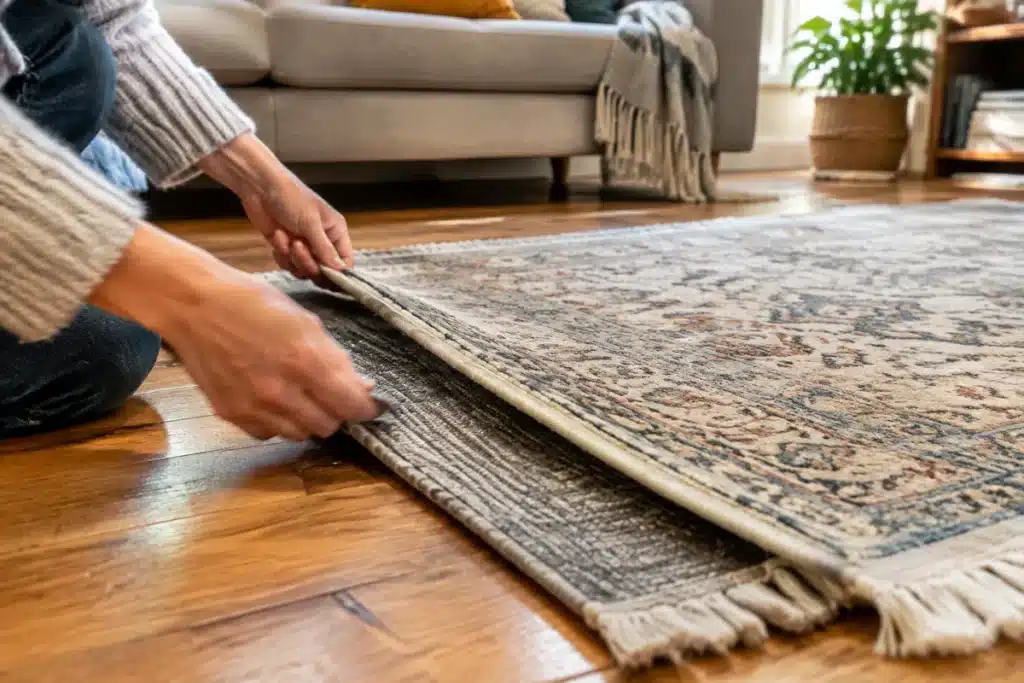
In modern interior practice, rugs have quietly moved beyond their traditional function as soft padding between furniture and floor. Increasingly, well-known figures from architecture, design, and the fine arts are treating rugs as more than utility items — they view the floor as a fifth wall, a broad horizontal plane ready to carry complex visual ideas.
Why a Simple Mistake in Your Online Pension Application Could Cost You Your Retirement Benefits
The ultimate trick to banish mold from your bathroom grout in just 7 minutes—no vinegar or baking soda needed
For both interior professionals and homeowners, rugs present a relatively low-commitment way to test strong hues, intricate patterns, and tactile surfaces. Unlike the permanence of painted accent walls or custom joinery, a rug can be swapped out, letting a space adopt depth and personality without a long-term renovation. Whether anchoring a seating arrangement or introducing an unexpected focal point, a rug can turn the ground plane into a vehicle for cultural references and personal storytelling.
What makes the current moment interesting is the wide spectrum of approaches—custom, research-led one-offs and small-run heirloom pieces sit alongside scalable, durable lines. The ten recent launches considered here combine historic ornament, autobiographical reference, and traditional making methods with computational design and advanced fiber technology. Some pieces reinterpret drawings, others borrow patterns from microscopic nature, and a few revive knotting methods once reserved for royal commissions. Together they argue that rugs can occupy the same artistic territory as framed works on a gallery wall—if anything, their lineage with tapestry hanging suggests they always have.
10 New Artful Rug Collections
1. Beni x Colin King: The Chelsea Collection
Morocco-based Beni’s collaboration with creative director Colin King has yielded The Chelsea Collection, which revisits ornate weaving traditions historically associated with palace interiors. The eight pieces introduce Royale, Beni’s reinterpretation of an old hand-knotting method once used for Moroccan nobility. The dense, labor-intensive weave requires months of work by experienced artisans, enabling complex motifs and a tapestry-like surface quality.
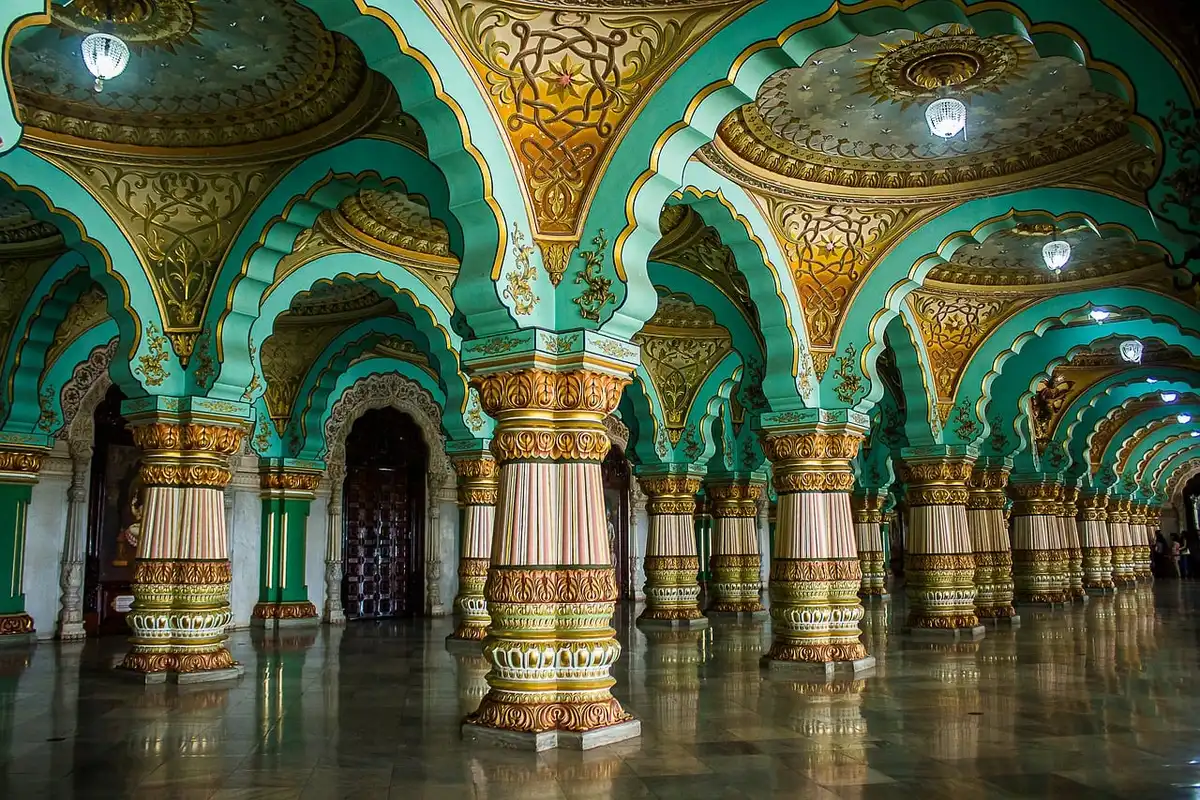
King draws on the tucked-away gardens of European cities, translating architectural elements like wrought-iron gates, formal garden layouts, and decorative flourishes into contemporary rug compositions. A palette dominated by deep blacks, browns, and greens accentuates the patterns’ fine geometry, showing how age-old craftsmanship can be rendered with a modern sensibility.
The Chelsea Collection from Beni x Colin King is available at benirugs.com.
2. Nordic Knots: Dancing Flower & Matches
Stockholm’s Nordic Knots debuts two evocative designs—Dancing Flower and Matches—both informed by Swedish Grace, the 1920s movement that fused classical proportions with restrained modernity. Made mainly from wool, the rugs rework botanical outlines and geometric motifs into richly textured surfaces.
Dancing Flower leans into organic, playful shapes, while Matches presents a more ordered composition with rhythmic geometry and accents of bamboo silk. Combining soft field colors with bold linear motifs, these rugs bring warmth, artistic presence, and visual cadence to contemporary interiors while nodding to Sweden’s decorative arts legacy.
Dancing Flower and Matches from Nordic Knots are available at nordicknots.com/us.
3. Armadillo: Venezia
Armadillo, an Australian rug house, introduces Venezia as its first collection made entirely from pure silk—a notable material departure for the brand. Inspired by Venice’s shifting light and the way it skims over surfaces, each rug is hand-knotted in India to form a continuous field of luminous color.

With a low pile and refined profile, the pieces subtly change with ambient light and vantage point. Offered in five stocked tones—Biscuit, Rosewood, Vermilion, Caper, and Serpentine—and an additional 15 made-to-order shades, Venezia illustrates how monochrome silk fields can anchor living spaces with understated warmth and depth.
The Venezia Collection is available at us.armadillorugs.com.
4. The Rug Company: Silk Textures
Part of The Rug Company’s Colour in Residence program, Silk Textures examines silk’s expressive potential alongside refined tertiary color schemes. The series includes 20 handmade rugs across two distinct surfaces: Vara, a handloomed wool-and-silk blend that celebrates subtle irregularity, and Caliche, a radiant 100% silk weave. The collection was shot at Villa Bologna in Malta, an apt Baroque setting for the pieces.
Colors were developed individually and take cues from mineral palettes—earthy clays, muted ochres, and soft sages. Through nuanced differences in texture, sheen, and hue, Silk Textures shows how a seemingly simple surface can shape the mood of a room.
Vara and Caliche from the Silk Textures collection are available at therugcompany.com.
5. Patterson Flynn: Abstraction
Patterson Flynn’s Abstraction collection explores the potential of abaca, a durable natural fiber, in contemporary rugmaking. The line reframes the material through bold, graphic work that references traditional decorative crafts—think Italian marbled paper or straw marquetry—while embracing modern compositional ideas.
Each rug reads like a standalone artwork rather than a repeating motif, taking advantage of abaca’s natural luster, texture, and light interaction. The outcome is a range that brings a fresh, contemporary edge to a material often associated with more classic interiors.
The Abstraction collection is available at pattersonflynn.com.
6. Sara Story x Christopher Farr: Hill Country
Interior designer Sara Story and rug maker Christopher Farr have produced Hill Country, a three-piece grouping rooted in Story’s personal memories. The series—Spider, Landscape, and Grid—draws on the sun-drenched terrain of Story’s Texas upbringing and nods to Louise Bourgeois’ iconic spider sculptures.
Hand-knotted from wool and silk, the pieces balance architectural order with painterly gestures. Spider, for example, uses raised linear elements to allude to an arachnid form without literal depiction, echoing Bourgeois’ influence while maintaining its own visual language. Hill Country illustrates how rugs can introduce narrative and personal resonance into contemporary interiors.
The Hill Country collection is available at christopherfarr.com.
7. Nanimarquina: Lucia Eames Collection
Spanish label Nanimarquina collaborated with Eames Office and Form Portfolios to adapt seven original works by Lucia Eames—daughter of Charles Eames and Ray Eames’ stepdaughter—into a series of rugs.
Rather than producing direct reproductions, pieces such as Echo, Rooted, and Sunbirds reinterpret Lucia Eames’ organic compositions through tactile techniques like hand-tufting, hand-knotting, sculptural relief, and braided jute. With earthy colorways and flowing shapes, the collection brings a lesser-known piece of the Eames family’s creative output into contemporary interiors.
The Lucia Eames collection is available at us.nanimarquina.com.
8. Jaipur Living: CallaLuxe
Jaipur Living’s CallaLuxe line demonstrates that expressive design and everyday functionality can coexist. Spanning 75 patterns, the collection combines performance-oriented, solution-dyed fibers with traditional handcrafting methods to deliver rugs that are both visually rich and easy to care for.
Manufactured using hand-knotting, hand-tufting, and handweaving, the series offers layered patterns, gentle ombres, and dimensional surfaces while remaining suitable for high-traffic settings. CallaLuxe proves that striking floor coverings need not be fragile or impractical.
The CallaLuxe collection is available at jaipurliving.com.
9. Nomadory Rugs: Plot
Originating from Verdant Phenomena, an outdoor group exhibition in Sonoma, California, Nomadory’s Plot rug investigates the interplay between cultivated growth and constructed geometry. Developed with The Bureau and artist Gigi Allen, the design references rectangular planter beds and the organic patterns that emerge within them.
Variations in pile height and contrasting stitch techniques underscore the tension between geometry and organic growth, translating garden-language into woven form. Woven from recycled polyester for outdoor durability, Plot shows how the visual grammar of landscapes can be translated into textile design for different contexts.
Inquiries about the Plot rug can be made at verdantphenomena.com.
10. Creative Matters x RDAI: Zoometry
Toronto-based Creative Matters joined forces with Paris practice RDAI to produce Zoometry, a project that fuses computational design with traditional handcraft. Drawing from microscopic biological structures—such as butterfly wing scales, spider webs, and coral formations—the six-piece series turns digitally generated patterns into hand-knotted rugs.
Made in Nepal from Himalayan wool and Chinese silk, the collection uses contrasts in materials and incremental color shifts to evoke the iridescence and complexity of natural microstructures. Each digital design acts as a precise blueprint for artisans; a single 2-by-3-meter rug can require roughly 1.8 million knots. As a research-driven experiment, Zoometry highlights how algorithmic precision and artisan skill can combine to render natural geometries as tactile artworks.
The Zoometry collection is available at creativemattersinc.com.
Similar Posts
- Discover the Balera Collection: Where Lighting and Tiles Merge Beautifully!
- Kohler launches Fleurette Artist Editions collection in collaboration with Aerin Lauder
- Revolutionize Your Walls: Karim Rashid’s Bold Wallpaper Capsule Transforms Interiors!
- Trina Turk Unveils Vintage-Inspired FLOR Rugs: A Deep Dive into the Archives!
- Revolutionizing Design: Osso & Bottone Transform Traditional Tile Grids with Playful Twists!

Hi, I’m Michael from the Decatur Metro team. I offer you practical tips to enhance your living space.