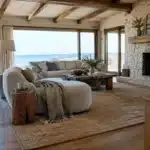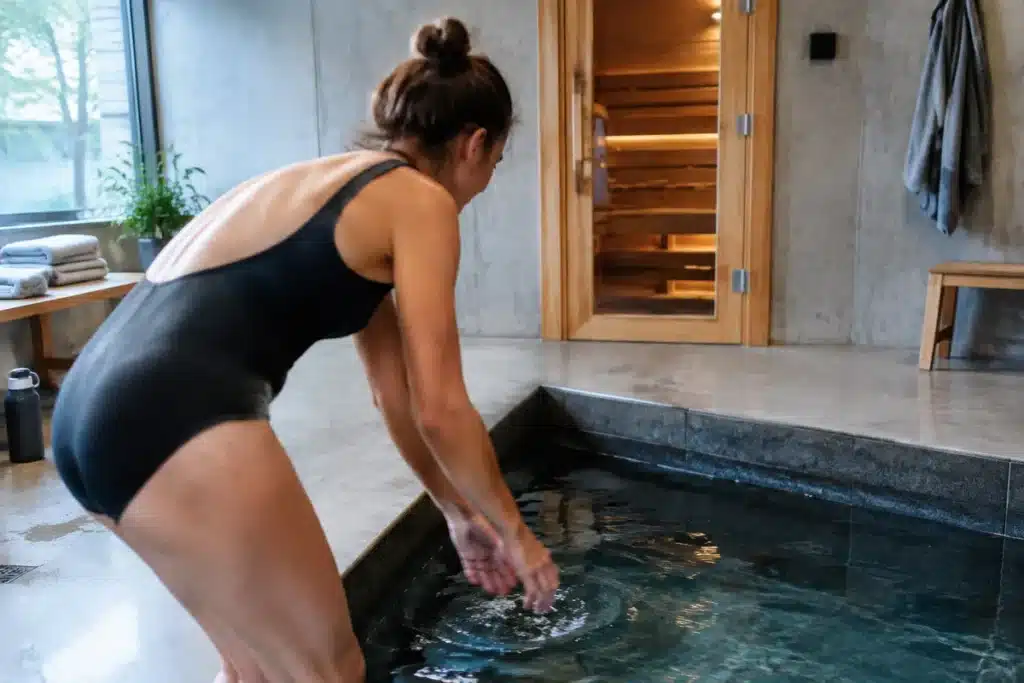
Once considered an afterthought relegated to backyard tubs or garage gym gear, cold plunges are increasingly being designed into homes. As interest in cold-water therapy grows, more homeowners are seeking ways to embed cold immersion options directly into their bathrooms, shifting the practice from a separate piece of equipment to an intentional element of interior design.
The motivation for adding a plunge goes beyond athletes’ recovery routines. Immersing the body in cold water has been linked to possible benefits such as less muscle soreness, better sleep, and improved stress resilience, though large-scale research on long-term health effects is still emerging. The consumer appetite is clear, however: Houzz’s 2024 Summer Trends Report found searches for “cold plunge” jumped 74% year-over-year, while queries for “indoor sauna” climbed 69%.
That surge ties into a wider movement toward homes tailored for wellness. Houzz’s 2026 analysis showed interest in the term “wellness room” up 164%, indicating that homeowners are more deliberately designing spaces to support relaxation and well-being.
Why a Simple Mistake in Your Online Pension Application Could Cost You Your Retirement Benefits
The ultimate trick to banish mold from your bathroom grout in just 7 minutes—no vinegar or baking soda needed
For interior designers, this shift changes briefings and planning. Arizona designer Stephanie Larsen, who integrates cold plunges, infrared saunas, and scent-diffusion systems into residential projects, reports clients are prioritizing these amenities more than before. She has observed a desire for houses that feel restorative and to incorporate technology that supports health and calm, according to comments she shared with Luxe Interiors + Design.
In practice, meeting those requests means considering how different wellness elements work together rather than treating each appliance as a standalone item. Cold plunges are frequently used alongside saunas as part of contrast therapy—alternating heat and cold exposure for recovery and circulation benefits. Installing both in a home calls for careful planning around footprint, plumbing, ventilation, and how the components relate spatially. At the same time, manufacturers are responding with systems that combine multiple functions and offer installation flexibility.
Ashley Steinhardt, vice president of sales at Hydro Systems, notes that residential wellness is becoming more deliberate, with purpose-built zones that combine various hydrotherapy options—everything from cold plunges to whirlpools and oxygenated microbubble treatments—within a single basin.
Hydro Systems has designed its Hydro Chill line to bring cold-plunge capability into configurable bathtubs, removing the need for a separate tub just for cold immersion. Recent models add smart-home compatibility, enabling users to set temperatures and schedule plunges via connected controls.
The company is also exploring solutions that let several hydrotherapy experiences occupy the same footprint. Its Hydro Chill Ultra model supplies both hot and cold water through an enclosed unit that produces its own hot water, eliminating the requirement for a conventional hot-water hookup. That self-contained approach makes it easier to install in places like pool houses or purpose-built wellness rooms where connecting to existing hot-water lines is impractical.
When homeowners have the space for a full home spa, designers can allocate separate rooms for saunas, plunge pools, and other amenities. But fitting hydrotherapy into a standard bathroom calls for a different strategy. Dual-purpose fixtures and compact multi-function tubs help compress what once took up an entire wellness suite into a footprint compatible with typical residential bathrooms.
“We don’t need a whole room to make wellness part of daily life,” Steinhardt points out. Hydrotherapy elements can be designed into smaller bathrooms so that health rituals become accessible as part of everyday routines.
Although cold plunges remain a relatively specialized home feature, their rising profile is encouraging designers to rethink conventional bathroom programs. As more wellness technologies enter domestic interiors, the design challenge will be blending them in ways that preserve usability, comfort, and the home’s aesthetic identity.
Editorial transparency: This piece was produced with support from AI tools that assisted with research, outlining, and copy refinement. Editorial judgment, reporting, and fact-checking were carried out by the Design Milk editorial staff.
Similar Posts
- Revolutionary Design by Future Simple Studio: Spa Playbook Replaced with Roman Civic Logic
- Matteo Thun Transforms Lake Louise: BASIN Glacial Waters Seamlessly Integrated!
- Stunning Norwegian Apartment: Downsizing Becomes a Design Revolution!
- Sherwin-Williams picks paler green as its signature hue for 2027
- Up Studio designs Hamptons home to support aging in place and well-being

Hi, I’m Michael from the Decatur Metro team. I offer you practical tips to enhance your living space.