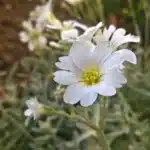
In Lorraine, France, two neighboring quarries have undergone completely different renaturation strategies. The one that allowed nature to take its course has achieved the best results.
This report was produced as part of the “Alternative Media and Environmental Challenges” journalism residency, established by researchers Audrey Alvès and Carole Bisenius-Penin from the Research Center on Mediations (Crem) at the University of Lorraine, in partnership with Decatur Metro.
Why the 12-5-30 Incline Walking Method Is the Ultimate Fat-Burning Workout, According to Fitness Experts
The ultimate trick to banish mold from your bathroom grout in just 7 minutes—no vinegar or baking soda needed
Lorry-Mardigny (Moselle), report
The dual nature is embedded in the landscape and history of Lorry-Mardigny, a rural commune consisting of two towns, located 25 km south of Metz. From 1870 to 1918, when it was annexed by the German Empire along with all of Alsace-Moselle, it served as a border town, complete with a defensive system on one of its hills.
Today, Lorry-Mardigny sits right on the border between Moselle to the north and Meurthe-et-Moselle to the south. The surrounding area, repeatedly pierced by quarries, displays two sides of renaturation of these spaces once exploited for human activities. One side exemplifies ecological success, the other underscores the need to plan for post-exploitation to achieve any success.
Anne-Marie Dufour lived in the commune until she was 20. She recalls that the construction of the A31 highway, which runs north to south through Lorraine, led to the opening of a quarry in the north of the commune in 1970. Before this, there had been some limestone quarrying—for building churches, houses, or as foundations for roads—but not on a scale that impacted the landscape significantly. The countryside was mainly used for sheep grazing, contributing to the creation of a ‘calcareous grassland,’ a landscape that has become rare in France, with very specific flora and fauna.
The village population was not too concerned at first. However, as quarry operations intensified and its managers sought to expand the quarry at the time of lease renewal in 1989, the village revolted. “It was during the bicentennial of the Revolution. We had our little revolution in the village too,” says Anne-Marie, with a mischievous smile. A petition circulated to cancel the expansion, a “big fuss” occurred, and the villagers succeeded in getting the site completely closed.
Yet, this episode did not mark the end of the story between Lorry-Mardigny and quarries. A second one opened to the south of the village in 2004, in the neighboring commune of Bouxières-sous-Froidmont. Operated by the company Lingenheld, it aimed to meet the demand for aggregates for a high-speed railway line. Between this second quarry—partially officially closed—and the first, the remnants of past activity are starkly different: life thrives in the first, it seems to flee the second.
Following the abandonment of the first quarry, the highway one, in the north of the village, the commune of Lorry-Mardigny committed to protecting the site. In 1994, it signed a ninety-nine-year lease with the Lorraine Natural Spaces Conservatory (CEN), now in charge of the ecological management of the area. The landscape has also been protected since 1995 by a prefectural order for biotope protection and is part of a Natura 2000 site.
Anne-Marie Dufour has become one of the three volunteer conservators of the site for the CEN, along with François Guerold, who brings valuable professional skills: two years ago, he was still a research teacher in ecology, specializing in the functioning of disturbed ecosystems. Alongside them, Marie-Pierre Comte, secretary of Friends of the Earth Moselle, accompanies us on this site that is close to her heart.
She marvels at the shoots of wild orchids poking their stems through the sparse vegetation. “Thirty plant species have reestablished here,” she says. She shares her joy of observing birds like the woodlark and the red-backed shrike, or various butterflies. “Every fortnight, there are different species,” she adds. Further on, offering his binoculars, François Guerold points out where a female eagle owl is nesting.
How did this rich and rare biodiversity reclaim a space exploited by a quarry? Well, by almost not intervening! “The place was returned to nature, which did its job,” says François Guerold casually. The quarry face, the area where rock was extracted, has been preserved and birds nest there today. The CEN has designed a trail to channel foot traffic and allow nature to peacefully reclaim its place.
A few species of grasses typically found in this environment were seeded on the bare soils at the beginning. Then, pioneering trees, such as birches and wild cherries, returned on their own. Maintenance today involves promoting grazing activities and doing some clearing to prevent the environment from closing in completely and turning into wasteland.
This landscape is nothing like that of the second quarry, on the southern border of Lorry-Mardigny. There, past activity is now hidden: part of the site has been backfilled, and trees were planted in 2008, 2015, and 2020.
Unfortunately, three-quarters of them appear to be already dead. “If they’re not growing, what does that mean is underneath?” François Guerold asks rhetorically, knowing the answer: to fill the hole left by its activity, the company Lingenheld had committed to restoring all the lands with a forest destination, while also being authorized to use external inert materials to backfill the site.
Part of the problem might stem from there: François Guerold has seen cups, syringes, and plastic mixed with the materials. “For the state [and the prefectures], it’s a way to keep local businesses, nurseries… running, while for every ton of rubble received, the quarry operator gets money. In twenty or thirty years, we’ll realize it was a mistake,” he asserts.
The Grand Est regional environmental authority, which reviewed a renewal request for the operation authorization in 2020, regretted in its report that the quarry operator “only reported visual monitoring of the waste used in backfilling,” without “procedures for tracking the origin” of the materials.
It also wrote that “the topic of waste valorization in quarry backfilling is a source of concern.” And it noted “the absence of commitment to the sustainability of the woodland after the cessation of activities.” Trees were planted, yes, but without a guarantee of survival, in essence.
Sébastien Wolff, technical and industries manager at the company Lingenheld, however, assures that “the reforestation and selection of species was overseen by the ONF [National Forest Office] from the first campaign.” Several species planted in 2008 were not retained for subsequent campaigns “given the [low] survival rate.”
“It’s slower to let nature take its rights,” says François Guerold, but the rebirth of a calcareous grassland enriches biodiversity more than half-grown trees. To make it work, it requires the attention of institutions and the pressure of informed residents, because quarry operators’ ambitions on the subject are often minimal. There are those who dig into nature, and those who truly aim to rebuild it.
Contrary to what one might think, some old quarries can “have a strong ecological interest,” says Damien Aumaître, mission leader at the Lorraine Natural Spaces Conservatory. “Some replace environments that had little interest, such as cultivated meadows. When quarry activities stop, it is therefore possible to regain biological and environmental added value by recreating environments favorable to certain rare species,” he adds.
This statement is particularly true in dry areas, like for limestone quarries or other hard rocks. Because in alluvial zones, “there’s rather an ecological devaluation.” In the Moselle valley, pierced on both sides by quarries, the return of biodiversity as rich as before the activity is impossible.
The old quarries there resemble mere water holes, just right for fishermen. There are some notable efforts, like the Haut-Saussy ponds in the commune of Velle-sur-Moselle, where simple arrangements of banks and islets have allowed a variety of birds to return. But all this “does not replace the previous environment, which was a complex ecosystem of alluvial meadows and forests,” the conservator specifies.
legend
Similar Posts
- Over-Tourism Threatens Piton de la Fournaise: Eruptions Draw Crowds, Risk Fragile Biodiversity
- Mushrooms Face Extinction: Essential Yet Overlooked, the Silent Crisis
- Dangerous Invasion: Stinging Caterpillars Spread Allergies in Northern France
- Save Cantal’s Wetlands: Locals Rally Against Quarry Project Threatening Pristine Area
- Grass-Free Gardens: How Landscapers are Reinventing Green Spaces Without Lawns!

Hi, I’m Ashley from the Decatur Metro team. I share essential information for a sustainable and responsible lifestyle.