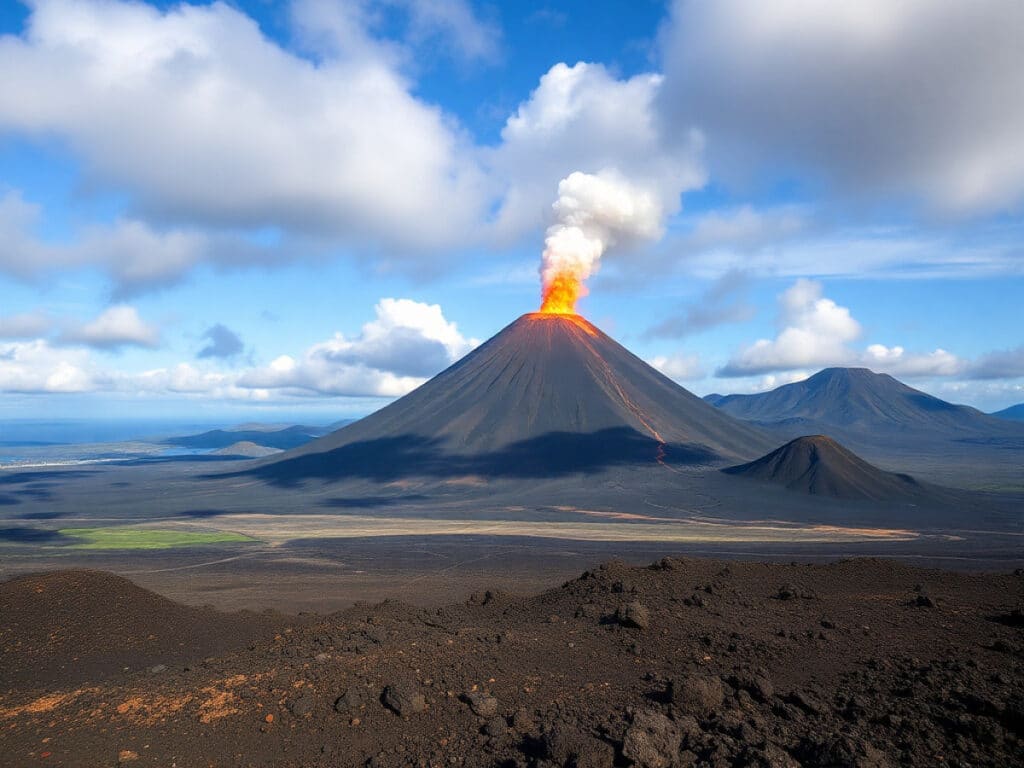
In 2026, the dual eruptions of Piton de la Fournaise in Réunion drew numerous onlookers. However, the excessive crowds and risky behaviors posed a threat to the already vulnerable biodiversity of the area.
Piton de la Fournaise (Réunion), coverage
Why the 12-5-30 Incline Walking Method Is the Ultimate Fat-Burning Workout, According to Fitness Experts
The ultimate trick to banish mold from your bathroom grout in just 7 minutes—no vinegar or baking soda needed
From the parking area to the start of the trail leading to the volcano, the rocky path is littered with glass, aluminum, plastic, cigarette butts, and numerous tissues. Piton de la Fournaise has just reopened following two particularly dramatic eruptions earlier in the year.
Both tourists and locals flock to this iconic site in Réunion, the island’s most visited spot, with around 350,000 visitors annually at the panoramic viewpoint of Pas de Bellecombe-Jacob. Signs of their visits are increasingly evident, as are concerns for the ecological balance of the area.
The volcano is an integral part of local culture and the identity of Réunionese people. When it erupts, it creates a buzz across the island. “ The older generations were scared of the volcano; there were legends. Nowadays, people aren’t afraid. When it erupts, it’s cool ”, says Didier Permalnaïck, a teacher visiting with his family after the enclosure around the volcano reopened.
The eruption, which ended in mid-April, lasted two months. The lava flow could be easily observed: it was visible from the “ route des laves ”, skirting the southeast flank of the volcano. As the lava flows headed towards the ocean, crowds gathered daily to witness the spectacle, some staying on the road while others ventured closer, often ignoring restrictions.
In the media and on social networks, videos of lava meeting the ocean were looped repeatedly. “ It’s not just tourists during an eruption; locals go too, Didier confirms. We’ve seen a lot, and now it’s important to bring our children, to show them and teach them about our natural heritage. ” He recalls with a smile: “ We used to play in the lava when we were kids. ” Many locals echo this sentiment. Although regulations are increasingly strict on paper, authorities do not fine those who bypass barriers and approach the flows.
However, the excessive visitation of the volcano area during and after eruptions poses significant ecological threats. The foremost issue, according to the Réunion National Park, is invasive exotic species introduced by humans, either intentionally or accidentally. Seeds from these species can easily hitch a ride on shoes or cling to clothing. “ In Réunion, this is the greatest threat to biodiversity ”, states Lorraine Masini-Condon, responsible for Sustainable Visitation at the Réunion National Park.
“ We monitor this especially in the volcano area. Off-trail activities, which are more common here than elsewhere, pose risks of introducing more invasive species into the environment. When there are crowds during an eruption, the risk is obviously greater. ”
It’s not just plants that threaten the fauna and flora of the volcano; rats also play a part. These rodents thrive on visitor waste. “ People think organic materials, like food waste and banana peels, will decompose as in a garden, but the climatic conditions do not allow for quick degradation ”, the park official explains.
With the altitude, decomposition slows, and before waste can fully degrade, rats have time to feed. The growing rat population disrupts the ecological balance and impacts other species. “ Rats prey on young geckos, bird eggs, their chicks, and even nesting adults ”, laments Lorraine Masini-Condon. Moreover, the volcano area is home to black petrels, a critically endangered bird species endemic to Réunion.
Rats aren’t the only threat to the black petrels. During eruptive periods, the influx of tourist helicopters and drones also disturbs this species. “ Black petrels perceive drones and helicopters as predators. They become stressed, stay in their nests, fail to feed, reproduce, or seek mates. Naturally, this impacts the survival of the species ”, warns Lorraine Masini-Condon.
The February eruption received extensive media and social media coverage. Despite bans on drone flights, these devices still filled the skies, supplying images for television news, Instagram, and TikTok. This was a rare event, as the lava had not reached the ocean in nearly two decades, making it a spectacle not to be missed. The National Forestry Office (ONF) reported that between 5,000 and 10,000 people visited to see the lava pour into the ocean on peak evenings.
The ONF also noted the number of vehicles at the volcano site during the initial eruption of 2026, on January 18. The event lasted just thirty-three hours, yet the eco-counter on the volcanic road tallied 3,700 vehicles, double the usual traffic.
Nicolas Villeneuve, former director of the Volcanological Observatory of Piton de la Fournaise (OVPF), has studied the volcano’s visitor patterns during eruptions. “ We can see up to +900 % more cars when a fissure opens on the north flank and +400 % on the south flank ”, the volcanologist states.
For him, the volcano has always been a draw, but social networks have changed the dynamics. “ Previously, those approaching an eruption were well-equipped mountain enthusiasts. This type of adventurer still exists, but now everyone wants to go, to capture images. The issue is the mass. Small paths turn into 2-meter-wide trails, and waste accumulates everywhere on the site; it’s a disaster. ”
Kevin de Berterèche is among these modern-day “ adventurers ” active on social media. He visits the most dangerous parts of the volcano, standing at the edge of a spewing crater or inches from a river of molten rock, equipped with a firefighter’s helmet and heat-resistant suit. “ I’m aware of the risks I take and I prepare my equipment so as not to harm the environment ”, he claims. Kevin denies any role in attracting crowds to the volcano: “ People are free to take risks, and I don’t think I encourage anyone to do what I do. ”
However, this content creator criticizes the lack of regulation for tourist helicopters within the Réunion National Park. While flights below 1,000 meters are banned in the core park area, there’s no regulation protecting the airspace over the volcano site.
Lorraine Masini-Condon regrets this lack of control: “ Even at certain altitudes, helicopters can disturb wildlife. ” She acknowledges, however, that the Réunion National Park needs to do more to educate visitors, especially regarding organic waste.
Meanwhile, the ONF, responsible for waste management at the volcano, insists it is making an effort. “ We already do a lot of cleanup in picnic areas, but we can’t allocate additional resources for trail cleanups, states Benoît Loussier, regional director of the ONF. We can’t be behind every hiker. Generally, users practice good habits, but with such crowds, there are inevitably some who behave poorly. We need users to do their part and pick up their trash in natural areas. ”
The lack of trash bins in the volcano’s parking areas reflects a desire to make visitors more responsible. In the meantime, waste continues to spread, and it’s the land that pays the price.
Similar Posts
- Biodiversity Haven in Namibia Ravaged by Flames: Vital Ecosystem Under Threat
- In Old Quarries, Nature Triumphs When Left Alone: Discover How
- Government Plans to Cut Costs: National Parks on the Chopping Block
- Europe’s Wild Pollinators at Risk: Bees, Bumblebees, Butterflies Face Increasing Threats
- Mountain Wildlife Distress Solved: Eco-Guards Educate Skiers in the French Alps

Hi, I’m Ashley from the Decatur Metro team. I share essential information for a sustainable and responsible lifestyle.