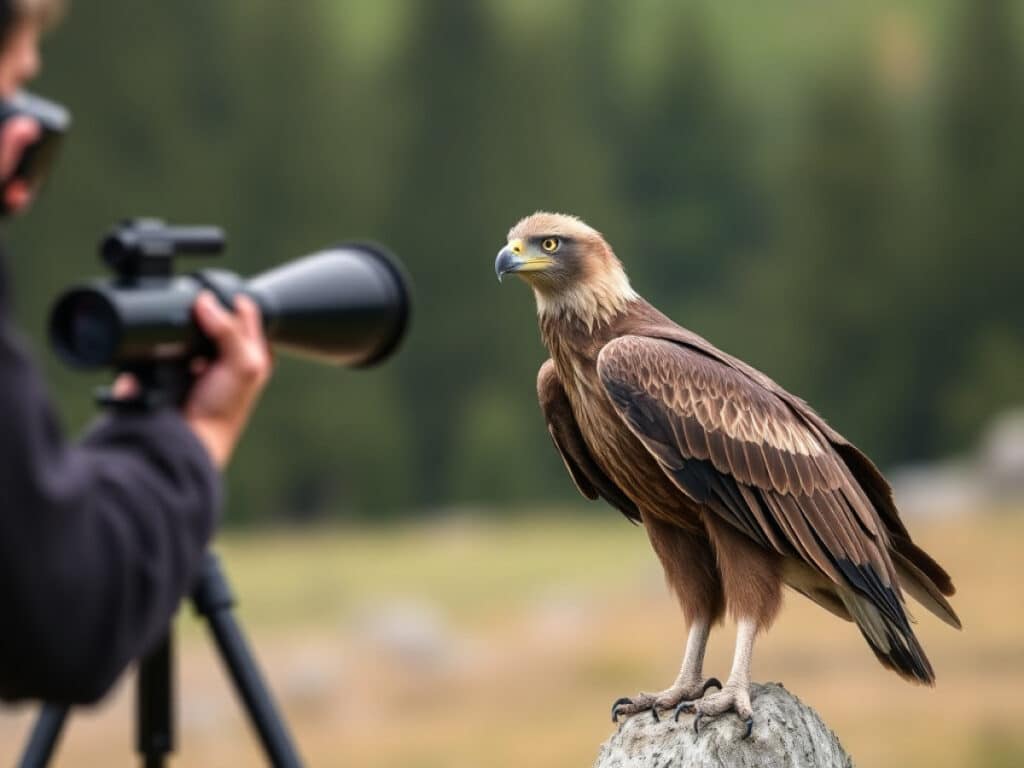
To safeguard the new pairs of bearded vultures settling in the Swiss Prealps, the first step is to locate their hideouts. The spotting scope is essential for discovering the nests of these elusive birds.
This article is published in partnership with the .
Why the 12-5-30 Incline Walking Method Is the Ultimate Fat-Burning Workout, According to Fitness Experts
The ultimate trick to banish mold from your bathroom grout in just 7 minutes—no vinegar or baking soda needed
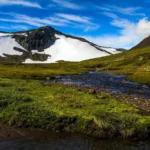
After several hours of trekking through snowy terrain on snowshoes and taking lengthy pauses to examine vast rocky cliffs, Célestin Luisier, the Swiss Romandy coordinator for the Foundation Pro Bearded Vulture (FPG), finally spots the perfect observation post. The Vaud Prealps stretch before him, while a fox bounds down the slope with impressive ease. The ornithologist is eager to determine if a young pair of bearded vultures, seen carrying branches in October, has established a nest on the north face of the surrounding massif.
The stakes are high: if a nest is found—a first for the canton—the FPG will notify local stakeholders to prevent any disturbance of the nest from December, the start of the egg-laying period, until June, when the young are expected to take flight.
Without proper measures, the nesting could be disrupted by helicopter flights, paragliders, or logging activities. The Alpine population of this large vulture, reintroduced into Switzerland in 1991, has been slowly increasing but remains vulnerable.
Identifying new nests is a painstaking task, akin to searching for a needle in a haystack. To achieve his goal, Célestin spends hundreds of hours in the field and collaborates with wildlife guards and foundation volunteers.
A large hole shielded by an overhang is visible to the right of the big ochre slab in the middle of the cliff. Could this be a good spot for the bearded vulture? The ornithologist’s reaction, eyes glued to his binoculars, is swift. “This cavity looks great,” he declares, unfolding his telescope.
Excitement mounts for Célestin when he thinks he spots some twigs in the darkness of the overhang with the eyepiece that magnifies 60 times. “It definitely looks like a bearded vulture’s nest, and there’s even a yellowish trail that suggests droppings to the right of the crevice!” he exclaims.
The potential nest is located 4 km away as the crow flies. The magnification is thus insufficient to clearly determine whether there is a nest. Célestin decides to watch for several more hours to see if any birds enter or leave the shelter.
Time passes and nothing noticeable happens on the north face, which he watches until his eyes ache. A soft call diverts his attention: “Sounds like a great spotted woodpecker, but the call fades at the end of the note, indicating it’s probably a three-toed woodpecker.” Indeed, the rare three-toed species takes off from a spruce branch… The intermission is over.
The saga continues when, for only three seconds, the biologist sees a bearded vulture glide between two peaks. And just like that, it’s over. What a nuisance! Then, as the sun moves westward, its rays finally illuminate the cavity. Célestin points his telescope back at the hopeful spot. Verdict? “What I thought were branches are just stones. There’s no nest in there…” Disappointment, but it’s all part of the job.
In the canton of Vaud, the presence of nesting individuals has been suspected for years, but to no avail so far. Bearded vultures can be easily observed in flight. However, near their nesting sites, they are shy and secretive. They have no predators themselves, but their eggs and newly hatched chicks face many threats.
“You can see the adults flying along a south-facing cliff for years and still fail to find their nest hidden on the opposite north face, because they return to it with utmost caution,” explains Célestin Luisier.
Among natural threats to the young bone-breakers, the common raven plays a significant role. Intelligent and also residing in the cliffs, this sentinel knows every raptor nest. If an egg or chick is left unattended for even a few minutes by both parents—possibly due to human disturbance—it provides the raven, the size of a buzzard, an opportunity to feast.
To finally discover the first established nest of the bearded vulture in the canton, Célestin Luisier will have to keep patrolling throughout this spring.
Keep Your Distance
The failure rate of bearded vulture nestings is higher in the French-speaking part of Switzerland than in the Grisons in the east—home to a significant population. The explanation is quite simple. Being the least densely populated canton, the Grisons provides these vultures with much-needed peace. Whereas in the west, human pressure is greater, causing numerous disturbances during the nesting period.
One particular concern involves photographers and videographers. “It is crucial to take pictures without endangering the bearded vultures,” warns Célestin Luisier. “These birds are very popular, and many people approach too closely without thinking. In Ticino, we had a case where a first nesting attempt failed because photographers were stationed 40 meters from the nest throughout the incubation period.” The FPG advises staying no closer than 500 meters from an occupied nest.
| La Salamandre, . |
Similar Posts
- Climbers vs. Birds: Rock Climbing Routes Closed to Protect Nesting Eagles
- Mountain Owls Mystery Unveiled: Tracking the Elusive Night Raptors in the Alps
- King of the Hill Reboot: Hulu to Release Brand New Episodes!
- Barn Owls in Crisis: Old Attics Needed for Nesting Havens
- Devastating Fire in Drôme: A Lament for Lost Natural Heritage and Wildlife

Hi, I’m Ashley from the Decatur Metro team. I share essential information for a sustainable and responsible lifestyle.