The Unseen Threat Beneath the Waters of Brest
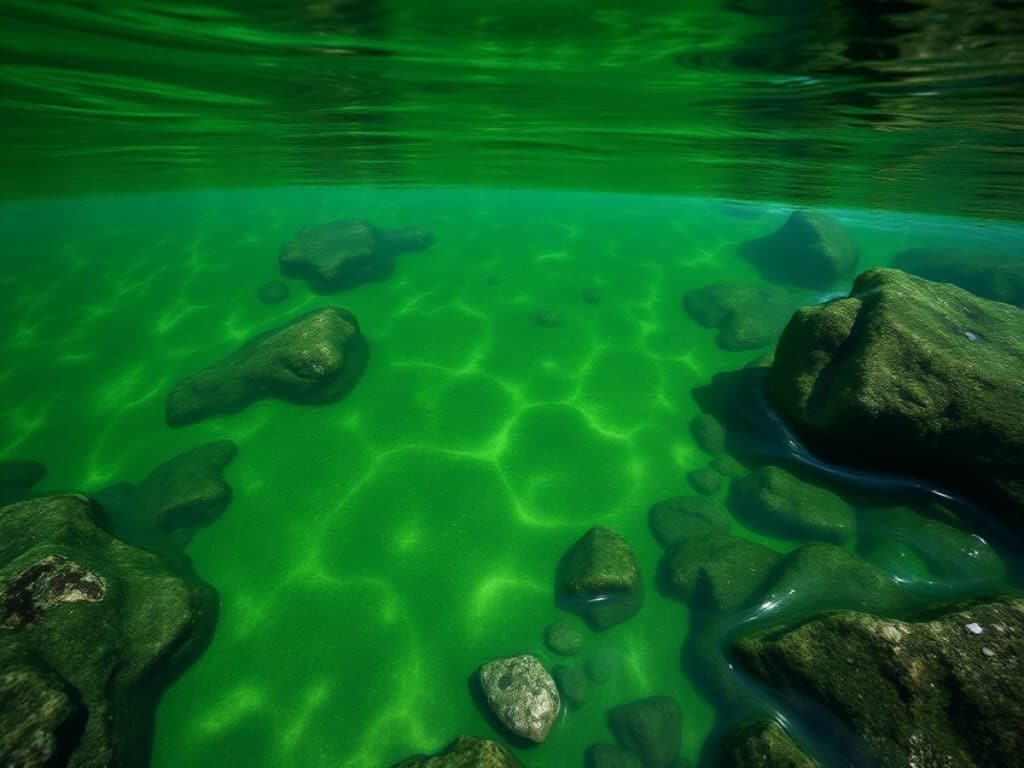
In the bay of Brest, a hidden environmental issue threatens the underwater ecosystem. Invisible to the naked eye, green algae cover the seabed, suffocating marine life. The primary culprits? Nitrogen fertilizers from industrial farming.
Brest (Finistère), field report
Why the 12-5-30 Incline Walking Method Is the Ultimate Fat-Burning Workout, According to Fitness Experts
The ultimate trick to banish mold from your bathroom grout in just 7 minutes—no vinegar or baking soda needed
From a viewpoint near Brest’s train station, Hubert Person scans the horizon. “At first glance, everything seems fine,” he remarks, his cap shielding his eyes on this sunny March day. He gestures towards the sea, partially obscured by the commercial port and its numerous buildings. “But what’s happening beneath the surface, that’s hidden from view,” adds Person, an activist with AE2D, a publicly recognized ecological organization based in Brest. “Since there’s no swell in the bay to bring the algae ashore, it remains out of sight,” explains Jean-Yves Quéméneur from Force 5, an environmental protection association in Finistère.
Below the water surface, the presence of green algae is significant. These algae don’t wash ashore; instead, they carpet the seabed, choking all life forms there. According to Alain Pibot, head of the French Office for Biodiversity in Finistère and a diving enthusiast, “Sometimes, there’s up to 2 meters of green algae on the seabed.”
Every spring, environmentalists in Brittany fear the weather conditions—a mix of rainy days followed by warm, sunny ones—that repeatedly lead to the proliferation of these algae, which can sometimes appear red in the bay. “The most sensitive and fragile species disappear first, such as sponges and sea urchins, as well as large bivalves. They are replaced by tiny worms that can survive in low-oxygen conditions,” observes Jacques Grall, a research engineer at the University of Western Brittany (UBO).
“Crustaceans, shellfish, worms, and sometimes fish are impacted. Juvenile fish also vanish as they cannot tolerate the reduced oxygen levels that occur as the algae decompose, forcing them to leave,” continues Grall, who has been at the European Institute of Marine Studies, a laboratory affiliated with UBO, since 1992.
In the bay of Brest, signs of eutrophication—when nutrients accumulate in a habitat, leading to excessive plant growth—have been detected in the most enclosed parts of the bay: at Daoulas Bay, Moulin Blanc at Relecq-Kerhuon, Fret Bay, and Roscanvel Bay.
“There aren’t many possible sources for the green algae. It has been calculated that agriculture is responsible for 97% of the eutrophication,” states Pibot decisively. “Though urban wastewater still illegally reaches the bay, this pollution is minimal compared to the agricultural contribution.”
The bay of Brest, spanning 180 square kilometers, lies at the confluence of several watersheds, such as the Aulne to the south and the Elorn to the northeast. These areas have a significant agricultural presence. Brittany, together with the Pays de la Loire, accounts for 70% of France’s factory farms. Excessive use of nitrogen fertilizers and manure, which is also high in nitrogen, on these watersheds leads to leaching into streams and rivers. This nitrogen then breaks down into nitrates that ultimately reach the sea, fueling the proliferation of green algae.
According to Pibot, “the bay of Brest is greatly neglected in the fight against green algae.” This fight began with a state initiative in 2010 aimed at curbing the spread of these organisms by reducing nitrate levels in the water. Eight bays are included in this plan, such as those of Douarnenez (Finistère) and Saint-Brieuc (Côtes-d’Armor), known for their massive algae strandings. However, the plan has been criticized for its limited impact since its inception.
Nevertheless, the bay of Brest is part of Terra Rade, a territorial contract that includes the Aulne and Elorn watersheds aimed at improving water quality. This program, too, faces criticism, particularly for its lack of consultation and absence of strong political decisions, as noted by Pibot. Initiated in 2018, it experienced a slowdown “between 2023 and 2025,” according to Jean-Yves Piriou, a former researcher at Ifremer and a member of Terra Rade representing the Eau et Rivières de Bretagne association.
A potential solution? Ending the cultivation of pesticide-intensive crops like corn to halt the loss of Brittany’s natural meadows. According to the National Botanical Conservatory of Brest, Brittany has seen the most significant decline in permanent meadows in France, with a 73% loss from 1970 to 2010. Between 2010 and 2024, Brittany lost an additional 6.5% of its meadows.
In summary, “a complete overhaul of agricultural policy is necessary,” asserts the former researcher. This could protect a unique ecosystem. Sheltered from the storms of the Atlantic Ocean, the bay of Brest, a site classified under Natura 2000, is a special sea because “it is semi-enclosed,” explains Pibot. “It has its own ecosystem and exhibits unique geobiological and geochemical characteristics.” It is also home to some of Europe’s most abundant maërl beds: these calcareous red algae have settled over more than 5,000 hectares.
Similar Posts
- Green Algae Crisis: Court of Auditors Slams State Failures Again!
- A new jellyfish species with 24 eyes has just been discovered in Hong Kong
- Reviving Berre Lagoon: Association Replants Vital Seagrass Meadows
- This Canadian Robot Discovers the Equivalent of 250 Million Elephants Beneath the Oceans by Analyzing Phytoplankton Mass
- After 150 Years, the Field Nigella Reemerges in Sarthe: A Remarkable Botanical Comeback!

Hi, I’m Ashley from the Decatur Metro team. I share essential information for a sustainable and responsible lifestyle.