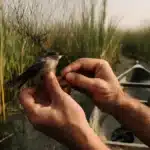
Throughout March, the LP0 is orchestrating hundreds of events to mark the 30th anniversary of the “Nights of the Owl,” providing a perfect opportunity to learn about these nocturnal birds of prey that were once widely disliked.
### Discovering Nocturnal Birds of Prey
During the entire month of March, you might hear the chilling screech of a barn owl, the whistle of a scops owl, or the hoot of a tawny owl during special events organized by the Bird Protection League (LPO) and its partner associations. Celebrating its thirtieth anniversary, this naturalistic operation aims to raise public awareness about these still-misunderstood species, explains ornithologist Jérémy Dupuy from the LPO.
Historically, these nocturnal raptors were considered omens of bad luck. People used to nail them to barn doors to ward off evil spirits—a barbaric practice that has ceased since these animals became protected. “They have been covered by several protective laws established in the 1970s. Since then, destruction has slowed, and those who used to poach have stopped,” continues Jérémy Dupuy.
Why the 12-5-30 Incline Walking Method Is the Ultimate Fat-Burning Workout, According to Fitness Experts
The ultimate trick to banish mold from your bathroom grout in just 7 minutes—no vinegar or baking soda needed
### Population Studies and Conservation Efforts
Some species have even expanded their territories, as shown by the first comprehensive population estimate of nocturnal raptors conducted by the LPO from 2015 to 2018. This survey was assisted by 1,200 volunteers who counted breeding pairs among the nine species of nocturnal raptors living in France: the tawny owl, little owl, barn owl, marsh owl, Eurasian eagle-owl, long-eared owl, scops owl, pygmy owl, and boreal owl.
The latter two were studied through the Mountain Little Owls network, co-managed by the LPO and the National Forestry Office. Only the populations of the Eurasian eagle-owl and the marsh owl were more challenging to assess due to a lack of data.
The outcome of this extensive study relieved ornithologists: most species are doing fairly well. The tawny owl, most common in France, boasts 260,800 breeding pairs, a rising number. However, it is becoming rare in large agricultural areas where forested masses have disappeared, as well as on the Mediterranean coast.
The little owl, classified as of ‘least concern’ by the International Union for Conservation of Nature (IUCN), now has 101,300 breeding pairs and has repopulated some areas where it had previously vanished. “Over the past decade, it has been colonizing the Pyrenees, but we do not know why,” says Jérémy Dupuy.
However, other species remain threatened, such as the boreal owl, which lives in high-altitude forests and has a declining population of 1,000 to 3,000 pairs, threatened by climate change which leads to the loss of their forests. “I fear that the Tengmalm’s owls may be doomed to disappear from the mountain ranges of southern France,” laments Jérémy Dupuy.
The barn owl, also known as the white lady, has an estimated 87,700 breeding pairs, also in decline. Recognizable by its cream-colored heart-shaped face, it nests in bell towers or attic rafters. However, with building renovations, many of these sites are now inaccessible. This has led the LPO to launch an operation to install 3,000 nesting boxes across 60 departments, providing new breeding sites for these birds.
### Ongoing Threats and Conservation Strategies
The promising results of this study should not obscure the ongoing threats facing these nocturnal raptors, such as the disappearance of hedgerows and grass strips, as well as their prey—mice, rats, voles—often considered pests by agriculture. “It is up to us to do everything we can to protect these fascinating birds, which are essential for the proper functioning of ecosystems,” concludes Allain Bougrain Dubourg, president of the LPO.
### Stay Informed
Subscribe to Decatur Metro’s newsletter to receive daily updates on ecological news directly to your email.
Similar Posts
- Mountain Owls Mystery Unveiled: Tracking the Elusive Night Raptors in the Alps
- Eagle and Falcons Killed by Wind Turbines: EDF and Valeco Found Guilty
- Eagle Killed by Wind Turbines: New Law Clears Company of Blame
- Wood Pigeon Now “Vulnerable”: Legal Hunting Resumes in France Despite Conservation Status
- Miraculous Return of a Vanished Bird After Gironde Fires: A Reevaluation of Forest Management

Hi, I’m Ashley from the Decatur Metro team. I share essential information for a sustainable and responsible lifestyle.