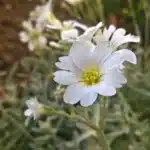
The organization Nature Reserves brings together owners of gardens, forests, and agricultural plots who are keen on converting their lands into sanctuaries for biodiversity. In doing so, they reconsider their connection with all living beings.
Labeaume (Ardèche), report
Why the 12-5-30 Incline Walking Method Is the Ultimate Fat-Burning Workout, According to Fitness Experts
The ultimate trick to banish mold from your bathroom grout in just 7 minutes—no vinegar or baking soda needed
In front of the town church in Labeaume, a quaint village by the Ardèche river, a small group is busy at work. “ There’s a lot happening here ,” mentions Nicolas Bianchin, pointing out the flourishing plants in the crevices of the limestone. “ We’ve identified about fifteen species just on this building alone ,” adds his colleague Simon Contant.
The two ecologists lead a botanical tour organized by Nature Reserves to explore the resilient plant life thriving despite urban soil conditions. With their guidance, plants are not merely considered “ invasive ,” but rather “ dynamic “ and “ interactive “ with the surrounding life, including birds, domestic animals, and humans.
Common species like wild lettuce, which often go unnoticed, are showcased by these enthusiasts. Many such plants thrive through a symbiotic relationship with humans.
Standing alone amidst concrete, the wild ancestor of our cultivated lettuce grows in spite of the lack of soil, “ thanks to this decomposed pile of wood bits, grass, hair, and dog droppings, which eventually created a nutrient-rich area it loves ,” explains Simon, as he chalks its name on the pavement so that “ people would notice it .”
“ What we can name, we can more easily protect ,” states Cassie Texier, co-founder of the association, which aims to create citizen nature reserves. Within just a year, their approach, based on learning and sharing knowledge about biodiversity, has attracted around fifty members from southern Ardèche to northern Gard.
By agreeing to a charter, landowners commit to not using chemical herbicides or planting exotic species and, through thoughtful intervention, to promote the flourishing of local plants. “ These voluntary reserves meet a need and expectation in a context where public protection policies are slow to materialize ,” explains Cassie.
Considering that 75 % of French forests are privately owned by over 3.3 million landowners, Nature Reserves deems it urgent to gain their support. “ With this urban outing, the idea is to stop systematically separating human-free wild areas from sterile urban zones ,” says Simon, a trained biologist.
Simon believes their philosophy complements that of the Association for the Protection of Wild Animals, which advocates for non-intervention. Here, hunting, foraging, and habitat restoration are not prohibited. “ It’s more about finding a balance ,” he explains, in a region heavily shaped by human activity.
Therefore, the association acts as a support system, offering management advice. “ Through its interventions, Homo sapiens has helped create environments like scrublands through pastoralism and meadows through extensive mowing, which are now areas of high biodiversity ,” Simon points out.
The mayor of Labeaume, Gérard Marron, has embraced this philosophy on 7 hectares scattered around the municipality. “ I belong to the generation that thinks untended gardens are ‘unclean,’ or that their owners are lazy,” says the mayor (diverse left). “We need to challenge these preconceptions, though it can quickly become preachy. I believe that by conveying messages, people will change their perspectives and then their actions. “
In the same spirit, the community organizes monthly ‘garden’ meetings for individuals. Pruning, grafting, planting local species… The knowledge of Jacques Chauvin, deputy mayor in charge of greening, is shared with volunteers: “ There’s been a demand since Covid, especially among the younger generations, to learn different ways of doing things, aware that if we continue to develop as we have, we will keep killing all living things. “
“ We’ve made plenty of mistakes on our land,” says Brigitte Auriacombe, owner of 3.5 hectares, watching Simon pour water on a dried-up moss that instantly regains its green color. “ For instance, I planted species of bamboo and mimosas, and we realized, thanks to the naturalists, that this was affecting other species. “
This university professor, who lives between Lyon and the neighboring village of Berrias-et-Casteljeau, appreciates the association’s non-judgmental tone. “ Everyone can move at their own pace. Plus, it’s much better to explain things to us and let us make our decisions afterward, rather than being prescriptive, which can be off-putting ,” she values.
Imagining the meticulously cared-for plots side by side, the teacher sees a certain “ power of the weak .” “ We could ultimately protect an area as large as the public sector, which is incredible ,” she remarks.
Nature Reserves hopes that landowners will eventually be convinced to commit to protecting this natural heritage in the long term by signing a real environmental obligation (ORE). This land tool, established by the 2016 Biodiversity Law, formalizes such a commitment through a notarial deed for up to ninety-nine years.
“ OREs are a way to pass on the stories, the narratives of previous owners and their connection to biodiversity. It’s a way to make future generations realize the importance of preserving it. Otherwise, it feels like we start over with each new owner. That’s a shame ,” notes Nicolas.
For her 8-hectare plot, which includes meadow, forest, and vegetable garden, Aïté Bresson is preparing to sign an ORE with Nature Reserves. “ My town is eyeing my meadow for a parking lot. It’s not about sanctifying everything, as I gladly let hikers cross my plots, but at least limiting the uses that could be made of these lands once I’m gone ,” says the woman who has lived for forty-five years in Ardèche.
By highlighting the interdependencies between humans and other forms of life, Nicolas Bianchin and Simon Contant take on the role of interspecies diplomats. Reflecting this, Simon’s response when an elderly lady asks how to get rid of the field bindweed in her garden: “ We avoid it, because there’s always a plant or a species that depends on it for life. “
Similar Posts
- Protecting Wetlands: Community Stands Against Confinement of Refugees
- Mimosa Invasion: Beloved Garden Plant Threatens Local Ecosystems
- From Dump to Biodiversity Haven: How a Landes Landfill Became a Thriving Lagoon
- Biodiversity Crisis in Île-de-France: How Climate Change is Reshaping Nature
- Grass-Free Gardens: How Landscapers are Reinventing Green Spaces Without Lawns!

Hi, I’m Ashley from the Decatur Metro team. I share essential information for a sustainable and responsible lifestyle.