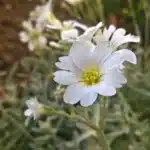
Graves adorned with living plants and biodegradable coffins characterize the eco-friendly cemetery of Ivry-sur-Seine, a sanctuary promoting biodiversity. Such initiatives have been proliferating across France in recent years.
Ivry-sur-Seine (Val-de-Marne), coverage
Why the 12-5-30 Incline Walking Method Is the Ultimate Fat-Burning Workout, According to Fitness Experts
The ultimate trick to banish mold from your bathroom grout in just 7 minutes—no vinegar or baking soda needed
« It almost feels like we’re in a garden », comments Anne, a retiree. Yet, she is walking through the natural cemetery of Ivry-sur-Seine (Val-de-Marne). Unlike traditional cemeteries, there are no marble headstones or decorative floral arrangements here. Instead, graves are simply covered with soil that supports the growth of various flowers and plants.
At the far end of the cemetery lies the ecological section, secluded behind hedges. It stands in stark contrast to the typical grey granite and marble graves. « The first time I saw it, I didn’t realize what it was », Anne recalls.
In this area, the oldest graves blend seamlessly with the surroundings: « You could almost walk over them by mistake. » There are no clearly marked paths weaving through the gravesites, just wooden stelae indicating the presence of around sixty burials.
This 1,560 m2 section, opened in 2019, exudes a sense of peace. The background is filled with the sounds of birds singing and the rustling of the wind. Insects buzz around the tulips and daffodils growing on the graves.
Wild grasses dotted with daisies and dandelions grow freely. In spring, leaves clothe the bushes, and life is palpable everywhere in this serene retreat. It makes one almost forget the nearby road, the hustle of the city, and the surrounding apartment blocks. « Stone and marble graves make death feel impersonal, cold. Here, it feels natural instead », Anne observes.
In a natural cemetery, the deceased are buried directly in the earth, in a biodegradable coffin made of untreated wood or cardboard from sustainable sources. The bodies are laid directly into the excavated ground without (or with minimal) embalming.
Typically, the deceased are clothed in natural fibers like linen or hemp, and the graves are covered with local, drought-resistant plantings. These specifications are detailed in a guidelines document available at the cemetery’s office.
While regulations may differ from one municipality to another, the goal remains the same: to make cemeteries greener and reduce the environmental impact of burials. According to a study published in 2024, a traditional burial emits about 620 kg of CO2.
Another source cites an even higher figure of 833 kg, equivalent to a 4,000 km car journey.
There’s also the issue of soil pollution from chemical embalming fluids or the microplastics found in traditional coffins and clothing.
Beyond being more environmentally friendly, burials in natural cemeteries also tend to be less expensive. In Ivry, a ten-year lease in the ecological section costs 343 euros, compared to 440 euros in the traditional part. There’s also no need to pay for a stone monument, which can often cost thousands of euros.
« Even in death, we still pollute », sighs Maxime, a student who visited the ecological section of Ivry-sur-Seine after hearing a radio report, « out of curiosity ». He hopes to leave the smallest possible environmental footprint after his death. « I didn’t expect to find this place so beautiful and full of life. It’s comforting to imagine spending eternity here ».
France’s first natural cemetery was established in 2014 in Niort (Deux-Sèvres), in the Souché district. For Amanda Clot, the cemetery manager, it represents « much more than a burial site. It’s a haven for biodiversity, a cool oasis, a place for strolls. In spring, it’s very colorful. In summer, people come to pick cherries, apricots, and peaches from the fruit trees we’ve planted ».
The concept of a natural cemetery is still relatively unknown. Today, only about ten exist in France. In Ivry-sur-Seine, only 61 plots have been sold since 2019 out of 157 available, while the necropolis includes 48,000 concessions. Few visitors make their way to the ecological section. « I’ve never heard of it », says Milan, who has been voluntarily feeding the cemetery’s cats for over ten years.
« Death is a taboo subject. Deviating from tradition scares people », mentions Stephen Charlieu, deputy mayor of Neauphle-le-Château (Yvelines), where a natural cemetery was opened in January. Although no burials have yet occurred there, the official is not worried: « There are about five deaths per year » in the town, and several residents « have shown interest in this new burial site by coming to inquire ».
According to Amanda Clot, it’s crucial to « demonstrate that alternative burial sites are viable, in order to change perceptions of cemeteries ». She is pleased that new municipalities, like Ivry-sur-Seine, are seeking her advice.
« In a traditional cemetery, the goal is to keep the body intact as long as possible, to fight against death. It’s as if we’re trying to touch eternity », the manager continues. In addition to preserving biodiversity, natural cemeteries help to accept that human lives are also part of a cycle.
Receive daily, free of charge, all the news about ecology directly in your mailbox.
Subscribe
Similar Posts
- Discover London’s “Magnificent Seven”: How 19th Century Cemeteries Turned Into Biodiversity Hotspots
- Thousands of Succulents Uprooted from Desert: The Dark Side of Home Decor
- Biodiversity Threatened by Budget Cuts: Essential Ecosystems at Risk!
- Revolutionizing Stonework: How Fashion Expertise Influences April Graves’ Unique Approach
- Breaking News: Anne Burrell’s Final Season of Worst Cooks in America Premieres on Food Network

Hi, I’m Ashley from the Decatur Metro team. I share essential information for a sustainable and responsible lifestyle.