In Gironde, the 2022 wildfires devastated the extensive plantations of maritime pines. This change has facilitated the return of a heritage bird species, the Eurasian curlew. Its reappearance raises questions about the management of the region’s forested areas.
Belin-Béliet (Gironde), report
Why the 12-5-30 Incline Walking Method Is the Ultimate Fat-Burning Workout, According to Fitness Experts
The ultimate trick to banish mold from your bathroom grout in just 7 minutes—no vinegar or baking soda needed
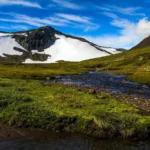
Dawn is just breaking. Fern sprouts stretch along the edges of a seemingly endless white track. For those familiar with the forest, the view now extends unusually far across these now bare moors, littered with the charred trunks of maritime pines, the remnants of the 2022 fires that scorched 32,000 hectares of the forest.
The cleared landscape has proven beneficial for the Eurasian curlew, a wading bird with a long bill, known to inhabit wetlands and coastal areas, and can live up to 30 years. In the Landes plateau, this heritage species had dwindled as its habitat was drained and replanted with pines over a century and a half ago.
Across the 7,400 hectares of forested parcels burned around Belin-Béliet in southern Gironde, the Eurasian curlew had not been seen for several decades. Last year, during a survey on post-fire biodiversity recovery, an employee from the Ligue pour la protection des oiseaux (LPO) Aquitaine unexpectedly spotted three individuals of the species. “We weren’t specifically looking for them,” explains Nicolas Mokuenko, a biodiversity officer at LPO Aquitaine. “This year, the organization has refocused its observation efforts on the curlew in the burned areas.“
“It seems that in the past, in the heath, you could hear it everywhere. The locals even used to make Easter omelets with its eggs,” continues the naturalist, pausing attentively. For twenty minutes, the 31-year-old tries to hear its call and spot it. His telescope is aimed towards a plowed parcel bordered by wet heathlands with purple moor-grass, a plant typical of humid, open environments that grows in clumps. A week earlier, a pair had been observed feeding there.
In the Landes de Gascogne, the breeding population of the Eurasian curlew was estimated at “fewer than twenty pairs” before the fires, according to the naturalist. Overall, the status of the species’ populations is not satisfactory. In France, the initial breeding range of the species stretches from Alsace to Gers, including, among others, the Saône basin, the Loire Valley, Aisne, Ardennes, and Brittany. Across Europe, its numbers have halved since 1980, according to LPO.
The sun rises behind the treetops. While waiting for a sign from the curlews, Nicolas Mokuenko notes everything he hears: larks and field swallows, meadow pipits. A volunteer at LPO since he was 13, he knows nearly 300 bird songs.
The naturalist eventually initiates a playback, a recorded call of the animal meant to elicit a response. The very territorial bird makes itself heard, its sound barely distinguishable from the wind. “It responded, but it was faint. I’m not sure where it came from,” concludes Nicolas Mokuenko.
Locating the nest is crucial: LPO must protect it with an electric fence. It could be destroyed by agricultural work or fall prey to foxes. Suddenly, a more distinct call. The naturalist is at his telescope. “I see it!” We observe it for five minutes, its long beak searching for food, before we lose sight of it in the sky.
The listening points continue throughout the morning. Standing still amid these wet heaths dotted with purple moor-grass, one can imagine the Landes shepherds on their wooden stilts, an essential tool in these once very marshy areas.
The Eurasian curlew adapts perfectly to this environment. Several dozen hectares of open expanses are enough for it to settle during the breeding season. It hides its nest in the clumps of the moor-grass heath and finds worms, crickets, and grasshoppers in the bare soil. “The arrival of the couples is at the end of March, and the young fly off at the beginning of July to wintering areas on the coasts,” continues Nicolas Mokuenko, driving an all-terrain vehicle along a sandy track. This seasonality would allow the timing of forest soil maintenance to be adjusted.
At the fourth listening point, after a playback of its call, another Eurasian curlew is heard. This is a first for this site. Three individuals have been contacted this year, as last year. The return of this bird—and other heritage species of the wet heaths, such as the Dartford warbler, the sedge warbler, and the tawny pipit—inevitably raises questions about forest management. We pass parcels sometimes replanted just two years after the fires. The forest must remain productive; there can be no downtime.
As it stands, the opportunities for returning to nest on these parcels will diminish year by year. “We will see how the species copes with the replanting,” remarks Nicolas Mokuenko, not optimistic, as he already has no contact with the species in many potentially favorable parcels. “It’s normal that we don’t see many, it’s a fragile species.“
In 1949, massive fires had previously allowed the return of the Eurasian curlew, documented by naturalists. Then, the forest had regained its productive function, quickly closing the habitats of the species. In the region, 92% of the forest is private and belongs to nearly 59,000 forestry owners, involved in the forest-wood sector. Economically, the industry is significant, with an annual turnover of nearly 3 billion euros.
The Regional Natural Park (PNR) of the Landes de Gascogne has initiated discussions with a dozen foresters about evolving forestry practices to allow heritage biodiversity to reestablish itself on the plateau. “Not draining the soils too much, reintroducing deciduous trees at the edges of parcels, having different age classes of trees in the parcels“, lists Nicolas Mokuenko. “It even seems that the curlew could cope with some clear-cutting because we see it feeding in parcels of bare soil. It just needs wet moor-grass heaths to nest and no degradation of the nest.“
“We could perpetuate wet heaths, which disappeared when the Landes plateau was drained, with Natura 2000 areas or sensitive natural reserves“, suggests William Caudron, forest and biodiversity officer at the PNR of the Landes de Gascogne. “These spaces would also be multi-use, as opening up the environment is also a tool for anti-fire propagation“, he adds.
Bernard Rablade owns 90 hectares of cultivated forest parcels, a third of which were decimated by the 2022 fires. The fire stopped 200 meters from his house. As he did in 1999 and 2009 after the major storms Martin and Klaus, he plans to reforest. Without any changes.
“The curlew has always been here, but right now, we see it more than usual. We’re talking about 30,000 hectares burned, that’s a nice open space. But even when you do a clear-cut of three, four, or ten hectares, it comes back“, he asserts. The forester is ready to delay forestry work according to the nesting period, but does not see himself preserving wet moor-grass heaths.
“Seasons pass, species arrive. In our maritime pine forests, biodiversity is always present. Today there are Eurasian curlews around me. In fifteen years, there will be new species“, argues the forester, contrary to the findings and recommendations of scientific research.
“All these open environments, that’s where there’s the most biodiversity. The work of Inrae [National Institute for Agricultural, Food, and Environmental Research] shows this. It also brings biodiversity to the neighboring forest parcel, so we have less impact from pests, insects, fungi“, explains William Caudron.
At the last listening point, Nicolas Mokuenko pauses. Facing the windshield of the car, the bare heaths have just been plowed. “Last time I came here, it was beautiful moor-grass heath“, he notes, resigned. “I don’t see how we could have a curlew here.“
Receive daily, free of charge, all the ecological news in your mailbox.
Subscribe
Similar Posts
- Gironde’s 2022 Fire Aftermath: Witnessing Nature’s Remarkable Resilience
- Fontainebleau Fires: What Future Awaits This Cathedral of Life After the Flames?
- Mountain Owls Mystery Unveiled: Tracking the Elusive Night Raptors in the Alps
- From Dump to Biodiversity Haven: How a Landes Landfill Became a Thriving Lagoon
- Pine Trees: Nature’s Own Matchbox Unveiled

Hi, I’m Ashley from the Decatur Metro team. I share essential information for a sustainable and responsible lifestyle.