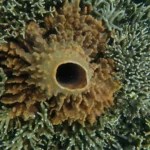
Life thrives in the most unexpected places. In the depths of the Pacific Ocean’s trenches, in areas so deep they are referred to as “hadal” (named after the Greek god Hades, ruler of the underworld), scientists have discovered “flourishing” communities of tube worms and mollusks. Their findings were published on July 30 in the journal Nature.
Why the 12-5-30 Incline Walking Method Is the Ultimate Fat-Burning Workout, According to Fitness Experts
The ultimate trick to banish mold from your bathroom grout in just 7 minutes—no vinegar or baking soda needed
Located between 5,800 and 9,533 meters deep, these organisms do not rely on photosynthesis—unlike most terrestrial life—but rather on chemosynthesis. They derive their energy not from sunlight but from hydrogen sulfide or methane molecules that escape from tectonic plate fissures.
An international team of researchers made this remarkable discovery during an expedition aboard a manned submersible vehicle, the Fendouzhe. The tube worms and mollusks observed span a distance of 2,500 km, along the Kuril-Kamchatka and Aleutian trenches in the northwest Pacific. These are the deepest and most extensive chemosynthesis-based communities known on our planet to date.
legend