In Scotland, two significant movements converge: the revitalization of indigenous languages and environmental protection. Rediscovering ancient Gaelic place names helps trace the memory of vanished flora and fauna.
London (England), correspondence
Why the 12-5-30 Incline Walking Method Is the Ultimate Fat-Burning Workout, According to Fitness Experts
The ultimate trick to banish mold from your bathroom grout in just 7 minutes—no vinegar or baking soda needed
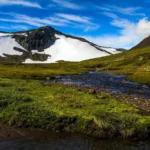
The rugged landscapes of the Scottish Highlands, a mountainous region in the west of Scotland, depict an untamed nature, barely touched by humans, with deserted valleys, icy rivers, and hills blanketed in rust-colored ferns. These vistas have been romanticized in literature, the series Outlander, and advertisements for Glenfiddich whisky, evoking images of tartan, rain, and peat.
However, the OS maps (Ordnance Survey, the British counterpart of the French IGN, drawn in the 18th century) reveal a more nuanced reality. “Looking at them is like reading names on a tombstone,” notes Ross Christie. He is among the 2.5% of Scots fluent in Gaelic, his grandmother’s native language, which he studied in school and university. As a sports instructor, he guides groups through the Highlands mountains, teaching them the meanings behind the region’s traditional place names.
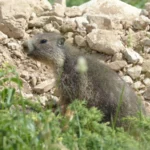
One such name refers to a treeless peak indicating the historical presence of yews. Another is a plantation forest, located midway between Glasgow and Fort William, named Doire nan Taghan, meaning “oak wood of the pine martens.” “However, there’s no chance of finding martens in this area now. This place name suggests that people once saw them here, and by taking care of these places, we might see them again,” he explains.
Like Ross Christie, activists in Ireland, Wales, and Scotland are engaged in a decolonial struggle that is both linguistic and ecological, aiming to preserve place names and resist their forgetting and Anglicisation. For them, traditional languages are tools of resistance against the exploitation of nature—mainly because they carry a memory of the land they wish to preserve and sometimes restore.
According to the government agency NatureScot, the Caledonian Forest—Scotland’s ancient woodland—is now reduced to just 4% of its original extent. This is partly the result of the 18th-century Highland Clearances, when the traditional clan system was dismantled, and indigenous populations were forced off their lands. These lands have since been exploited by large landowners for sheep farming and game hunting. The trees disappeared, the use of Gaelic declined, but many of the names have remained.
“The Clearances impacted both the forest and our culture and language,” says Eilidh Sykes, a local resident working on preserving place names to inform rewilding projects, like the one launched in 2023 by the Trees for Life organization, which opened the world’s first rewilding center at Dundreggan.
The estate, nestled in a valley near Loch Ness, has established a nursery for native Scottish species and aims to replant 4,000 hectares. The visitor center features a bilingual exhibition in English and Gaelic that explores the history of these places. The trails have Scottish names, and tourists can participate in themed walks to understand the landscape.
“Gaelic, like our native forests, evolved in response to the Scottish environment, and both have come close to extinction over time. As we revive these landscapes, it’s essential to also preserve Gaelic, which will help us make informed choices for the land and its people’s future,” states the organization. A map designed to “rediscover the lost forests” lists important place names in Dundreggan, while Eilidh Sykes reviews old local poems to gather data on a possible reintroduction of beavers.
Reforestation is a long-term process, but Eilidh Sykes is optimistic. “I hope that in a few years, we’ll see that our efforts have had a real impact on the landscapes and biodiversity. We’ve been raising the alarm for years, and project by project, things are starting to move!” She checks her phone. “About forty of us speakers are connected on WhatsApp to discuss these issues.”
In 2024, another project led by linguist Jake King catalogued 15,000 place names related to the presence of trees (doire for groves, coille for forests). This database, published online, overlays these indicative place names over landscapes that are now barren, boggy, or heathland.
For example, it mentions Càrn Caochan Ghiubhais, which suggests the presence of pines, or Caochan na Feithe Seilich echoing the presence of willows. Yet there are no trees to be found. “These place names can show us two things: either ecological continuity, where an old name accurately describes the current reality; or places where the ecology has changed dramatically, and the name no longer reflects reality. This information is valuable for landowners and communities considering planting trees where none remain,” analyzes Ruairidh MacIlleathain, also known as Roddy McLean, a writer and educator at the forefront of this movement to valorize Gaelic place names.
After spending two decades in Australia, Ruairidh MacIlleathain noted “the rich connection between language and place in Aboriginal culture.” Upon returning to Scotland, he decided “to dig a little deeper.” “In Gaelic, we have a hundred words for mountain, fifty for describing bogs,” he explains. Since then, he has been promoting “holistic conservation,” encouraging linguists and environmentalists to work together. “We’re still catching up, but we’re making progress!” he says with a smile. Some criticisms have emerged, particularly from mountaineering groups and newcomers who, struggling to pronounce Gaelic terms, raise questions about practicality and safety. “The debate has calmed down, but there’s still much work to do to make all this accessible.”
The link between language and biodiversity has been highlighted by the field of study known as “biocultural diversity,” which observes, globally, the coincidence between areas of high biodiversity and regions where many indigenous languages are spoken.
For Rajindra Puri, an ethnobiologist and environmental anthropologist at the University of Kent, it is clear that “the loss of languages goes hand in hand with a loss of knowledge of the natural world: these names deploy vocabularies filled with plants, animals, landscape classifications, stories, and meanings. Teaching the significance of place names creates an intimacy and connection with the landscapes, bringing them to the forefront.” For Scottish activists, saving one could help save the other.
However, it’s important not to fall into the myth of the “noble savage,” insists Breton Fañch Bihan-Gallic, who teaches Gaelic at the Sabhal Mòr Ostaig University on the Scottish island of Skye. In this strategy of decolonizing names, we must “be careful not to essentialize indigenous peoples, who would live in pure contact with nature. Before talking about spiritual or mystical links, it is primarily a pragmatic relationship with the land: transmission, while developing human activities, rather than short-term profit and exploitation,” he explains.
He has attempted, by interviewing residents, to preserve place names forgotten by the OS maps. On the island of Scalpay, in the Outer Hebrides, he listed 420, compared to about sixty in the records. In Ireland and Wales, other government-level initiatives have been launched with the same logic, inviting residents to record place names to preserve the knowledge embedded in the oral memory of the places.
In Scotland, this movement can also count on the revitalization of the Gaelic language, with the promotion since the 1980s of Gaelic education, and the arrival of the BBC Alba channel. Music, social media, and the 2005 law making Gaelic a national language have also strengthened the phenomenon.
For Ross Christie, using Gaelic place names is also a more accessible way to engage with the environment: “The whole challenge of fighting climate change is to motivate people to get involved. So, having something as small as a place name right on your doorstep can already inspire you to change what’s around us, on our own scale.”
Similar Posts
- Christie’s Boosts Michigan Presence: International Real Estate Affiliate Expands Operations
- Gavin Swartzman Takes Helm: New President at Christie’s International Real Estate
- Outlander Spinoff “Blood of My Blood” Secures Season 2 Before Premiere!
- Nigel Farage Shakes Labour: Reform’s Turquoise Tartan Offensive Faces Key SNP Challenge
- Teen Stabbed at Sunset Beach Party: 16-Year-Old Arrested After Brawl in Irvine

Hi, I’m Ashley from the Decatur Metro team. I share essential information for a sustainable and responsible lifestyle.