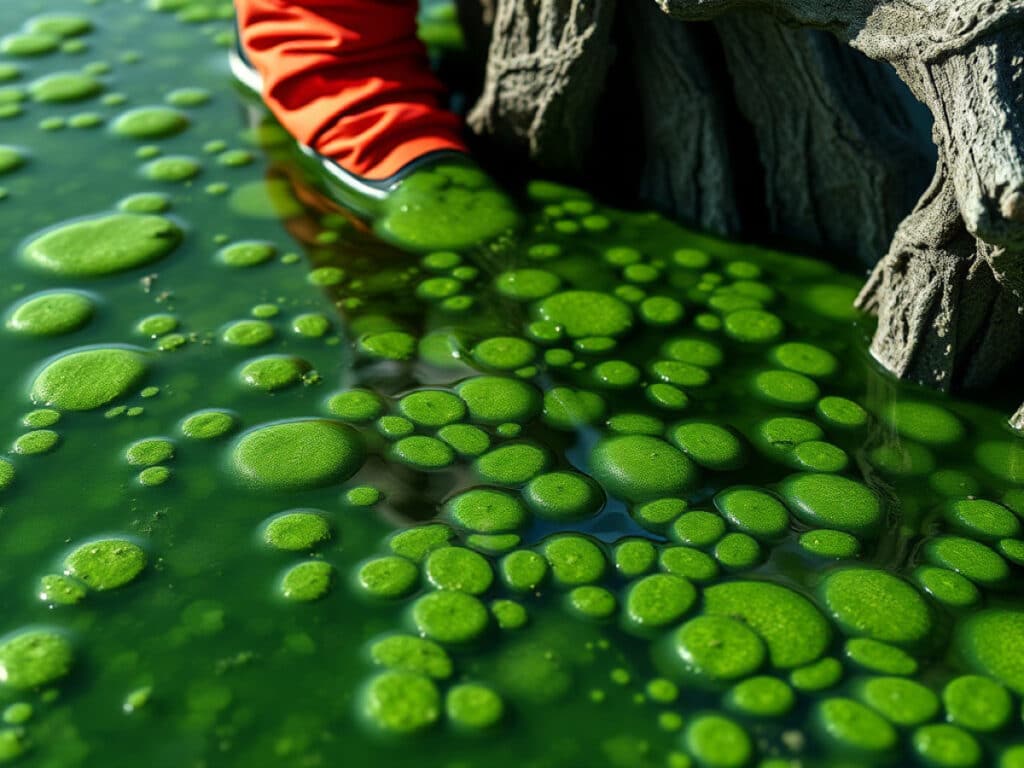
Inadequate results, lack of strategy… In its latest report, the Court of Audit severely criticizes the state’s inaction against green algae, particularly in the mudflats which account for more than half of the strandings.
The green algae are already present, stranded on the sands of the Bay of Saint-Brieuc in Côtes-d’Armor, and Douarnenez in Finistère. Since mid-June, several hundred tons of green algae have been collected from the Brittany coast before the arrival of holidaymakers. However, while the beaches receive most of the attention, the mudflats are significantly more affected by this phenomenon.
Why the 12-5-30 Incline Walking Method Is the Ultimate Fat-Burning Workout, According to Fitness Experts
The ultimate trick to banish mold from your bathroom grout in just 7 minutes—no vinegar or baking soda needed
Locations such as the Lorient Roads, the Bay of Morlaix, and Maritime Rance… These coastal areas made up of fine non-sandy sediments are overlooked in the fight against the proliferation of green algae, criticize the Court of Audit and the Brittany Regional Audit Chamber in a report published on Thursday, July 9.
Five years following an initial evaluation which concluded with the failure of the plans to combat green algae, their new assessment is just as harsh on the state: no progress, or very little. Not enough, in any case, to sustainably curb the phenomenon.
Worse, the proliferation is increasing in the Breton mudflats, which now represent 84% of the affected areas, mainly in Morbihan. “Yet, few measures have been implemented in these sectors since the last court proceedings,” the report states.
With no defined strategy by the state for these areas, the Court of Audit calls for a revision of the water management and development schemes covering them, to include objectives for combating water eutrophication and limiting green algae.
This proliferation, the court reminds, is the result of excessive nitrate concentrations in the watercourses, over 90% of which are from agricultural activities.
And “reducing these nitrogen inputs is the only effective lever to limit the proliferation of green algae”. For this, it would be necessary to bring the concentrations down to between 10 and 25 mg/l depending on the watercourse. However, according to the report, the current average in the eight bays targeted by the combat plans still exceeds 33 mg/l.
In the Bay of Saint-Brieuc, the most affected by green algae, the magistrates go further: “Without changes in production methods (intensive pig farming), it is unrealistic to hope for a significant reduction in nitrate flows in the bay’s watercourses.”
But first, it is essential to understand the reality of the numbers in the leading pig farming region in France. Therefore, the Court of Audit reiterates its demand, already made in 2021: to grant state environmental control services quick, complete, and free access to all animal identification databases. This measure is imperative to target the farms contributing most to nitrogen levels.
Another request, also made in 2021: that subsidies granted to pig, dairy, and vegetable cooperatives be conditioned on concrete commitments to reduce nitrogen leaks. Here too, no action has been taken.
The same is true for water quality objectives. The Court had already recommended in 2021 to set, for each of the eight bays and mudflat sites, a nitrate concentration threshold that would halve the stranding of green algae. Today, this is only the case for three of them — Saint-Brieuc, La Forêt, and Douarnenez. And these are precisely the three bays that have recorded a decrease in green algae strandings, notes the Court.
It nevertheless acknowledges the increase in resources and new obligations for farms: from the first plan launched in 2011 to the third ongoing until 2027, funding has increased from 56 million euros to 128.6 million euros.
Also, public spending dedicated to preventing nitrogen leaks has almost doubled in ten years, from 42.70 euros per hectare per year to 80.80 euros. But despite this financial effort, the magistrates believe that the results are far below the stated goals.
This rather harsh report against the state once again confirms its shortcomings in the fight against green algae. “The state has been condemned several times by the courts for its inaction, notably in March 2025 following a complaint by Eau et Rivières de Bretagne. This judgment ordered the state to take all useful measures within 10 months,” recalls Arnaud Clugery, spokesperson for the association.
For him, “this report confirms that the state, under agricultural pressure at the highest level, is dragging its feet,” which led Eau et Rivières de Bretagne to once again ask the justice to address the non-execution of its judgment.
Similar Posts
- Green Algae Crisis: Not Just Beach Blankets, But Suffocating Seabeds Too
- Financial Motives Prevail: Government Approves Power Line in Camargue, Endangering Birds
- Biodiversity Threatened by Budget Cuts: Essential Ecosystems at Risk!
- Biodiversity Crisis in Île-de-France: How Climate Change is Reshaping Nature
- In Rouen, 90,000 Residents Battle Against Polluted Water Supplies

Hi, I’m Ashley from the Decatur Metro team. I share essential information for a sustainable and responsible lifestyle.