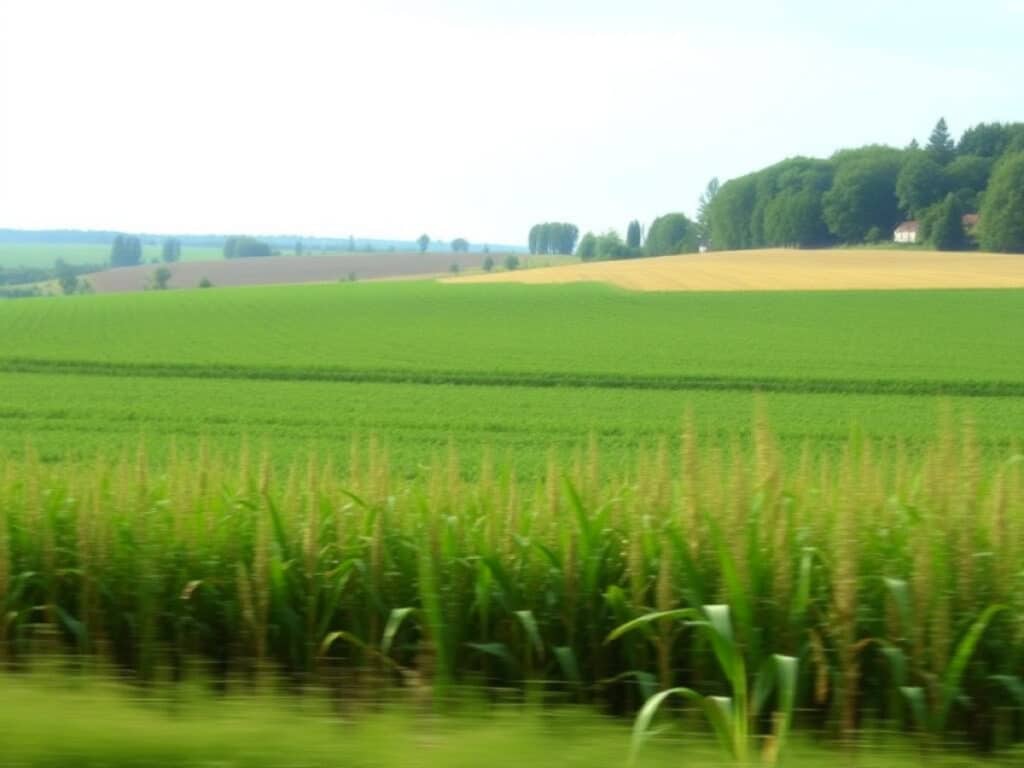
In Val-d’Oise, numerous orchards are being uprooted and replaced with cereal crops. This change is leading to a reduction in habitat diversity, which is essential for wildlife.
Ézanville (Val-d’Oise), report
Why the 12-5-30 Incline Walking Method Is the Ultimate Fat-Burning Workout, According to Fitness Experts
The ultimate trick to banish mold from your bathroom grout in just 7 minutes—no vinegar or baking soda needed
From the window of the train crossing north of Paris, the landscape unfolds. Beyond Sarcelles, urban areas give way to vast golden wheat fields interspersed with green patches. We meet Benoît Huet, a representative from the France Nature Environment Val-d’Oise association, at the Écouen-Ézanville station. Just a few steps away, at a level crossing, he points out the agricultural landscape on the other side of the tracks, towards Saint-Brice-sous-Forêt. One can see large cultivated areas bordered by a hedge, a few solitary trees, and the distant forest. “Previously, where the maize field is now, there was an orchard abandoned for about thirty years. It was surrounded by trees, including oaks that were 20 meters tall. This area had become a refuge for animals, but it was cleared six years ago,” he describes.
Pointing to two plots on either side, he continues: “These maize fields have also replaced two working orchards that were uprooted less than two years ago.” A path, once popular with walkers, has now disappeared. “These three orchards covered more than 4 hectares. Other smaller orchards were removed in the same area, which is ecologically significant as it connects Montmorency forest with the Écouen forest.”
In recent years, residents have noticed that many orchards have been cleared. In Ézanville, Catherine Burton, a local resident, takes us along a path adjacent to maize fields. She points out a few trees standing out against the horizon: “Between these trees, there was an abandoned orchard that was uprooted last year. It was a place where I often walked. I used to watch the birds: finches, little partridges, yellow buntings… They’re gone now. Today, we only hear a lark singing, whereas before, they were plentiful. It’s the silent countryside.”
According to the cadastral data she shows us, nearly 12 hectares of orchards have been removed in the municipality of Ézanville within a year. Nearby, she points out another wheat field, situated higher up, which replaced an old orchard: “When the orchard was planted, there were major floods in Ézanville, and the runoff would flow down to my house. The fact that it has been replaced by a field is likely to worsen the situation,” she laments.
She highlights the silence of Ézanville’s mayor, the deputy, and the departmental services, whom she has contacted. When approached by Decatur Metro, the mayor of Ézanville did not respond to our inquiries.
“Many bird species are dependent on agricultural environments and could be found in orchards at various times of the year,” says Patrick Da Silva, a representative from the Bird Protection League (LPO) Val-d’Oise. “Previously, these species found a mosaic of biotopes conducive to their survival, but intensive agriculture has eroded these environments. Year after year, our local LPO group has observed the decline of the little owl.”
With about 400 hectares of orchards, Val-d’Oise is one of the primary orchard regions in Île-de-France. However, like the rest of the region, the sector is weakening. Philippe Plaideau, president of the Les Vergers d’Île-de-France group, contacted by phone, speaks of “a general exasperation,” with increasingly restrictive legislation, difficulties in finding labor, and heavy administrative burdens. Indeed, when an orchard owner retires, successors are rare.
To the east of Écouen, Benoît Huet shows us an orchard no longer in use, along a wide asphalt road recently built for cycling to Le Mesnil-Aubry. We spot a kestrel perched atop an apple tree. The protective nets are torn in places, and grass has grown between the trees, signs that the orchard is no longer maintained.
With the disappearance of orchards, an entire landscape heritage vanishes along with a broad range of refuges for wildlife. “Orchards contribute to the diversity of crops at the territorial level. If they are replaced by large cereal fields, there are no trees, nor grass and flowers for the bees. Biodiversity is impoverished,” explains Valentin Verret, an agronomist at Agrof’ile, an association that promotes agroforestry and living soils in Île-de-France.
He refers to a 2022 study by Inrae. In comparing various agricultural practices, Aude Vialatte and her colleagues demonstrated that diversifying crops supports biodiversity and enhances the resilience of crops to climatic variations.
“Having diversity in agricultural environments allows for numerous ecological niches and supports a greater variety of species, which act as agricultural auxiliaries (pollinators, pest predators, and soil engineers) or benefit them,” adds Olivier Renault, an ecologist at the Île-de-France regional biodiversity agency. Trees also present benefits: “Trees create a microclimate, enrich the soils, and serve as windbreaks. In the event of heavy rainfall, they regulate water flows and act as a barrier to runoff.”
However, orchard farming remains highly vulnerable, notes Valentin Verret: “It seems that orchardists are no longer able to achieve normal harvests with the heatwaves, hail, droughts… Each year brings despair. Protecting orchards from climatic variations is becoming economically challenging.”
In Val-d’Oise, near Écouen, some local initiatives are preserving orchards. Across Montmorency forest, the municipality of Saint-Prix has designated its orchards as sensitive natural areas of local interest. Here, residents themselves pick apples from the communal orchard during participatory harvests.
In Ézanville, we visit orchards that were purchased by Plaine de vie, an association that facilitates integration through organic market gardening. “The primary idea is integration through the production of organic vegetables and the maintenance of green spaces,” explains Claude Robert, the association’s president. “We had been looking for premises for a long time and found this farm for sale. We started producing apples and some pears in organic conversion on this plot in 2024.”
Pierre Rigault, the former orchard owner, assists the association. He shows us various apple varieties: belchard, gala, fuji, ambassy, akane… Harvested, they will be offered to members along with vegetable baskets, and some will be processed into apple juice or jelly.
“Last year, we produced 25 tons of apples. We are approaching neighboring municipalities to supply leisure centers and schools,” comments Claude Robert, who notes that, for now, despite requests, the association lacks the staff and financial guarantees to acquire more orchards.
Similar Posts
- Breaking News: Chestnut Trees Not Doomed, Contrary to ONF Claims!
- Mighty Beetle Halts Highway Construction: How a Tiny Insect Challenged Engineers!
- The surprising reason gardeners swear by painting tree trunks white
- Government Halts Hedge Revival Plans: Environmental Efforts Cut Short
- Chainsaw Horror: Residents Furious as Beloved Trees Are Uprooted

Hi, I’m Ashley from the Decatur Metro team. I share essential information for a sustainable and responsible lifestyle.