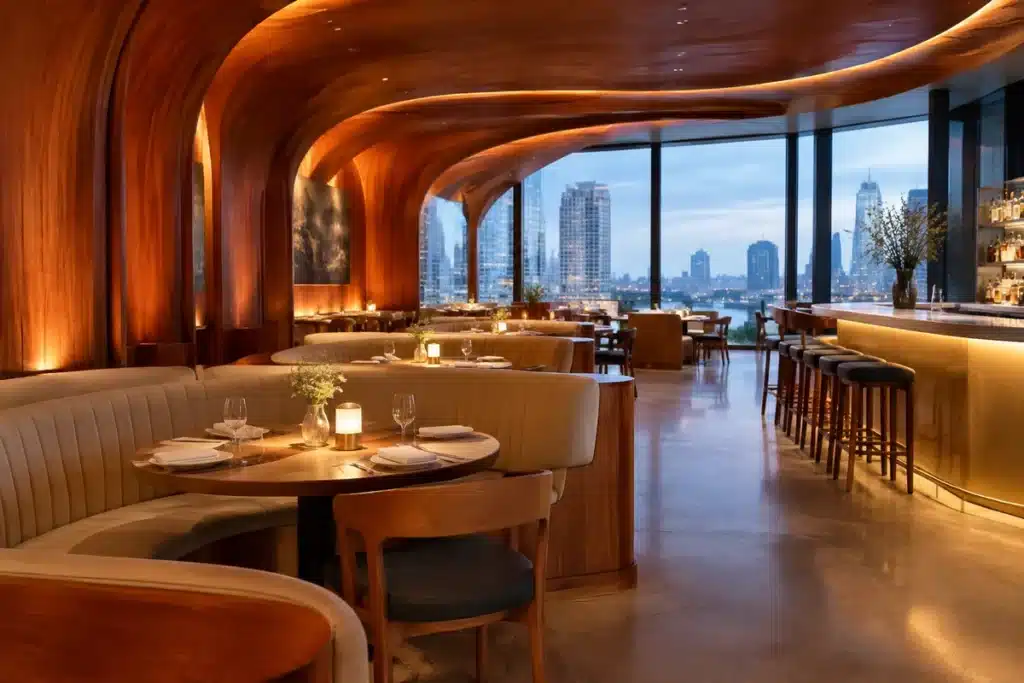
Creating a restaurant for filmmaker George Lucas might seem like a chance to bring his well-known movie worlds to life. Yet when designer David Rockwell and his team set out to create Skywalker Grill, the main restaurant at the Lucas Museum of Narrative Art in Los Angeles, their inspiration came from somewhere else.
Why a Simple Mistake in Your Online Pension Application Could Cost You Your Retirement Benefits
The ultimate trick to banish mold from your bathroom grout in just 7 minutes—no vinegar or baking soda needed
Instead of drawing on Star Wars or Lucas’s other films, the design looked to Skywalker Ranch, his creative refuge in Northern California. Lucas and his wife, Mellody Hobson, wanted the restaurant to feel comfortable, intimate, and inviting—an intentional counterpoint to the museum’s futuristic building, designed by Ma Yansong of MAD Architects.
On the newest episode of Once Upon a Project, Rockwell talks with host AJ Paron about how the idea developed. Their discussion covers the inventive construction methods used to shape the restaurant’s sculptural wood interior, as well as the choices that connect the space to the museum around it.
“They wanted to start the conversation around warmth and the kind of warmth of Skywalker Ranch in many facets, not only material palette but also custom furniture,” Rockwell says.
The resulting interior brings together deep-toned cherry wood, rounded banquettes, made-to-order furniture, and discreetly incorporated lighting. A standout element is a flowing wooden enclosure that extends across the ceiling and down the walls, giving the dining room a sheltered, almost nest-like feel. As Rockwell notes, the space contains no right angles.

Creating the smooth, continuous effect required substantial work behind the scenes. The team made each cherry panel individually, combining established woodworking practices with technology-assisted methods. The structure also had to make room for seismic needs, building services, lighting, and acoustic treatments without disrupting the uninterrupted surfaces.
Asked by Paron which part of the project was hardest to resolve, Rockwell singles out the support structure for the woodwork. “If I had to pinpoint one element, it would be developing the system to mount and support the cherry wood panels in such an organic design,” he recalls.
Rockwell and Paron also discuss how the restaurant was designed to sit within the wider museum. The building’s sweeping shapes and futuristic presence might have suggested an equally dramatic dining room, but the design team and their clients chose a more restrained approach.
Rather than using familiar imagery from Lucas’s movies, the interior takes inspiration from cinematic techniques such as lighting, motion, and carefully composed views. A gently curved bar draws the eye toward broad views of Los Angeles, and the lighting scheme was planned to minimize reflections on the large glass walls.

The team even examined the seating layout through a film-like lens, producing views from every chair in the restaurant. “We’ve never had anyone ask us to look at that from that specific point of view,” Rockwell shares.
During the episode, Rockwell also describes working closely with Lucas and Hobson throughout the process. They took an active role, examining models, trying out furniture, and contributing to the many decisions that give the restaurant its distinctive character.
Listen to the latest episode of Once Upon a Project for the complete conversation between host AJ Paron and David Rockwell.
This season of Once Upon a Project is presented by Crypton.
Similar Posts
- Discover Seoul’s Top Asian Restaurant: A Modern Twist on Traditional Cuisine!
- Discover Atlanta’s Best: A Restaurant That Celebrates Italian Cuisine and Culture!
- Modern Japanese steakhouse features denim-hued interior
- Japanese-Greek Fusion Unleashed: Athens’ Onuki Restaurant Opens Its Doors!
- Stunning Norwegian Apartment: Downsizing Becomes a Design Revolution!

Hi, I’m Michael from the Decatur Metro team. I offer you practical tips to enhance your living space.