Experience high tides at Mont-Saint-Michel Bay, the bellowing of stags, or the migration of moose in Sweden… “Slow TV,” which broadcasts nature around the clock, continues to capture viewers’ interest. Decatur Metro delves into the reasons behind its success and its limitations.
On the screen, the salt marshes of Mont-Saint-Michel Bay stretch endlessly, like vast green tongues surrounding the sea. Occasionally, sheep can be seen grazing, completely indifferent to the camera filming mere inches away. In the background, the silhouette of Mont-Saint-Michel stands out against the skyline. Suddenly, this pastoral scene shifts to barren muddy expanses. At times, one might catch a glimpse of wading birds, little egrets, or elegant avocets… and sometimes, nothing at all. Such is the nature of “slow TV.”
Why the 12-5-30 Incline Walking Method Is the Ultimate Fat-Burning Workout, According to Fitness Experts
The ultimate trick to banish mold from your bathroom grout in just 7 minutes—no vinegar or baking soda needed
For eight days, from November 4 to 11, eleven cameras and a drone broadcast live around the clock the high tides in the bay of Mont-Saint-Michel. The feed is unaccompanied by commentary, with static shots that sometimes last several minutes, encouraging viewers to observe and contemplate. Some cameras are positioned in the salt meadows, or on mudflats in the middle of the bay, while others are mounted high atop the spires of Mont-Saint-Michel… The aim is to capture every transformation, every change in landscape and biodiversity that occurs during this phenomenon, where the sea sometimes recedes up to 15 kilometers from the coast!
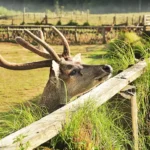
This slow TV broadcast is the second offered by France 3 since the start of the academic year. The first, covering the deer rut in September, was a resounding success. Consequently, France TV decided to replicate the experience with this new sequence on the high tides, again directed by Nicolas Sallé.
The viewership numbers are impressively high, even surpassing those of the live broadcast of the deer rut, according to data shared by France TV’s communications team. What drives such enthusiasm for a slow-paced program that films nature? What does this interest tell us about ourselves?
“Slow TV meets a need to slow down, to catch one’s breath. It helps restore calm in a world beset by ecological, political, and geopolitical storms,” says researcher Minh-Xuan Truong, a specialist in slow TV programming in Sweden. “The very principle of Slow TV is to counter an era that moves quickly, where we are fed optimized, fast-paced, noisy content… It’s the opposite of social media.”
Slow TV also satisfies an unmet need for nature in an increasingly artificial society, where natural spaces are diminishing. “In my research on Slow TV, people often told me it’s like having a window onto nature in their living room,” Minh-Xuan Truong shares.
This intrusion of nature into one’s home provides a sense of well-being: “It has long been known that viewing images of nature can have a positive effect on mental health, or general well-being,” agrees Anne-Caroline Prévot, a researcher specializing in mediated nature experiences. A study published in the journal Nature Communications in March showed that simply watching images of nature can reduce the sensation of pain.
While not yet prescribed in place of painkillers, slow TV allows people who cannot get outdoors, or those living in highly urbanized areas, to access digitized nature. “In Sweden, the slow TV broadcasts are shown in waiting rooms, prisons, hospitals… And there are never any commercials. It’s a true public service program,” notes Minh-Xuan Truong, who has also studied nature in video games.
According to his observations, certain video games with very natural settings help players partially satisfy their nature deficit: “During the lockdown, many players of Zelda Breath of the Wild [a video game focused on nature] told me they used it as a substitute for outdoor nature experiences. Or as a kind of hiking simulator,” the researcher explains, drawing a parallel with the effects of slow TV.
“It will never replace a real experience in nature,” cautions Marie-Laure Girault, co-director of Frene (the French network for education on nature and the environment). For her, slow TV broadcasts miss a range of sensations, smells, tastes, and experiences that can only be had by directly accessing a natural space. “When you’re in nature, you experience wonder, but also sometimes uncomfortable experiences: you might get caught in a storm, encounter biting insects… It’s the dialogue between these different facets of nature that allows us to better understand it and connect with it. This is completely absent in digital nature experiences.”
While she acknowledges that slow TV can marginally contribute to the discovery of nature, she remains adamant: “It glues us to the screen rather than encouraging us to go outside. It’s easier to promote these types of broadcasts than to invest in discovery classes, or to fund free bus rides to forests, for example.”
However, researcher Minh-Xuan Truong sees the glass half full: “Certainly, the experience of technomediated nature is never sufficient. It’s just a step, a rung on the ladder towards reconnecting with nature. But for some people, it’s the only way they can contact nature, and that’s much better than nothing.”
Furthermore, this ecologist by training is convinced that slow TV can actually inspire viewers to venture into real nature: “In my research on video games that feature nature prominently, many players told me it made them want to go observe insects in the real world, or to go animal watching in person.”
For him, the same thing happens with slow TV, because, like video games, these broadcasts are based on waiting and uncertainty: “We let people take their time, we don’t guide them by telling them what they’re seeing on the screen, nor how to react. We don’t know what will happen, which animal might appear on the screen…” It’s this role of “viewer-actor” that creates the conditions for wanting to learn more and truly engage with nature.
Additionally, these broadcasts facilitate the popularization and sharing of naturalist knowledge. In the slow TV show about moose in Sweden, which has been running since 2019, there’s a chat and an app to discuss the broadcast. Numerous Facebook groups also allow the most dedicated viewers to discuss their observations on screen, share opinions… This creates a stimulation, a desire to specialize, to delve deeper into knowledge about nature. “This peer initiation is extremely important in building a relationship with nature and an environmental identity,” analyzes Minh-Xuan Truong.
Over the years, these broadcasts could also help raise awareness of climate issues. For instance, in Sweden this year, the snow melted earlier, so the moose migration was moved up, consequently shifting the timing of the slow TV broadcast. “On chats and discussion channels, people were surprised by the lack of snow. They started talking about climate change,” reports the French researcher, who now lives in Sweden.
Conversely, Marie-Laure Girault, from Frene, fears that the growing interest in these broadcasts could lead to a massive influx of tourists to these sensitive natural areas, ultimately leading to the destruction of these ecosystems. “Of course, this can lead to excesses,” agrees Minh-Xuan Truong. “Here in Sweden, there are tour operators to see the moose in real life, around the filming location, which itself is protected.” Besides the ecological footprint of this niche tourism, he especially fears that less scrupulous platforms might produce less controlled and less ethical broadcasts.
Despite this, the French researcher considers slow TV to be a generally effective tool for getting people interested in nature. He, who spends his life in front of screens, is well aware of their dangers, but believes they can serve the environmental cause when used properly: “To exclude digital experiences of nature on the grounds that they happen behind a screen would be truly unfortunate… It’s important to understand them and to use them as one of several tools to get people interested in nature, and in its conservation.”
Similar Posts
- Can Virtual Experiences Ignite a Love for Nature? Discover the Power of Digital Exploration!
- “It’s criminal!” This former PlayStation boss is strongly upset with the video game industry over this specific topic
- NBC’s “The Traitors” Goes Civilian: Apply Now for the All-New Season!
- From One Piece to Pokémon: Lego Bets Big on Manga and Video Games to Win Over Teens
- Virgin Media Customers Alert: Only 48 Hours Left for FREE 4K Upgrade!

Hi, I’m Ashley from the Decatur Metro team. I share essential information for a sustainable and responsible lifestyle.