In a time of austerity, a Senate report recommends merging some public institutions, including national parks. Workers fear this may undermine environmental protection.
Owing to debt, the caretaker government led by François Bayrou is seeking to save 44 billion euros for the upcoming year and enforce its austerity regime. Among the recommended actions is the elimination or merger of 30% of the state’s public operators, which includes the eleven French national parks.
Why the 12-5-30 Incline Walking Method Is the Ultimate Fat-Burning Workout, According to Fitness Experts
The ultimate trick to banish mold from your bathroom grout in just 7 minutes—no vinegar or baking soda needed
A report published on July 1st suggests, among other things, consolidating these parks and integrating them into the French Office for Biodiversity (OFB) to streamline administrative processes. However, park staff and stakeholders are concerned that this plan could jeopardize their mission’s proper execution. They worry that in this era of austerity, it could be the ibex and the salamander—species they protect—that may pay the price.
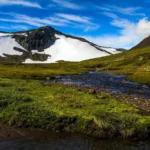
From the Alps to the Amazon, national parks cover 8% of metropolitan and overseas territories, where hundreds of endangered or threatened species flourish or survive. The first of these, Vanoise National Park, was established in 1963 with the challenging task of balancing environmental protection and economic appeal. Sixty years later, these parks welcome over 10 million visitors annually and each enjoys significant autonomy.
This autonomy was further emphasized in 2006 by the Giran law, which reaffirmed a governance model for the parks involving both the management and a board of directors (CA) comprised of state representatives, local stakeholders, and elected officials. A scientific council (CS), responsible for providing opinions and recommendations, also guides the decisions of these bodies.
Through tripartite consultation, a decision in certain coves of Port-Cros Park (Provence-Alpes-Côte d’Azur) due to excessive tourism has helped preserve certain marine slopes where the highly protected seagrass, posidonia, thrives. The same is true in the Calanques, where the park and the city of Marseille have agreed to establish quotas in several creeks.
“Currently, such decrees can be issued quite quickly and in consultation with local actors. If the reform were passed, management and local committees could only give their opinion, and only the OFB would be able to approach the prefectural authorities for a decision. This could take months, even years”, laments Gilles Martin, honorary president of the scientific council of Port-Cros Park, who signed an op-ed published on August 26 by a collective of jurists and scientists in the newspaper. This text condemns a project that “would tear down what has been built over more than six decades… in the name of imagined savings and administrative simplifications”.
The proposed merger of parks by the Senate report would thus weaken a system whose quality, in the eyes of its main managers, is beyond question. “Changing the current model would undermine the effectiveness of nature protection”, argues Rozenn Hars, president of the Vanoise CA and spokesperson for all other park CAs.
Her concerns are echoed by John Thompson, an ecology researcher and president of the scientific council of Mercantour National Park. He fears a decline in the knowledge of species for which the parks serve as sanctuaries. “Without local steering, we would struggle to monitor their evolution and adaptation strategies in a context of climate change”, he asserts.
Both Hars and Thompson are volunteers and are not clinging to positions for lucrative salaries. For the National Environment Union (affiliated with the Unified Syndical Federation, FSU), which is the majority, the priority is not to overhaul the current system but rather to pay attention to the quality of work of its employees. “We have already seen a reduction of 20% in positions over twelve years: we are fewer in number and must assume more responsibilities”, says representative Sandrine Descaves.
Some even see this project as a step backward compared to the efforts of decentralization undertaken in the early 1980s, which the Giran law specifically reinforced for parks. “Stepping up to create a single entity would rationalize the prerogatives of eleven establishments with too diverse economic, social, and natural realities, and would destroy the bond patiently woven with local actors”, supports Lionel Laslaz, a teacher at the University of Savoie Mont Blanc and specialist in natural spaces.
In the Senate, from where this controversial report originated, left-wing senator Michaël Weber (Socialist, Ecologist and Republican group) criticizes “a purely economic mandate, likely to contribute to further rejection, or even lead to an accelerated retreat from ecological transition”. A risk of backlash, at the worst possible time.
Similar Posts
- Chad Ends African Parks’ Management of National Reserves: A Shift in Conservation Strategy
- Eagle and Falcons Killed by Wind Turbines: EDF and Valeco Found Guilty
- In Africa, Powerful NGO Accused of Seizing Land in the Name of Conservation
- Australia’s Wildlife Vanishes: Politicians Turn a Blind Eye
- Robinson Crusoe Island: A Marine Conservation Model Threatened by Chile’s Far-Right

Hi, I’m Ashley from the Decatur Metro team. I share essential information for a sustainable and responsible lifestyle.