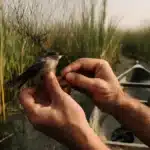
In Gironde, under the guise of an ecological innovation claimed to transform air freight, a company is on the verge of clearing dozens of hectares of forest and wetlands to build its airship factory.
Bordeaux (Gironde), report
Why the 12-5-30 Incline Walking Method Is the Ultimate Fat-Burning Workout, According to Fitness Experts
The ultimate trick to banish mold from your bathroom grout in just 7 minutes—no vinegar or baking soda needed
The courtroom at the Bordeaux administrative tribunal is overflowing with attendees. This 27th of February marks the beginning of the legal battle concerning the “flying whales”: these giant airships that the startup Flying Whales plans to construct, aiming to reduce carbon emissions in the air freight sector. According to the company’s website, the helium in the airships allows them to defy gravity “without intense energy consumption.”
However, the issue arises with the production of these next-generation zeppelins as the company intends to set up its factory on 75 hectares of wooded and wet areas in Laruscade (Gironde). The initial clearing operations started in February.
This development worries Sepanso Gironde, an environmental group that has filed two appeals with the administrative tribunal against the “flying whales” project. Their aim is to revoke the environmental authorization granted in 2025, as well as the exemption from protected species regulations.
To prevent “irreversible damage,” Sepanso Gironde also wishes for the construction to be halted until the court decides on its appeals—a process that could take years considering potential appeals. Unfortunately, on March 2, the judge decided to allow the continuation of the work.
“They talk about an innovative project, but is it worth destroying wetlands given the urgent need to preserve them?” questions Patrick Maupin, vice-president of the association. Indeed, Flying Whales’ green promises clash with the degradation and destruction of 39 hectares of wetlands.
The ecological value of the chosen land has been recognized twice, by the Environmental Authority as well as by the National Council for Nature Protection. Both bodies have asked the project initiators to find an alternative site with fewer ecological stakes. In the area, 252 plant species and 206 animal species have been identified, including 77 protected species, one of which is the European mink, critically endangered globally.
At the hearing, attorney Pierre Pelissier, representing Sepanso Gironde, exploited the loophole in ecological compensation: “If we consider the compensation site chosen in Baurech [Gironde], it is tens of kilometers away from the project [43 km as the crow flies]. How are Mr. and Mrs. Mink supposed to cope?”
The legal team for the association also criticized the planned use of kerosene to power the airships until 2030, before switching to hydrogen—a frequent mirage touted by the aviation industry lobbies. They further criticized the “burden of innovation carried by the public sector.” Indeed, the startup has received significant support from the Nouvelle-Aquitaine region totaling 100 million euros, including subsidies, loans, or capital investments. The French state and Quebec have also contributed financially.
“Let’s not forget that this project also has ecological merits,” argued Maître Corinne Lepage, representing Flying Whales. The former Environment Minister (1995-1997) praised the innovation for allowing “logging in hard-to-reach areas without having to dig trenches for trucks.”
Maître Gutierrez, representing the Community of Municipalities Latitude Nord Gironde — the project’s sponsor — endeavored to downplay the urgency of halting the ongoing work, which he described as “reversible”: “We’re only conducting operations that allow geological surveys. So, flattening of vegetation and clearing on a surface of 7,000 m².”
According to project leaders, construction of the factory isn’t scheduled to start until September 2026. Exiting the hearing, Clément Barthe, the industrial director of Flying Whales, admitted a delay in the initial trials of the prototypes, originally planned for 2027: “They will now take place in 2028.”
Similar Posts
- One in Five Wetlands Could Vanish by 2050: Global Environmental Crisis Looms
- Save Cantal’s Wetlands: Locals Rally Against Quarry Project Threatening Pristine Area
- Protecting Wetlands: Community Stands Against Confinement of Refugees
- Biodiversity Crisis in Île-de-France: How Climate Change is Reshaping Nature
- Miraculous Return of a Vanished Bird After Gironde Fires: A Reevaluation of Forest Management

Hi, I’m Ashley from the Decatur Metro team. I share essential information for a sustainable and responsible lifestyle.