Scandinavian design is known for airy rooms, pale timbers, uncluttered silhouettes, and an overall sense of serenity. Adapting that aesthetic to a cruise ship, however, requires solving spatial constraints—especially when set against the grand, highly ornamental interiors often found on mainstream cruise vessels.
Viking has embraced Scandinavian modernism as a defining element of its onboard look, shaping interiors that read less like typical ship decor and more like thoughtfully appointed homes. Across the fleet, the visual vocabulary interprets Scandinavian traditions through a contemporary lens—sometimes described as “New Nordic”—using natural surfaces, richly textured materials, muted colorways, and sculptural, well-proportioned furnishings.
“While we don’t formally label it ‘new Nordic,’ classic Scandinavian ideals have been reinterpreted for today’s lifestyles and travel habits,” explains Richard Riveire, founding principal of Rottet Studio and the designer behind Viking’s river, ocean, and expedition ships. “There remains an emphasis on restraint, but it’s paired with a comfortable, inhabited feeling. Contemporary Scandinavian design is less about stark minimalism and more about creating environments that are welcoming, considered, and enduring.”
Why a Simple Mistake in Your Online Pension Application Could Cost You Your Retirement Benefits
The ultimate trick to banish mold from your bathroom grout in just 7 minutes—no vinegar or baking soda needed
Adapting Core Nordic Ideas
Rather than treating Scandinavian style as a fixed visual formula, Riveire and his team built the fleet’s interiors around five guiding concepts: residential modernism, the natural world, craftsmanship, cultural heritage, and a spirit of exploration. That structure provides a simple architectural backbone, while fabrics, upholstery, rugs, and furniture add tactile warmth and variation. “Those material and textile details give each area a personal, inviting quality while maintaining the pared-back sensibility central to Scandinavian design,” Riveire says.
Referencing Nordic Culture
Nordic roots show up throughout Viking’s ships in curated regional artworks, including works by notable Norwegian artists such as Edvard Munch. Textiles and decorative elements extend those cultural links, from fabrics by Dutch designer Hella Jongerius to tabletop pieces inspired by Finnish architect Alvar Aalto.
“That cultural lineage helps anchor the interiors in Norwegian traditions and storytelling, while the exploration theme underscores that these vessels are for curious travelers,” Riveire notes. “You’ll see maps, globes, libraries, star charts, and other exploration motifs woven into the design language.”
Prioritizing Materials and Craft
Material selection plays a key role in transforming large public rooms into spaces that feel more like residences. Pale woods, woven natural textiles, and stone introduce warmth, texture, and depth across cabins and shared areas. “Craftsmanship is essential because it brings humanity and authenticity to a space,” says Riveire. “We specify furniture, art, textiles, and objects that reference handmade traditions or honor historic craft skills.” These craft references appear in details such as leather-woven lounge seating, intricate ceiling lattices, and carved wooden wall elements.

Bringing Nature Indoors
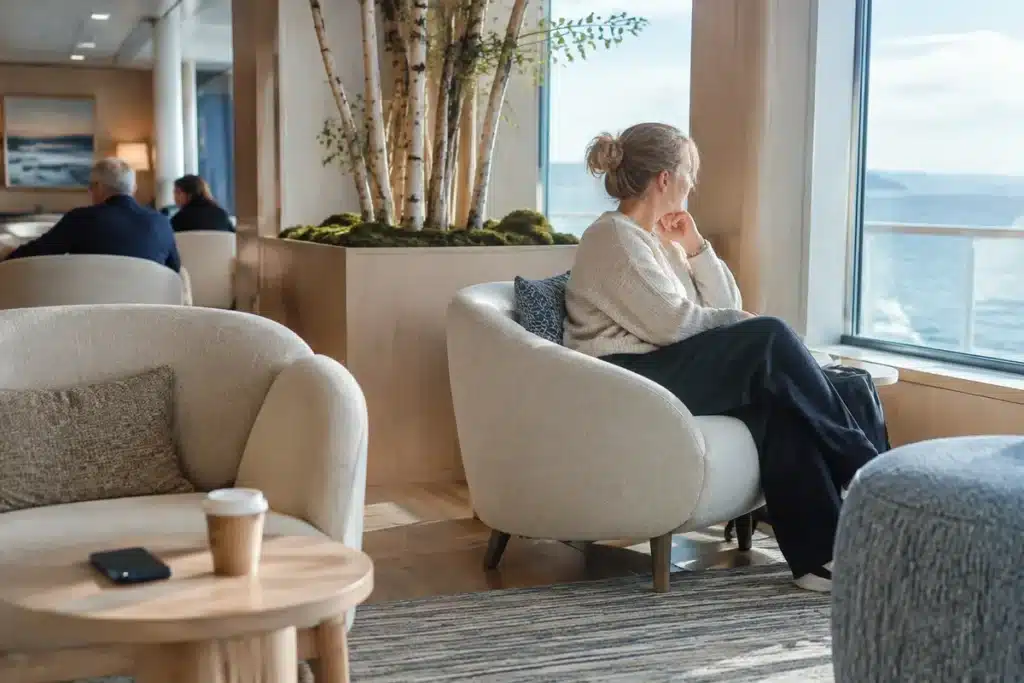
The Nordic landscape—marked by birch groves, moss, and resilient plant life—shapes both the material palette and the sensory touches aboard. Elements that evoke driftwood, lichen, and moss recur in cabins and lounges. Birdsong is sometimes piped gently into public restroom areas, while birch branches in planters and floor-to-ceiling forest murals appear in communal spaces and the spa. “The idea is to let the landscape and wildlife outside inform the interior experience,” Riveire explains.
The spa extends Nordic bathing customs with features like a snow grotto, a cold plunge, and thalassotherapy pools. “Water ties the interior to the outdoors, so the spa becomes a physical expression of the Nordic design approach,” he adds. Natural materials such as slate, stone, and glass maintain the spa’s subdued, minimal material story.

Using Color with Restraint
Instead of relying solely on stark white or an exclusively neutral scheme, the interiors layer warm creams, sandy hues, and other earth-toned shades inspired by nature. Striped navy and slate accents appear on cabin headboards, while translucent aqua glass plates and water glasses add light-refracting highlights to dining tables. Small pops of orange and rust in cushions and carpets introduce contrast without upsetting the overall calm. “These details show a more expressive side of Scandinavian design,” Riveire says. “We aim to include color, but in a way that doesn’t create visual clutter.”
Making the Outside Part of the Room
Floor-to-ceiling windows do more than bring in daylight; they intentionally frame the passing scenery so the landscape becomes an ever-changing focal point of the interiors. “A Norwegian fjord, a European riverbank, or the Antarctic expanse becomes part of the room—an artwork that’s constantly shifting,” Riveire observes. Sightlines and spatial planning are used to reinforce that connection.
On land, designers can predict the sun’s path through a building. At sea, daylight behavior is far less predictable—its direction and duration can change dramatically, and in polar summers the sun may not set. Interiors therefore need to respond to varying light throughout a voyage. Architectural openings, curtains, and shades are configured to adapt as conditions change, balancing daylight with comfort and privacy. “Spaces stay connected to the outside world while still offering quieter, more intimate moments indoors,” Riveire says.
Hiding Technology and Controlling Sound
Creating a home-like atmosphere relies on more than looks; sound, warmth, and lighting shape how comfortable a place feels. To preserve the clean, uncluttered appearance, technology is discreetly integrated into wood joinery and architectural details—examples include underfloor heating in cabin bathrooms and subtle lighting controls. Acoustic treatment is equally important for achieving a sense of hygge at sea: textile-covered wall panels, acoustic carpet underlays, and upholstered surfaces all help lower ambient noise levels in public zones. “In the Scandinavian tradition, design serves comfort quietly,” Riveire explains. “Technology and acoustic measures are woven in so unobtrusively that guests notice only how peaceful the space feels.”
Creating Cozy Areas within Large Volumes
Eliciting a lived-in, domestic warmth on a ship with grand public spaces such as multi-level atriums poses a design challenge, since Scandinavian design often favors smaller, approachable environments. “Achieving a residential atmosphere aboard a vessel requires strict attention to proportion,” Riveire says. “We follow a ‘cocoon’ idea—a house-within-a-house approach—so the interior feels quiet and serene rather than competing for attention.” This concept informs how open social areas and intimate seating niches are arranged. “Every grouping of furniture is planned around how guests actually move through and inhabit the spaces,” he adds.
Similar Posts
- Revolutionizing Stonework: How Fashion Expertise Influences April Graves’ Unique Approach
- Explore m2atelier’s Masterpieces: A Highlight of Genova Design Week!
- Sashya Thind Transforms New Build: Discover a Warm, Worldly Modernist Masterpiece!
- Eureka Ergonomic’s Arundel collection pairs walnut and leather
- Explore a Toluca Lake Home: How a Limited Color Scheme Creates Stunning Depth!

Hi, I’m Michael from the Decatur Metro team. I offer you practical tips to enhance your living space.