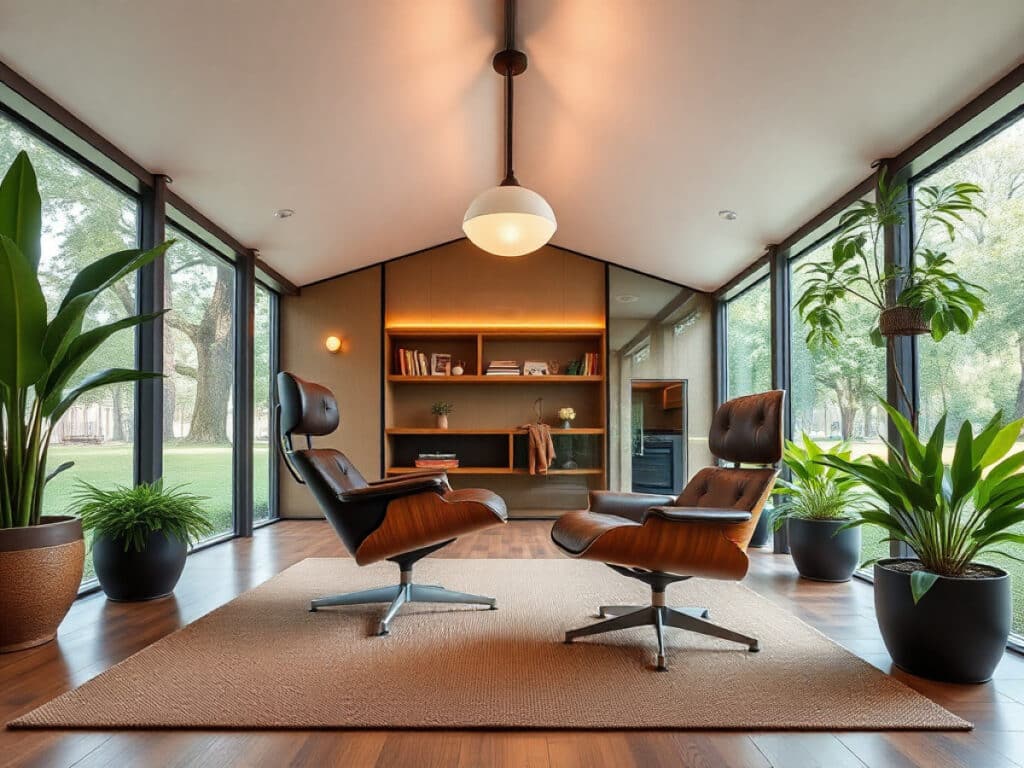
Charles and Ray Eames: Pioneers in Ergonomic Design
Charles and Ray Eames are celebrated figures in the development of ergonomic design, with their creation of the Eames Lounge for Herman Miller standing as a testament to the seamless integration of innovative design and meticulous craftsmanship. The couple had a profound interest in experimenting with materials, often incorporating industrial components to create unified and meaningful projects such as the Eames Pavilion System. This system was first unveiled at the Triennale Milano, brought to fruition through a partnership between Eames Office and Kettal. Each component of the system is vibrant, unique, and designed with human needs in mind.
Designing with Life in Mind
Why the 12-5-30 Incline Walking Method Is the Ultimate Fat-Burning Workout, According to Fitness Experts
The ultimate trick to banish mold from your bathroom grout in just 7 minutes—no vinegar or baking soda needed
The exterior of the Pavilion is crafted to accommodate the rhythms of daily life. The windows are large, allowing for ample air circulation, and the colorful panels can be arranged in various configurations to suit both private and public spaces. Essentially, they serve as life’s containers, arranged to enhance living spaces just as one would arrange building blocks.
For the Eameses, designing a home was primarily a problem-solving exercise. The combination of Charles’ architectural background and Ray’s artistic sensibility led to a profound understanding of human interactions and needs, which they skillfully translated into their architectural projects. “Over the nearly four decades of leading the Eames Office, I’ve frequently been asked about acquiring a replica of the Eames House. While one-to-one replicas have their place, we were always envisioning something more—a comprehensive, internationally applicable systems approach,” explained Eames Demetrios, the Director of Eames Office and the couple’s grandson. He emphasized that the new system transitions Eames-designed prefabricated buildings from prototypes to fully realized products, not merely facsimiles but robust architectural ecosystems. “The Eames houses, many of which were never constructed, were always intended as milestones and prototypes for this kind of evolutionary design. Our grandparents’ documents confirm that their designs, though site-specific, were always aimed at mass production for human living,” Demetrios added.
A Reflection of Human Experience in Design
The designs by the Eameses exude a balance and symmetry that extend throughout their philosophy. They were not content with creating mere objects of beauty; every element of their designs was a reflection of a deep understanding of human behavior, movement, and nature—from the communal nature of a kitchen counter to the simple act of removing shoes in a hallway. While cultural standards may vary, certain universal truths about human nature persist, and it is these truths that truly fascinated the Eameses.
Their designs often featured vivid splashes of color—a brilliant blue and yellow against the industrial black and grey—that were quintessentially Eames, showcasing Ray’s artistic flair. The industrial elements and cold metals are softened by a sense of family and connectivity, highlighting an ability to settle the mind and create comfort, reflecting a unique talent inherent to their work.
Similar Posts
- Top 12 Must-See Highlights from NeoCon 2026: Discover the Best in Design Days!
- Canadian Design Triumphs: Architecture Firm Unveils Stunning New Office Celebrating Craftmanship
- Erwan Bouroullec Transforms Tyvek into Stunning Sculptural Wall Lighting: See the Innovation!
- F5: Tiffany Woodson Talks Retail Therapy: Discover Fresh Flowers, Textiles & More!
- Stunning Polish Office Blends Scandinavian Design with Superior Acoustics: See the Photos!

Hi, I’m Michael from the Decatur Metro team. I offer you practical tips to enhance your living space.