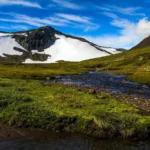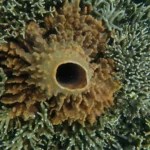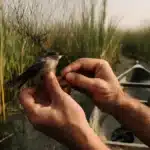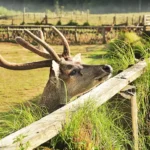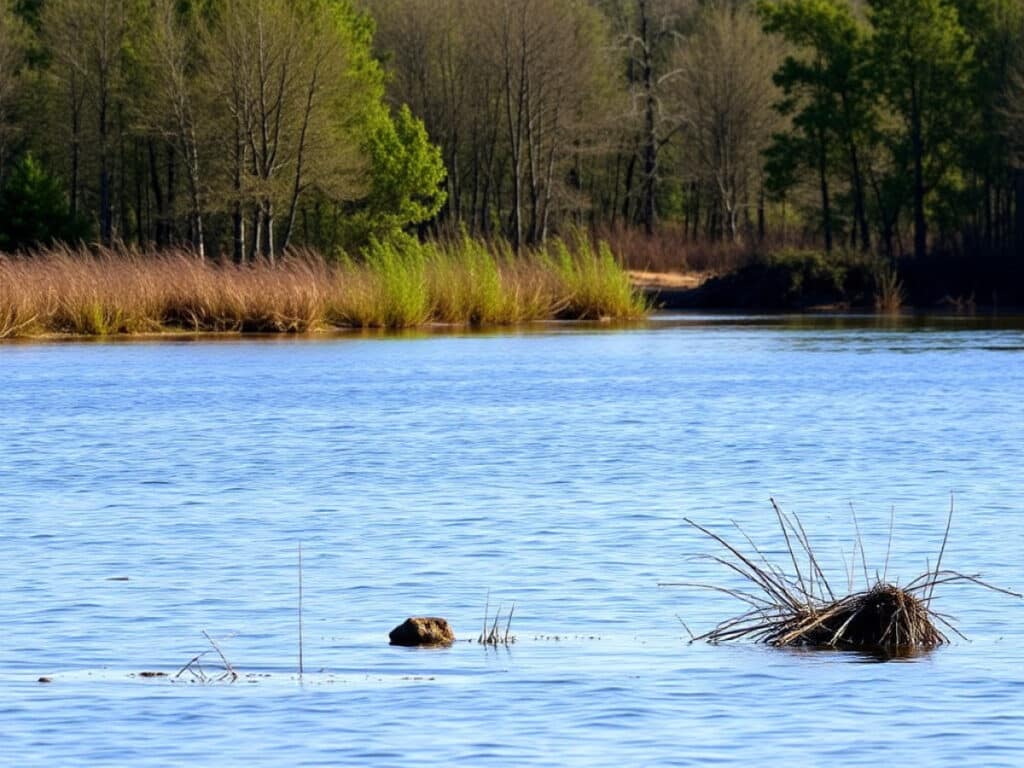
In the Landes forest, lagoons are vital biodiversity hubs threatened by droughts. A program aims to restore them, including transforming an old landfill back into a thriving habitat for wildlife and plants.
Onesse-Laharie (Landes), reportage
Why the 12-5-30 Incline Walking Method Is the Ultimate Fat-Burning Workout, According to Fitness Experts
The ultimate trick to banish mold from your bathroom grout in just 7 minutes—no vinegar or baking soda needed
As she nears the shores of the Onesse-Laharie lagoon, Valérie Guéguen, the lagoon project manager for the Landes department, lights up with excitement. This naturalist passionately watches over this groundwater outcrop in the midst of a pine forest. This lagoon is particularly significant to her as it was the first to be included in the department’s conservation and restoration program initiated in 2011. Previously, the site served as a landfill where local companies dumped their construction waste. Now restored, “ this lagoon no longer needs us “, says Valérie Guéguen.
Long neglected and in poor condition, the lagoons have been under siege from all sides for years. Recently, several stakeholders have shown a commitment to bring them out of obscurity by restoring and preserving them. Alongside the Landes department, which started the program in 2011, other organizations at various levels are involved: water agencies, other departments (Gironde and Lot-et-Garonne), river syndicates… The National Botanical Conservatory (CBN) has taken on the role of coordinating these efforts under the name Écolag project, launched in 2024.
In the Landes forest, the CBN has cataloged over 6,000 of these small wetlands. Formed during the last ice age when the typical sand of the Landes massif settled, lagoons are small depressions where the groundwater emerges. These wetlands host a very specific fauna and flora, with some species found almost exclusively here.
For instance, the faux-cresson de Thore, a heritage species of which France holds the vast majority of the global population, is found only within the Landes triangle. Among the dragonflies and amphibians, rare species particularly enjoy the environment provided by these unique areas, such as the Iberian tree frog.
“ These are oligotrophic environments, naturally low in nutrients, explains Anaëlle Deveaud, conservation mission officer for the CBN. They have a particular morphology, are shallow, and vegetation develops in a concentric manner. “
In a single lagoon, different habitats can be observed. Firstly, its center, well-watered, surrounded by a belt of amphibious vegetation that withstands a brief dry period in summer where faux-cresson thrives; then the edges of the lagoon, consisting of a moor with less humid vegetation. They offer ecosystem services for species that live only there. But also for the rest of the fauna and flora, for which they are places to drink, cool off, and expand, serving as small biodiversity islands amidst the rows of maritime pines.
“ They also serve as indicators of water resources, explains Valérie Guéguen. And they can act as water storage areas. “ At Onesse-Laharie, a piezometer has been installed to measure the water level, reflecting the state of the groundwater. Like many wetlands, lagoons are particularly sensitive to drought episodes. The more water they hold, the more carbon they store.
In mid-July, Valérie Guéguen could no longer visit the site to check the lagoon’s water level due to forest work restrictions implemented to reduce the risk of fire outbreaks. However, she continues to monitor the groundwater levels and finds the ongoing drought “ very concerning “, even though the surface aquifers (on sand) that emerge in the lagoons are less critical than the alluvial aquifers feeding the streams. The current level is slightly below average.
Already in June, during our field visit, she noted that the water level was dropping too quickly between each of her visits and worried about a dry summer.
In the vast Landes forest, spanning hundreds of thousands of hectares, they are rarely used in firefighting efforts, according to David Demarcq, a territorial forestry technician for the National Forestry Office (ONF), responsible for the sector. However, some have been equipped as water points for forest fire defense.
Simon Kuntzburger, a mission officer and phytosociologist at the CBN, spends many days in boots traversing these environments. He contributed to a CBN report stating that only 20 % of these lagoons are in “ good conservation status “. Drainages conducted to establish pine monoculture over the past two centuries or water-intensive maize cultivation have partly emptied many of these small reserves.
“ They were here before the forest “, says Valérie Guéguen nonetheless. In some areas, the use of agricultural fertilizers has been a factor in environmental deterioration. “ The presence of invasive species like water primrose or the American crayfish also leads to classifying the lagoon as being in poor conservation status “, adds the expert.
The passage of vehicles when they are dry in the summer damages them, or too many wild boars, which turn a lagoon into a wallow. “ When there are a few, it’s beneficial, but not when they overturn the entire lagoon “, clarifies Simon Kuntzburger.
The two main risks facing the lagoons, according to the phytosociologist, are drainage and climate chaos: increasing drought episodes strain these spaces and ultimately lead to “ depletion of species and habitats “.
Despite the restoration program, some wills are still missing. “ We work with willing owners, so many are municipalities, observes Valérie Guéguen. Private owners are harder to reach, sometimes they live abroad. “ About half of the 91 lagoons monitored within her project belong to the public domain, while most are located in private forests. “ It can sometimes take a while to get them involved in the adventure “, notes Paul Carrère, vice-president of the Landes department and socialist mayor of Morcenx-la-Nouvelle, where four lagoons are monitored.
Each site has its characteristics. When restoration is necessary, it is therefore done after a diagnosis, to which the National Botanical Conservatory lends its expertise. Sometimes this involves removing harmful vegetation, such as pampas grass. In others, drains must be removed to restore proper hydraulic functioning.
The Onesse-Laharie lagoon no longer requires major work; only a few improvements are made here and there. The Nils storm this winter damaged the surrounding forest, and selective logging has just been carried out to fell trees weakened by the weather. A new “ buffer zone “ between the forest and the lagoon has been decided by the ONF and the municipality, explains David Demarcq: “ We will replant hardwoods that are more rooted than the pine and will induce other interactions with the lagoon. “
These sites, often located deep in the forest, remain out of reach or unknown to the public. But to convince of their preservation utility, Paul Carrère takes the opposite bet on those in his municipality that are accessible: the place hosts nature animations and school groups throughout the year.
The mayor of Morcenx-la-Nouvelle is convinced: it is this mediation effort that will make the difference for the future of these sites: “ The best way to engage the next generation is to show them these remarkable natural spaces that are part of the Landes heritage. “
Similar Posts
- Gironde’s 2022 Fire Aftermath: Witnessing Nature’s Remarkable Resilience
- Reviving Berre Lagoon: Association Replants Vital Seagrass Meadows
- Mountain Volunteers Revive Drying Ponds: Swift Nature Recovery After Drought
- Pine Trees: Nature’s Own Matchbox Unveiled
- Nature’s Quick Comeback: Volunteers Revive Dried Mountain Ponds After Drought

Hi, I’m Ashley from the Decatur Metro team. I share essential information for a sustainable and responsible lifestyle.