In the southern part of Texas, the expansion of Elon Musk’s SpaceX center is causing significant disruption. The local wildlife is severely affected by the industrial activities, and indigenous tribes have been expelled from their lands.
Brownsville, Boca Chica, and Floresville (United States), report
Why the 12-5-30 Incline Walking Method Is the Ultimate Fat-Burning Workout, According to Fitness Experts
The ultimate trick to banish mold from your bathroom grout in just 7 minutes—no vinegar or baking soda needed
His words are few and profound, his call echoes a heartfelt cry: “They destroy and pollute everything and call it progress.” With a stern, sun-tanned face, Juan Mancias, the leader of the Carrizo/Comecrudo tribe, struggles to contain his anger over the contamination of the Lower Rio Grande Valley in southern Texas (United States).
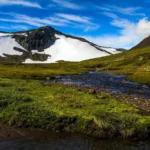
Located 500 kilometers from this still pristine environment, the contrast is stark. Near Boca Chica beach, a narrow coastal strip between the United States and Mexico, SpaceX has erected its Starship rockets right in the heart of the Lower Rio Grande Valley Nature Reserve, one of the richest and most fragile ecosystems on the continent.
“They dream of reaching Mars. We’re just trying to stay on Earth,” says Juan Mancias. He labels Elon Musk a “nature predator.” The far-right billionaire is convinced he will reach Mars by the end of 2026.
A fifth and final rocket is set to launch from this site, surrounded by salt marshes and dunes, on a Monday to Tuesday night at 1:15 AM Paris time in 2025. This area has become one of the most industrialized sites in southern Texas.
Before becoming the playground of the billionaire, this beach was a sanctuary for wildlife and the birthplace of the Carrizo/Comecrudo tribe. “They stole our land, and now, they are even stealing the sky,” laments the tribal chief. The indigenous people were first driven out of Boca Chica during the Texan conquest in the 19th century. The privatization of the beach and Elon Musk’s control of the region represent a new dispossession.
At a press conference in 2018, Elon Musk dismissed ecological concerns with a wave of his hand: “We have a lot of land with no one around, so if a rocket explodes, it’s not a big deal.” For the Carrizo/Comecrudo, this statement encapsulates the violence of a project built on the disregard for life. “They see a desert where we see a living world,” Juan Mancias exclaims.
Since 2014, dunes, salt marshes, and nesting areas have given way to this Muskian kingdom: an aerospace base flanked by Starbase, its new “rocket city,” which became a full-fledged municipality in May 2025. In this private city where municipal power and the corporation are one, residents work for SpaceX, and the mayor, Bobby Peden, is a sort of CEO-elected official who can issue building permits on the fly, restrict road access, or even close the beach.
In Boca Chica, SpaceX rockets consume the coast with their tests. Environmental groups estimate that each launch uses nearly 2 million liters of potable water and burns over 1,200 tons of highly polluting fuel. The roar of the engines reaches 150 decibels, a noise level that drives all animal life away from the landscape.
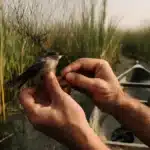
Kemp’s ridley turtles, among the most endangered in the world, the dolphins of Laguna Madre, and hundreds of species of migratory birds are pushed increasingly further away. The Central Flyway, an aerial corridor followed by millions of birds annually, is gradually closing under the weight of fences, access roads, and repeated SpaceX tests.
Away from this grim reality, Gilbert Hernandez—owner of the independent bookstore Buho, whose logo features an owl—watches this disaster with bitterness. Seated in an armchair at the entrance of his shop, in downtown Brownsville near Boca Chica, the thirty-something sees a world changing too quickly.
“Birds are smart and resilient, but it becomes complicated when they encounter a barrier not from nature,” he says. The piping plover (Charadrius melodus), a small coastal bird, has already lost more than half its population since the space site was established.
Further north, in the brushlands of the Lower Rio Grande Valley, the Texas ocelot—a spotted feline on the brink of extinction—sees its habitat fragmented. “Every meter of brush removed is one less chance of seeing it again,” laments a refuge guard, who remains anonymous for fear of reprisal.
“They call it cohabitation; I call it expulsion,” adds the guard. “Here, nature no longer has a place, and the animals can’t complain.”
Despite this, the U.S. Federal Aviation Administration has recently authorized SpaceX to increase its launch frequency from five to twenty-five launches per year. In 2014, the same agency assured in its environmental impact study that the establishment of SpaceX “would not have a significant effect on the environment.”
Despite the power of Elon Musk and his overly intrusive neighbors, resistance is organizing. The active South Texas Environmental Justice Network regularly holds meetings with residents, who are often unaware of the dangers surrounding them.
On the walls of the Bob Clark community center in Brownsville, the signs set the tone: “The only immigrant I want deported is Elon Musk,” “Save Boca Chica Beach.” Discussions, often in Spanish—given the predominantly Latino population—ignite around these existential threats to biodiversity and the very survival of communities. Everyone expresses their anger, fears, and wounds.
“Less than 3% of our wildlife habitat in the Rio Grande Valley remains, and the growth and activities of SpaceX threaten what’s left,” state the organizers, concerned.
At the heart of this turmoil, co-founder Bekah Hinojosa embodies this struggle. A tireless activist, she was arrested for tagging “Stop SpaceX” on a wall of the Brownsville city hall in 2022. Since then, her message has spread.
Beyond Rockets: The Empire of Liquefied Natural Gas
Just a few kilometers from Boca Chica, another industrial giant looms on the southern Texas coast: the liquefied natural gas (LNG) terminals. Two massive projects, Rio Grande LNG and Texas LNG, have been approved on the shores of the Port of Brownsville, at the mouth of the Rio Grande.
Each plans to export millions of tons of fossil gas extracted through hydraulic fracturing from the Permian Basin. The projects, supported by local and federal authorities, now extend to wetlands and the sacred lands of indigenous peoples.
Environmental organizations estimate that this entire complex would make southern Texas one of the largest LNG export hubs in the world, while dooming an already depleted ecosystem. For Juan Mancias, leader of the Carrizo/Comecrudo tribe, “these plants will poison our air and water every day.”
Similar Posts
- Elon Musk’s ex-wife revealed the one word that’s his greatest weapon
- Elon Musk wants to make a gift to all of humanity, and it will be completely free
- Elon Musk did it: All iPhones and Android smartphones can now use his satellites to make calls from anywhere on Earth
- Elon Musk’s outrageous offer shocks his Twitter employees
- Elon Musk’s upcoming free gift to humanity: here’s how it works

Hi, I’m Ashley from the Decatur Metro team. I share essential information for a sustainable and responsible lifestyle.