[The New Faces of Environmental Crime 3/4] The craze for succulents has reached such heights that some individuals are willing to pay enormous sums or turn to dubious dealers, even if it means breaking the laws protecting these endangered plants.
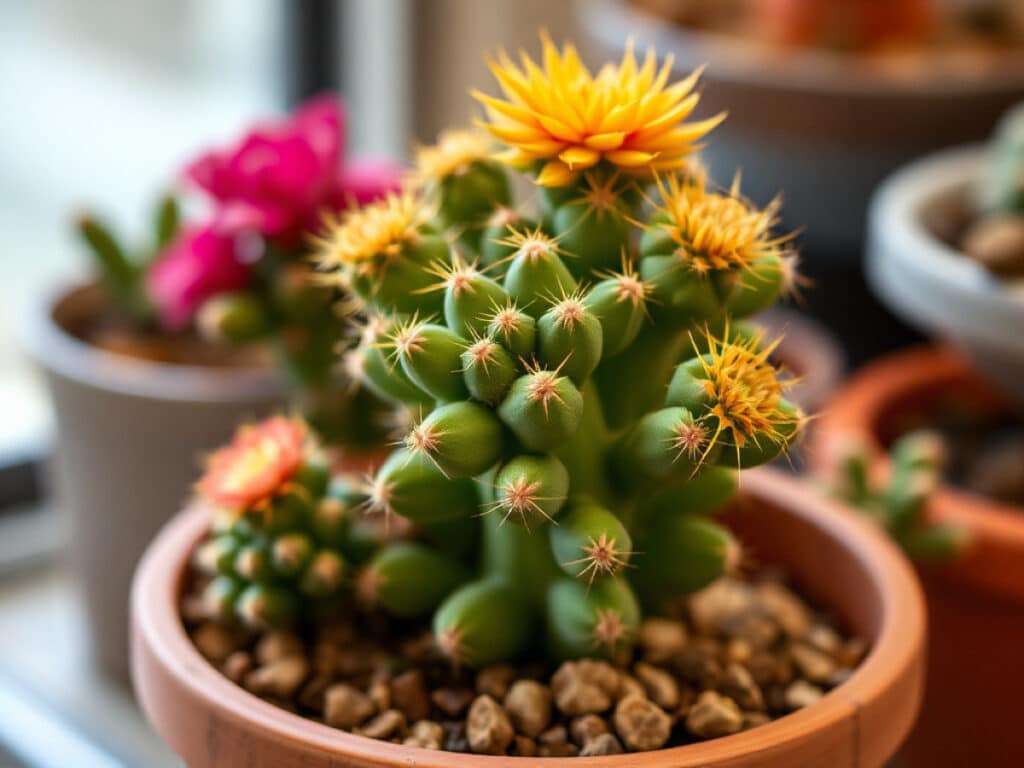
Are you familiar with Echinocactus grusonii? It’s better known as the “mother-in-law’s cushion” due to its spherical, spiny appearance. How about Crassula ovata? This one is called the “jade tree” because of its small, rounded, gemstone-green leaves. And what about lithops? These plants are often referred to as “pebbles” or “living stones” because their stemless shapes and colors blend in with natural minerals. Welcome to the world of succulents, or “fat plants.”
Why the 12-5-30 Incline Walking Method Is the Ultimate Fat-Burning Workout, According to Fitness Experts
The ultimate trick to banish mold from your bathroom grout in just 7 minutes—no vinegar or baking soda needed
These plants share a common trait: “Originating from regions with extreme climates, they are all drought-resistant and have developed various adaptations to store water in their leaves, stems, or even through their spines in the case of cacti,” explains Henri Kuentz, one of France’s leading experts on cacti and succulents, who sells them in his nursery in Fréjus (Var), established in the 1930s by his grandfather.
Since the early 2020s, these plants have become social media stars. Just search for the hashtags #cactus or #succulent on Instagram to see thousands of daily posts from all around the globe. The same goes for Facebook, where many users share their common hobby. For instance, nearly 320,000 people follow the French-speaking group Plantes grasses et cactées passions.
It’s easy to see why succulents are so popular: they can thrive without watering, maintenance, and in poor soil. They’re perfect for those without a green thumb! Miniature varieties also appeal to apartment dwellers, especially since they typically grow very slowly. The diversity of shapes—cylindrical, rounded, or various geometric forms—is matched only by the surprise of their flowering, which can take years to occur. Although brief, the blooms are sometimes spectacular, bursting with bright and varied colors.
This “succulent mania” has raised concerns among organizations fighting against the trafficking of protected species. “I think it’s one of the most photographed plants on social media, both for its aesthetic appeal and as a part of collections, highlighting ancient or rare specimens,” notes Maud Lelièvre, vice-president of the International Union for Conservation of Nature (IUCN), contacted by Decatur Metro.
However, this popularity comes at a time when these species are already under significant pressure in their natural habitats due to habitat destruction (ranching, road construction, mining, urbanization…) and climate change. According to the IUCN, climate change could be a crucial factor in the risk of extinction for 60 to 90% of the 400 cactus species assessed—out of more than 10,000 existing species. In 2024, the IUCN also revealed that 82% of the Copiapoa cactus species, endemic to Chile’s coastal Atacama Desert, were in danger of extinction, up from 55% in 2013, due to climate change and illegal harvesting.
About thirty cactus species, mainly from Mexico and nearby countries, are listed on the red list of the Convention on International Trade in Endangered Species of Wild Fauna and Flora (CITES), in Appendix I. This means their trade is completely prohibited when collected from the wild.
“However, if a grower can prove they have propagated them in cultivation, by producing their own seeds or cuttings, they move from Appendix I to Appendix II, which allows commercialization on the European market,” details Henri Kuentz. Appendix II still requires a series of administrative steps.
Generally, there’s little risk of buying a cactus that has been removed from its natural habitat from well-established garden centers or nurseries in France. “There’s a significant production of succulents in Europe, going back decades,” assures the horticulturist. “In the Netherlands, there are ‘factories’ growing succulents under tens of hectares of greenhouses. There are also giant nurseries in Spain and Italy, under greenhouses or in open ground.”
The real danger comes from online sales, “a true jungle of plants,” according to Henri Kuentz. Many of these selling sites are based in Southeast Asia, especially Thailand. Consumers can find all kinds of cacti there, at lower prices than in Europe for fairly common plants, and at exorbitant prices for the rarest specimens. For instance, Astrophytum, a type of globular cactus, can be found for over 100 euros on some sites. Some Copiapoa even fetch more than 1,500 euros each.
This endless supply can tempt some into the game of collecting and searching for that exceptional plant, risking—intentionally or not—crossing into illegality, warns Fabrice Gayet, CITES referent and trainer on protected species trafficking at the Directorate General of Customs: “People start with three cacti, then four, five, ten small cacti. They want more and more, each time different, new, etc.”
“In forums, I always explain that it’s very complicated to bring plants from non-European countries [see box],” Henri Kuentz agrees. “But there are those who absolutely want that particular plant, and it’s so easy to order. And not all parcels are checked.” The number of seizures has indeed increased significantly, from 505 in 2024 to 905 in 2025. A study conducted in Quebec reveals that succulent collectors are often willing to engage in illegal online trade to acquire their “precious.”
In interviews she conducted, Léanne Vincendon, a doctoral student at the University of Montreal, found that even those with training in horticulture, biology, or environmental science were involved. “These are people who condemn poaching and illegal harvesting in nature,” she notes. “But they still decide to break the law.”
She highlights how “the desire of succulent plant consumers to own and connect with nature can, paradoxically, contribute to harming and degrading it.”
While most plants imported into Europe are cultivated, this market also conceals real poachers. “The hub of trafficking is now in Asia,” observes Henri Kuentz. “For example, Chinese are willing to spend a lot of money and pay smugglers for very rare plants.” And above the wealthy collectors, “there are highly structured criminal organizations that recruit disadvantaged local populations, as with drug trafficking,” explains Maud Lelièvre, from the IUCN.
These traffickers, mainly active in South America, South Africa, Tanzania, and Mozambique, ask locals to locate rare specimens in nature using GPS coordinates. In this highly organized business, intermediaries and local populations are paid. “And it wouldn’t work if there weren’t corrupt people,” adds the IUCN vice-president. “A number of producers in the countries of origin make false certificates. Police officers turn a blind eye, customs officers turn a blind eye… There are complicit parties at all levels.”
1.1 million succulent plants were seized between 2021 and 2025 in South Africa. These seizures represent only about 15% of the traffic.
Facing the profitability of this type of business, these desert jewels are quite fragile. “If these plants are protected, it’s because it’s necessary. It’s not a whim. We tend to think that cacti are extremely robust, but they are not doing well,” insists Fabrice Gayet. They have taken millions of years to adapt to very demanding environments, but with climate change, these plants are reaching their limits.
Will they manage to move to areas where their seeds, carried by the wind, will manage to develop? wonders the customs officer. “What is certain is that where these plants are today, with an increase of 5°C, they will die like everything else. They are in a very bad position. We might as well do what we can to protect them.”
Importing succulents from the other side of the world is subject to stringent regulations. The seller must accompany the order with a CITES export permit, an invoice indicating the name of the plant, and a phytosanitary certificate that ensures the plant is free of any parasites or diseases. “The consumer must also contact the Dreal [Regional Directorate for the Environment, Planning, and Housing] of their region and request an import permit,” explains Fabrice Gayet, CITES referent at the Directorate General of Customs.
Most plants seized by customs come from cultures, making them easy to distinguish from wild plants. “When you discover 2,000 tiny cacti, all identical, all green, in perfect condition, you imagine they’ve been well-fed, never seen an insect, and are of artificial reproduction. But it remains a cactus. And the regulation requires having a CITES export document,” emphasizes Fabrice Gayet.
Many sellers choose to ignore these rules, and the buyer may see their purchase seized during an airport check. Hence the importance of demanding all these documents at the time of purchase. A plant with a phytosanitary certificate must always display on its label the species name (like cactaceae, for example), the country of origin of the producer, and the European flag.
Find the other articles in our series:
legend
Similar Posts
- Thousands of Succulents Uprooted from Desert: The Dark Side of Home Decor
- Europe’s Wild Pollinators at Risk: Bees, Bumblebees, Butterflies Face Increasing Threats
- Mushrooms Face Extinction: Essential Yet Overlooked, the Silent Crisis
- Wild Vanilla Faces Extinction: Climate Change Threatens Precious Spice
- Rare Botanical Phenomenon: Titan Arum Set to Bloom Imminently

Hi, I’m Ashley from the Decatur Metro team. I share essential information for a sustainable and responsible lifestyle.