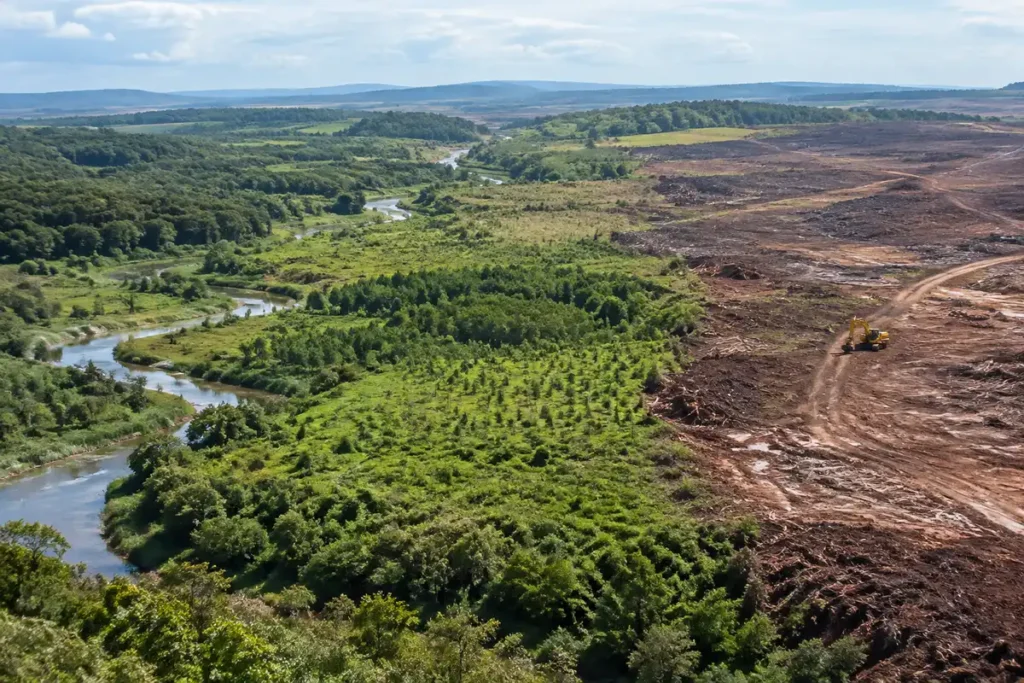
Global attempts to revive damaged ecosystems are far from sufficient. A report released on Thursday, 29 October by the Food and Agriculture Organization (FAO), the United Nations Environment Programme (UNEP) and the Secretariat of the Convention on Biological Diversity finds that 252 million hectares are undergoing restoration measures in 2026 — an expanse roughly the size of Algeria. To meet the international goal of restoring 30% of degraded ecosystems by 2030, efforts would need to roughly triple over the next four years.
“In just four years since the adoption of the Global Framework in Montréal in 2022, we have achieved 34% of the target, which is encouraging — but my job is to say we must do better,” says Inger Andersen, UNEP’s executive director.
Progress is highly uneven. Asia is responsible for 76.3% of restored land, driven largely by China’s contribution of 127 million hectares. Aquatic environments are notably overlooked: only about 11 million hectares of inland waters and 5.7 million hectares of ocean areas are currently being restored.
Why a Simple Mistake in Your Online Pension Application Could Cost You Your Retirement Benefits
The ultimate trick to banish mold from your bathroom grout in just 7 minutes—no vinegar or baking soda needed
This midterm assessment is playing a central role in the discussions at COP17 on biodiversity, being held in Yerevan, Armenia, through Friday, 30 October. “The findings of this report are already being woven into the deliberations and draft texts of the negotiations,” notes Salman Hussain, an environmental economist at UNEP. “But it also offers concrete recommendations to guide action after the COP.”
To reach the 2030 targets, the report calls for more than a fourfold increase in annual funding — from $64 billion to $296 billion. The authors urge, among other measures, shifting subsidies that harm nature toward restoration programs. Their analysis suggests that restoring 15% of globally prioritized areas could sequester about 30% of the rise in atmospheric carbon dioxide since the Industrial Revolution and would contribute to preventing some 60% of potential species extinctions.
Similar Posts
- One in Five Wetlands Could Vanish by 2050: Global Environmental Crisis Looms
- France outlines ambitious nature plan but offers no concrete proposals
- Nature Protection vs. Destruction: For Every $1 Invested, $30 is Spent on Harm
- Scientists Expose Corporate Role in Biodiversity Destruction: Urgent Call for Accountability!
- Biodiversity Threatened by Budget Cuts: Essential Ecosystems at Risk!

Hi, I’m Ashley from the Decatur Metro team. I share essential information for a sustainable and responsible lifestyle.