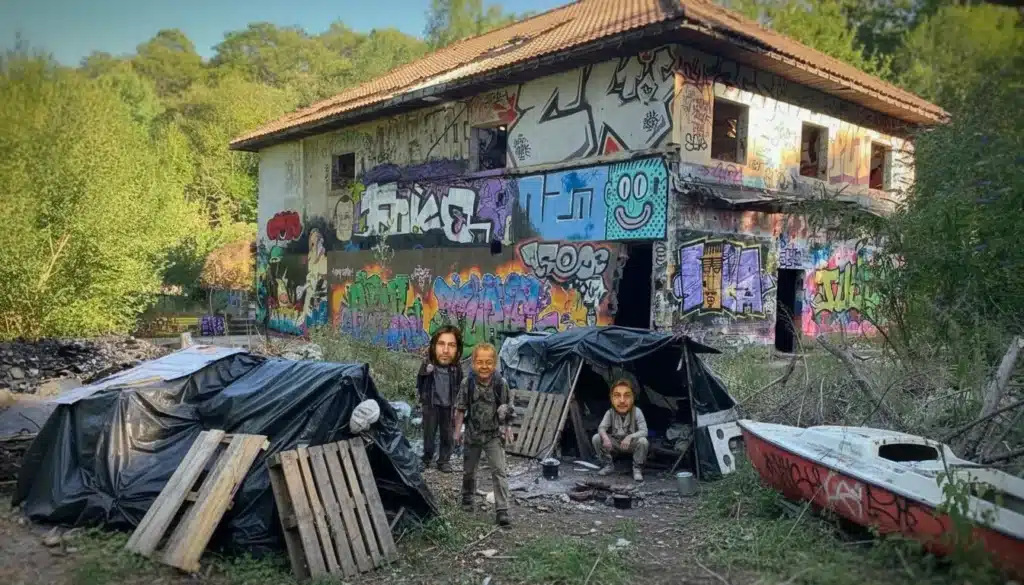
You thought your house was safe, but did you ever worry about your forest or garden being taken over? Welcome to the new reality: illegal occupation isn’t just for houses anymore—and property owners are sounding the alarm.
From Homes to Forests: Where Are Squatters Striking Next?
Once upon a time, illegal occupation conjured the image of strangers settling down in someone else’s house or maybe splashing around in a private pool. Those days are gone. Across France, astonished owners are reporting a new—and frankly baffling—trend: squatters targeting forests, gardens, even boats and vacant lots. The tranquility of private life is under siege in places few expected, and the wave of testimonies coming in shows a phenomenon growing more widespread and complex.
Why Are Forests and Unusual Properties Becoming Targets?
Take Alain from Ille-et-Vilaine. He discovered groups of partygoers invading his forested land—multiple times, no less—each occasion leaving serious damages. In Paris, boats moored at the Port de l’Arsenal are often occupied illegally; some even set ablaze. At La Rochelle, enhanced security became necessary just to protect property. Meanwhile, private pools, especially in campgrounds, are being freely used by those with no permission at all. These stories prove that today, nothing from your main home to your backyard or boat is immune.
Why the 12-5-30 Incline Walking Method Is the Ultimate Fat-Burning Workout, According to Fitness Experts
The ultimate trick to banish mold from your bathroom grout in just 7 minutes—no vinegar or baking soda needed
So, why the sudden interest in these spaces? Forests, once considered unattractive for squatters, now hold unique appeal. Here’s the logic:
- Unmatched discretion: Natural, isolated spaces are hard to monitor. They allow those who want to camp or host impromptu parties to go undisturbed and, frankly, unnoticed.
- No quick detection: While someone squatting in a home or garage raises alarms fast, woodland trespassers might stick around for days before anyone catches on.
- Risk of damage: This results in all sorts of headaches—unauthorized woodcutting, uncontrolled fires, leftover trash, makeshift shelters left behind. And there are cases where even the main house isn’t spared.
Recent events show just how hard it is for owners to reclaim their homes, even if they’re absent only temporarily. Other forms of illegal occupation are just as troublesome: boats, barges, pools, even vacant lots now fall within the squatter’s sights, each with its own set of challenges and headaches for owners.
Security Dilemmas: More Than Just a Locked Door
The reports grow more concerning in cities. In Paris, moored boats are routinely invaded and sometimes set on fire. Owners pile on the security, but nothing seems to stop a determined intruder. Private pools in campgrounds or residences similarly see their share of unauthorized users, often leaving behind a mess both physical and sanitary.
This problem isn’t reserved for one group. Some seniors have actually lost their homes due to these occupations—some even expelled from their own houses. The spectrum runs from unfairly evicted elderly couples to families unable to return to their rightful property. Occupied gardens, garages, or private parking spots—turned into makeshift shelters or hangouts—also bring a sense of helplessness, as owners struggle to even identify who’s trespassing on their property.
The law isn’t much help. Fighting illegal occupation can feel like running an obstacle course—sometimes barefoot, sometimes uphill, and nearly always against the wind. The anti-squat law does exist and aims to punish offenders, but in practice, it’s an uphill battle. Why?
- Proof is tricky: Without clear evidence or identification of the squatters, enforcement falters.
- No special protection for land: Unbuilt land doesn’t enjoy the same legal shield as a home, making its recovery all the more complicated.
- Red tape galore: Filing a complaint or demanding expulsion means frustrations and long waits. Authorities ask for precise identification, which is hard to obtain when intruders operate cautiously.
And while homes are protected by the concept of “inviolability,” meaning a speedy expulsion is possible, forests, barges, gardens, and boats can fall into limbo. Proving ownership and unauthorized use is rarely simple, and no law guarantees you’ll recover your forest or patch of dirt quickly.
Owners Seek Solutions: Between Innovation and Despair
The legal gap between the protection of homes and open land is fuelling a wider debate. Many owners are pinning their hopes on a comprehensive reform that would offer equal protection for all types of private property. In the meantime, self-defense is the name of the game: fences, alarms, neighborhood watches—but these do little against persistent or organized squatters.
Until there is a legislative breakthrough, vigilance remains the watchword: check on your property regularly, join forces with neighbors, and don’t underestimate the creativity of those looking for a place to set up shop.
One thing is certain: the era when only your house keys needed guarding is over. In today’s world, even your forest or garden might need a watchdog (though sadly, there’s no legal canine for property rights—yet).
Similar Posts
- The owner of this squatted apartment takes justice into her own hands: “I’m breaking the law, but I have no choice”
- Better Homes and Gardens Real Estate Expands: Acquires Tennessee Firm!
- Labour Surpasses Migration Milestone as Polls Approach: Farage Reacts, “What on Earth is Going On?!”
- New Jersey AG Sues RealPage, 10 Landlords: Major Antitrust Violations Uncovered!
- Protect Local Wildlife Right Outside Your Door: How French Landowners Are Creating Biodiversity Sanctuaries

Hi, I’m Brandon from the Decatur Metro team. I guide you through the trends and events reshaping our region.