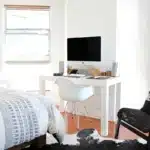
Nestled in the verdant embrace of Laurel Canyon in Los Angeles, the CM G1 House emerges as a fusion of historical allure and contemporary living, thanks to a collaborative redesign by Ome Dezin and furniture designer Willett from Los Angeles. Entering this home is like stepping into a conversation between the past and the present, where modern design interacts with historical elements.
Why the 12-5-30 Incline Walking Method Is the Ultimate Fat-Burning Workout, According to Fitness Experts
The ultimate trick to banish mold from your bathroom grout in just 7 minutes—no vinegar or baking soda needed
Originally constructed in the 1960s, the house has been transformed to suit modern sensibilities while honoring its mid-century heritage. The renovation was handled with great care to preserve the original architecture, now enhanced with a design that balances meticulous detail with a touch of warmth. Jesse Rudolph and Joelle Kutner of Ome Dezin saw this project as an opportunity to blend Willett’s creative vision with their expertise in rejuvenating homes with strong character.
For Willett, the visionary force behind the distinctive enhancements, the CM G1 House represents an ’emotional landscape,’ a concept that emphasizes human connections, often overlooked in modern home construction.
Willett explains, “We designed this home as an homage to the artistic experimentation that Laurel Canyon is known for. The natural surroundings and the area’s rich history informed our design approach, leading to custom, site-specific design elements that unfold quietly throughout the home, each crafted detail sparking curiosity and reflecting the area’s unique character.”
The principles of Frank Lloyd Wright resonate in the home’s design through its open spatial planning, thoughtful functionality, and linear progression, all critical to the project’s success. The redesign emphasizes sleek horizontal lines and introduces modern features such as large sliding doors on the west side, seamlessly connecting the indoors with the natural landscape. The approach to furniture is progressive, reminiscent of a time when pieces not only filled a space but also represented sculptural forms, enhancing the human experience within abstract spaces.
Willett’s design philosophy extends to the tactile experience of furniture, with materials that hark back to the 1960s. Warm Douglas fir wood links the house to its mid-century roots, while rich marbles and solid black flagstone anchor it firmly in its canyon setting. Skylights strategically placed throughout the ceiling bathe the interior walls in natural light, enhancing the sense of intimacy.
The house’s interior seamlessly integrates architecture and furniture, particularly in the master bedroom where a custom built-in system combines a desk, daybed, and storage into one fluid structure. Willett’s signature pieces like the Tonn Table, Gio Stool, Radi Table & Chairs, and Popo Chair are thoughtfully placed throughout the space, alongside new pieces from his Early Works: Group 01 collection, initially designed for his own home. Recent additions include the leather Poporo dining chair, Popo counter stools, and the KOC Dresser, enhancing the home’s curated aesthetic.
The interior also features a carefully selected mix of vintage and modern elements, with pieces chosen by Ome Dezin from DEN, a local antique store, and artworks from cc-tapis’ Whispers Collection by Scarlett Rouge, showcased for the first time in the U.S. within this home.
Willett states, “My design philosophy comes to life through the interplay between my furniture and the surrounding environment, creating a unified space for living where distinctions between the transient and the permanent blur.”
The CM G1 House defies simple categorization, blending function with artistic expression, and merging indoor and outdoor spaces. The home’s design and furnishings reflect the comfort and aesthetic integrity typical of the mid-century period while challenging conventional architectural boundaries.
Ome Dezin and Willett view architecture as a relational and experiential art form, creating spaces that are meant to be lived in and felt, rather than merely observed. These environments are designed for daily interaction and personal transformation.
If you find yourself in this space, Willett suggests lighting the fireplace, wrapping up in a blanket, and settling into the built-in sofa overlooking the pool and canyon. “I hope they find comfort here,” he notes. “Everything they need to relax, enjoy, and live well is right here.”
He concludes by reminding us that great design, like great architecture, is dynamic. It’s an environment we inhabit, a narrative we continually recreate, and an emotional journey we carry with us, even beyond the physical space of the home.
Similar Posts
- Iconic Restoration: Ome Dezin Revives Whitney R. Smith’s Hollywood Hills Masterpiece
- Stunning Echo Villa: A Sculptural Home Inspired by Taiwan’s Majestic Mountains
- Sashya Thind Transforms New Build: Discover a Warm, Worldly Modernist Masterpiece!
- Stunning Transformation: Gunter & Co Unveils Light-Filled London Arts and Crafts Home
- Bergman Design House Transforms London Apartment: A Stunning Living Archive Unveiled!

Hi, I’m Michael from the Decatur Metro team. I offer you practical tips to enhance your living space.