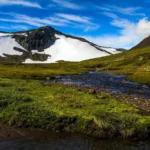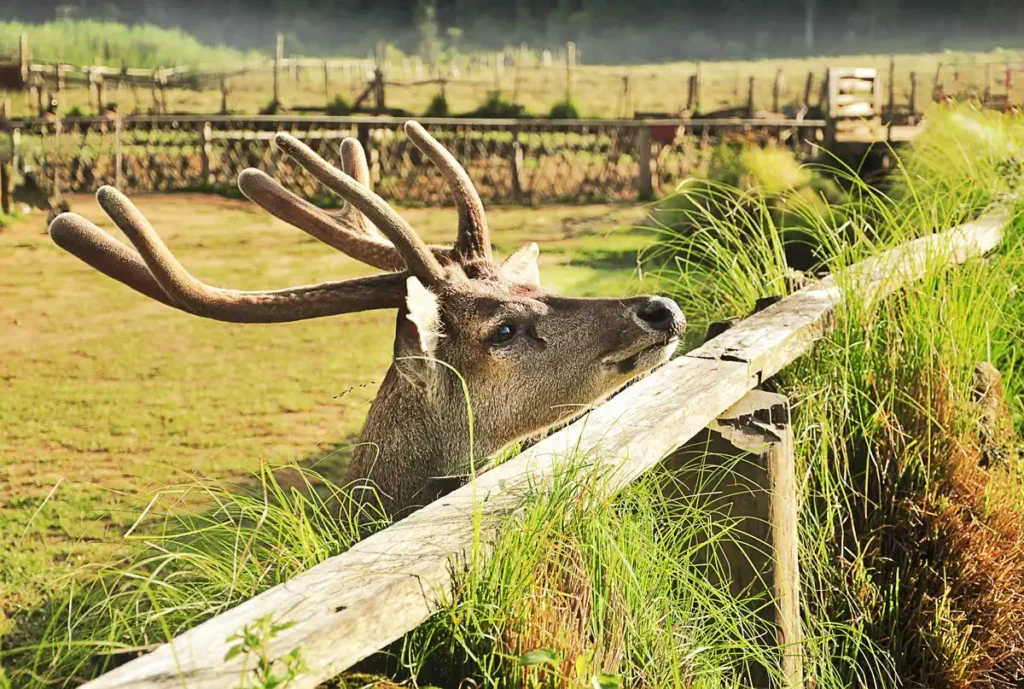
The concepts of borders and walls, which are so prevalent in our imaginations, are meaningless on the scale of a living world where permeability is the norm, observes researcher Jérôme Sueur, author of a book on the subject.
From the scale of gardens to that of nations, our species has been keen on constructing barriers. However, in the rest of the living world, borders are primarily characterized by their permeability, explains Jérôme Sueur, a professor at the National Museum of Natural History and an expert in ecoacoustics (the study of the role of sounds in biodiversity). He has published a beautiful book with Actes Sud, which transforms our perspective on the concept of borders. Artificially opposing movements, he writes, “leads to suffocation and collapse”. By trying to seal off space, we are strangling life.
Why a Simple Mistake in Your Online Pension Application Could Cost You Your Retirement Benefits
The ultimate trick to banish mold from your bathroom grout in just 7 minutes—no vinegar or baking soda needed
Decatur Metro — Ecoacoustics has been your main area of research. What led you to explore the topic of “living borders”?
Jérôme Sueur – I wanted to step outside my narrow field of expertise and broaden my view. I’ve always been fascinated by forest edges, those drastic changes between a field and a dense forest. I wondered if there were other such edges in the living world and what their operational modalities were, from the scale of cells to that of large geographic structures. On a personal level, I am also deeply moved by the migrant crisis. All these elements combined, and gave me this idea.
What are we talking about when we discuss “borders of the living”? What are their characteristics?
It’s a place that separates two structural, morphological, physiological, or even evolutionary states: the membrane of a cell, the interface between the aquatic and aerial world, the intertidal zone [the areas exposed to the ebb and flow of tides]… It’s where one transitions from one environment to another, from one body to another, where a change occurs.
What roles do these borders play in ecosystems?
They structure the functioning of organisms and ecosystems. But they are places of encounter, change, and passage, more than opposition, as we conceptualize national borders. In the living world, borders are not protective walls. They simply delineate different physiologies and ecologies.
The forest edge is a prime example. Historically, ecologists viewed the edge as a confrontation site. In reality, the ecological properties of both environments blend there. It’s an ecosystem in its own right, very dynamic.
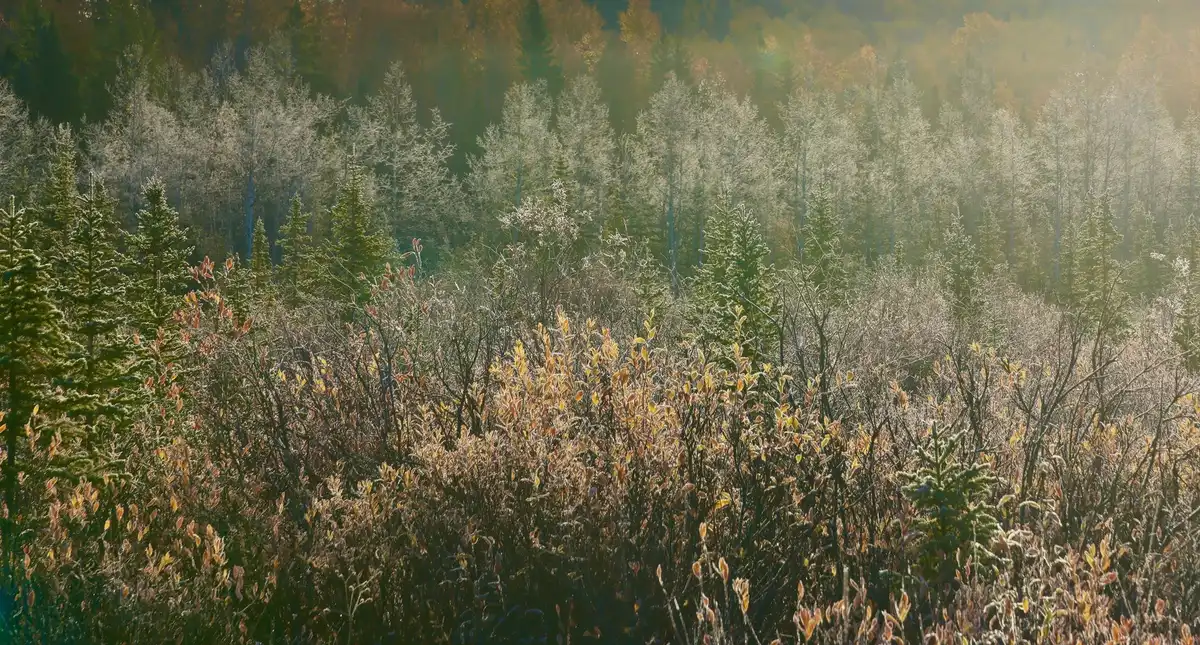
The trees at forest edges are often more vigorous because there is more light, which also attracts phytophagous insects [that feed on plant material] and their predators, including birds. Some animals cross the edge to seek protection in the forest, others cross in the opposite direction to feed…
Forest edges can be compared to cell membranes: there is a constant exchange from inside the cell to the outside, and vice versa. Borders are porous places. Without this porosity, nothing works.
Without permeability, you write, “the world risks asphyxiation”…
The best example of this are neurons, which operate by transmitting a small electrical field thanks to the porosity of cell membranes. Blocking this passage, which can be done with neurotoxic substances, is lethal.
At all levels of life, passage must be allowed to avoid suffocation. This is also seen in thermodynamics: a completely closed system cannot function. It requires exchanges.
The era today values self-isolation. But stifling human movements is suffocating for both individuals and societies.
It’s often said of certain species, like wolves or marmots, that they “mark their territory”, that they “rule” over areas… Are there species that, like humans, build rigid borders? Or are we projecting our own relationship with territoriality onto their behavior?
Species may defend favored spots where they reproduce, nest, or find food. But apart from mudskippers [fish that build small walls in wet sand], animals do not build walls. They signal their presence by leaving chemical signals, like urine, by displaying their colors, or by making sounds.
These territories are quite permeable: animals move through each other’s territories. Sometimes, these incursions trigger aggressive competitive reactions, but these territories shift greatly over time and space. They change throughout the day, with the seasons, and as new individuals arrive… They are constantly being questioned. And one species’ territory, like a bird’s, does not affect another’s, such as a mammal’s or an insect’s. Our human borders, however, are imposed on all.
You note in your book how borders erected by humans are deadly for humans themselves. The English Channel and the Mediterranean, in particular, have become “cemetery seas”. Our borders can also affect the rest of the living world…
Around the planet, we are building more and more hermetic walls to separate ourselves from each other. Today, there are over 70, accounting for 10% of global borders. By stopping movements, we alter the entire ecosystem. For example, the 3,200 km wall built between the United States and Mexico blocks nearly 2,000 species of terrestrial and aquatic plants and animals. It endangers Mexican wolves, Sonoran pronghorns, jaguars, ocelots, and California toads…
Conversely, some borders can protect the living, by keeping humans away. This is a form of paradox I discuss, with the example of the two Koreas. There is a green belt between them where no one goes. There are mines that can injure mammals, but the biodiversity is quieter because there are fewer humans. This is also found in Cyprus and at the former border between East and West Germany.
Besides national borders, we erect a multitude of other barriers with more insidious effects. You mention roads, dams, locks…
These large infrastructures fragment habitats. They divide space into small mosaics, which do not necessarily contain all the resources an individual needs to feed, reproduce, protect themselves, avoid heatstroke, or escape predators.
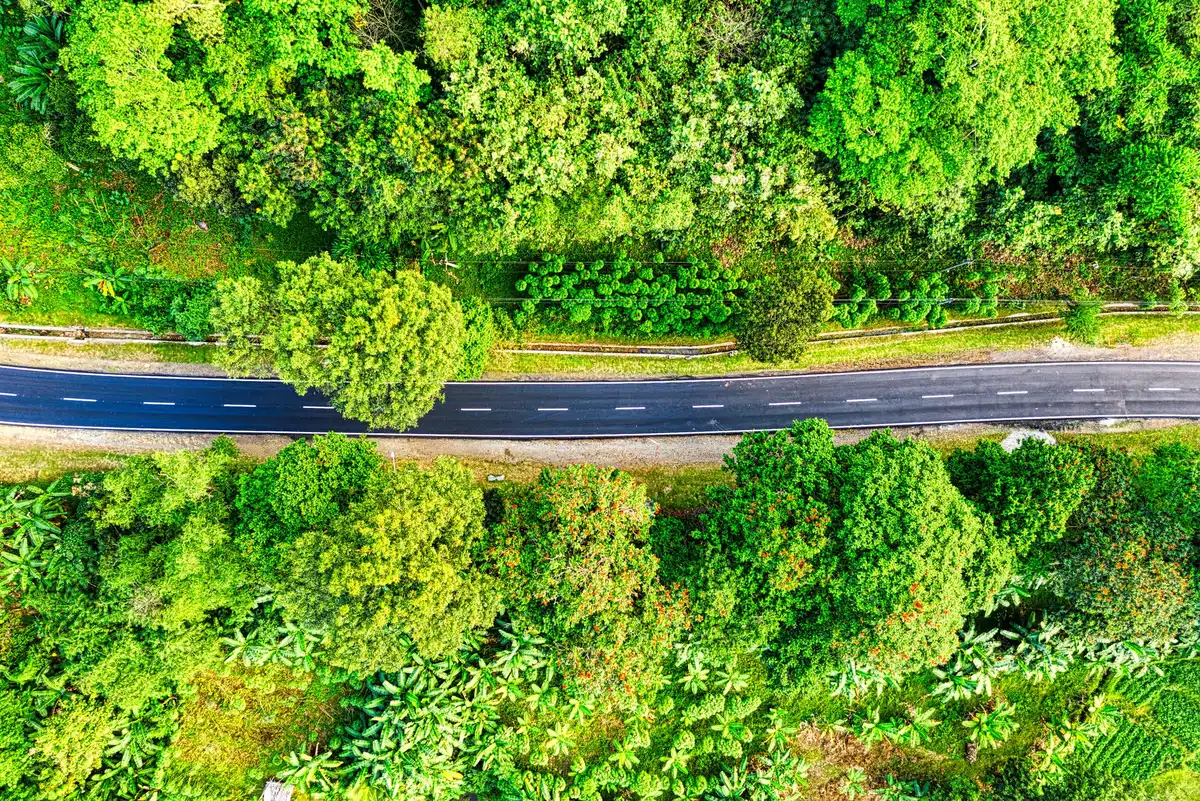
They also limit exchanges with other individuals, the possibilities for encounter and reproduction. It’s a form of confinement. Today, only 37% of the world’s rivers can be freely traversed by living beings along their entire length.
Beyond large state infrastructures, we block the living at an individual level, with fences we install around gardens or large properties of hunters, especially in Sologne. Animals are killed because they do not have the freedom to escape. This trend is closely linked to the notion of private property, which is deeply rooted in our societies. Symbolically, these fences are also a form of opposition to others. This is not the case everywhere. In England, for example, gardens are not partitioned.
What lesson can we learn from what you describe? How could the relationship of the rest of the living world to the border inspire ours?
One must always be careful with bio-inspiration, especially in politics. But it is somewhat the subliminal message of this book: let’s be more tolerant and open, let our borders be more open, welcome others… Let’s be more porous. It is absolutely abominable to prevent someone in distress from entering somewhere, or worse, to move them to an unknown place, without understanding their suffering.
Recently, between France and England. I do not understand how ultra-equipped armed forces can attack people fleeing misery. It’s inhumane, and completely disproportionate.
Whether human or not, migration is never a choice. It is an absolute necessity, the result of environmental pressures in the broad sense. No one migrates for pleasure.
What do you think about the current hyperfocus on the border, in much of the political and media space?
I do not understand it. We will not solve societal problems by closing borders. The real issue today is the environment. And it is transboundary.
|
Living Borders, the Porosity of the World, from Cells to Ecosystems, by Jérôme Sueur, published by , May 2026, 208 p., 20.50 euros. |
Similar Posts
- New virus discovered in China: Langya Henipavirus raises concern
- Trump Claims Destroying Habitat Does Not Harm Species: Environmental Controversy Explodes
- Biruté Galdikas Reveals: Tracking Orangutans Through Neck-Deep Marshes
- Wildfires Rage: Should Hunting Be Banned to Give Wildlife a Break?
- All iPhones and Androids can now make calls via Musk’s satellites from anywhere on Earth

Hi, I’m Ashley from the Decatur Metro team. I share essential information for a sustainable and responsible lifestyle.