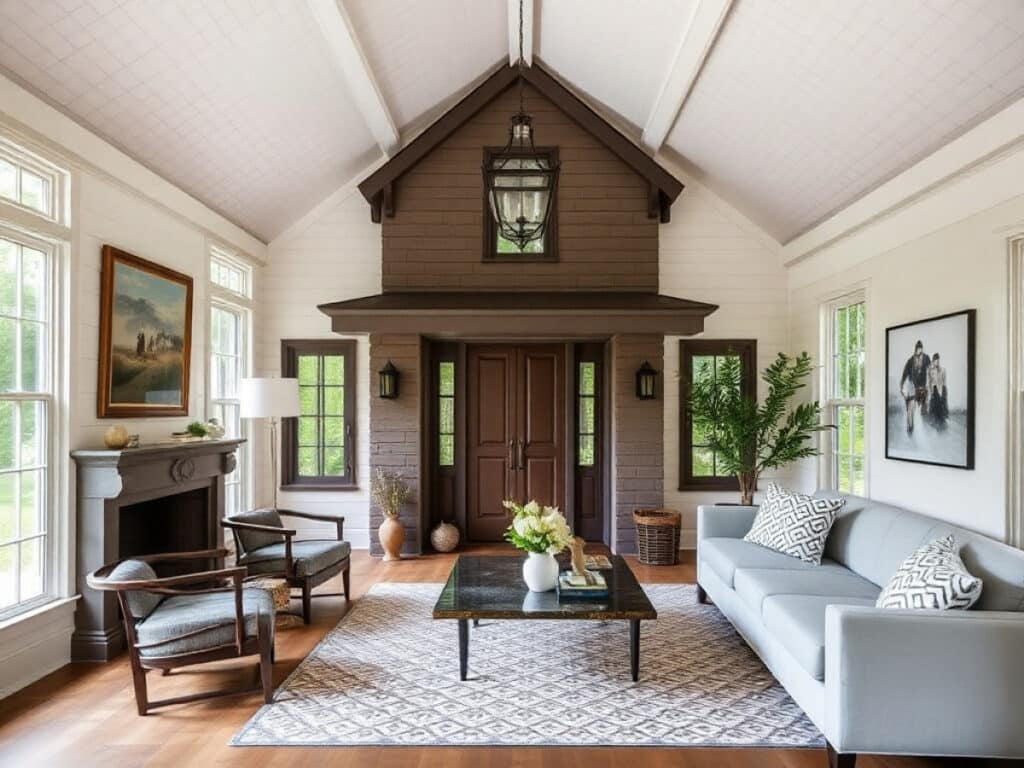
Restoration projects often adhere to a philosophy of conservation—original elements are meticulously restored, surfaces are treated, and finishes are applied to maintain the house in a perpetual state of historical perfection. However, at Tryon Hill, a 1929 Cape Cod house in Portland, Oregon, designer Sara Gray from the firm Grayhaus based in the Pacific Northwest, challenges this approach. She selects materials such as unlacquered brass, Calacatta Viola marble, mohair, velvet, linen, seasoned wood, and natural stone not for their durability against wear but for their capacity to embrace it, viewing the development of patina and wear as integral to creating a welcoming and lived-in atmosphere in a home nearly a hundred years old.
Instead of using distressed finishes that merely simulate age, Gray opts for reactive materials that evolve and gain character from daily interactions and use. Unlacquered brass fixtures naturally tarnish and change color with frequent handling. Mohair and velvet furnishings develop unique compression marks from consistent seating. Similarly, the house’s floors and walls gently capture signs of life through subtle indentations and marks that reflect its use.
Why the 12-5-30 Incline Walking Method Is the Ultimate Fat-Burning Workout, According to Fitness Experts
The ultimate trick to banish mold from your bathroom grout in just 7 minutes—no vinegar or baking soda needed
The color scheme Gray employs further supports this philosophy. Soft jewel tones and deep, dark colors envelop the rooms, providing a warm, integrated feel that eschews the stark contrasts often seen in modern heritage renovations. In certain areas, the color palette becomes more focused and nearly monochromatic, lending a modern flair to the space while maintaining the home’s overall harmony.
Inspired partly by the homeowner’s personal style, Gray designed a small, intimate room nestled between the dining room and kitchen as a dedicated salon. This space, with its deep burgundy walls and subdued, cozy lighting, is crafted to foster intimate conversations.
The renovation, which took 18 months, dealt with the typical structural quirks of nearly century-old homes, such as unusual joist configurations, building constraints, and unforeseen issues common in older properties. Gray’s strategy of preserving the home’s original architectural moldings, proportions, and symmetrical balance, while infusing it with a vibrant material aesthetic, ensures the structural integrity and historical essence of the house remain visible beneath its renewed interior.
The outcome is a home that will naturally transform over the next five years—not through decay, but through the accumulation of experiences and life lived within its walls.
Similar Posts
- Explore a Toluca Lake Home: How a Limited Color Scheme Creates Stunning Depth!
- Stunning 1974 San Francisco Home Renovation: Preserving Its Historic Charm!
- Japanese-Inspired Elegance: House of Rolison Ushers Home into Stunning New Chapter
- Explore This Stunning Texas Home: Where Moody Tones Embrace Mid-Century Vibes!
- Marcela Cure Transforms Miami: Discover How Material Restraint Redefines Living!

Hi, I’m Michael from the Decatur Metro team. I offer you practical tips to enhance your living space.