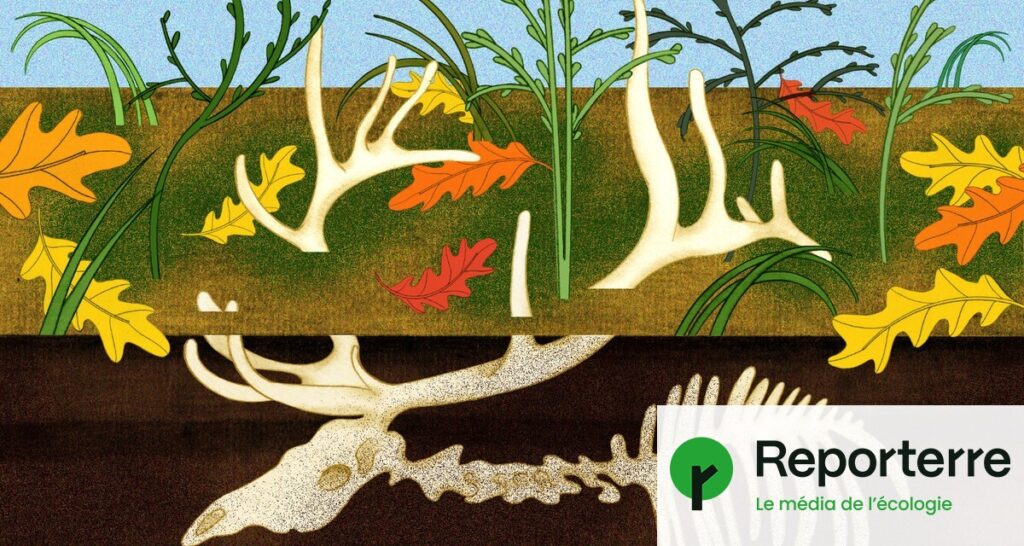
Dead trees that host insects, whale carcasses that feed whole communities… A large-scale study has investigated how the dead affect the living — what the researchers call a “core ecological concept.”
Death does not always mark an ending. At the scale of ecosystems, the remains of organisms continue to shape the living world; in some cases their bodies even support ecosystem vitality. A new study demonstrates this by quantifying, for the first time at such a broad scale, how the remnants of so‑called foundation species — those that create or structure habitat, like corals on reefs or trees in woodlands — influence ecosystems. The scientists argue these effects can be substantial and say the role of the dead for the living should be regarded as a fundamental idea in ecology.
The authors emphasize that leftover material from foundation species is far from mere background clutter or inert debris. Instead, they describe these remains as active agents with significant potential to alter ecosystem structure, processes and resilience. In short: the dead really do keep shaping the living world.
Why the 12-5-30 Incline Walking Method Is the Ultimate Fat-Burning Workout, According to Fitness Experts
The ultimate trick to banish mold from your bathroom grout in just 7 minutes—no vinegar or baking soda needed
To reach these conclusions the team analyzed long‑term ecological monitoring data from the U.S. National Science Foundation’s LTER (Long‑Term Ecological Research) network. They tracked populations of foundation species in the aftermath of mass‑mortality events, spanning follow‑up periods from two to thirty‑two years. Ten different ecosystems were examined — roughly half marine and half terrestrial — including coral reefs, mangrove and kelp forests, oyster reefs, tropical wet forests and boreal stands. The study sites ranged geographically from the tropics up to the Arctic circle.
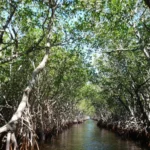
Their verdict: corpses can be productive. In many cases, remains speed ecosystem recovery and bolster resilience, sometimes in striking ways. For example, leaf litter trapped among mangrove roots after a hurricane enriches the root zone with nutrients and promotes the formation of new roots. In boreal forests, charred standing spruces left after a wildfire release abundant seeds into the soil, helping the forest to regenerate.
Similar effects were recorded in temperate forests of New England that were devastated by woolly aphid outbreaks. There, standing dead trees create microclimates that benefit sapling growth. In coastal systems, accumulations of empty oyster shells on mudflats supply young oysters with hard surfaces to attach to and grow upon, facilitating population recovery.
Previous research has already highlighted many ways dead organisms sustain life. In forests, studies estimate that 20–30% of insect species depend directly or indirectly on dead or decaying wood. On shorelines, seaweed and marine detritus deposited by tides feed a host of plants, invertebrates and birds. In the deep ocean, large carcasses can become critical nutrient hotspots: a single whale fall can deliver to deep‑sea communities an amount of organic energy comparable to what would normally arrive from the surface over 100 to 200 years.
Overall, nine out of the ten ecosystems the researchers studied showed measurable responses to the presence of remains. Those effects are not uniformly beneficial, however. On Moorea in French Polynesia, for instance, the dead coral skeletons left behind after marine heatwaves provide footholds for macroalgae, which then hinder the survival of juvenile corals. Over time the algae can outcompete corals and turn reefs into sprawling assemblages of dead skeletons. As the authors note, the same remains can advantage some organisms while disadvantaging others.
In a Puerto Rican tropical rain forest the team found another downside: the thick layer of post‑storm woody debris on the forest floor can shade out light and delay the growth of seedlings, slowing forest recovery.
The researchers stress that understanding how species continue to modify their environments after death is increasingly important. With climate disruption, deforestation, mega‑fires and overfishing on the rise, the frequency and scale of mortality events are likely to increase, meaning dead organic material will become more prevalent in many ecosystems.
That growing prevalence makes it imperative to learn more and to incorporate these effects into conservation and management. Allowing more dead wood to remain in forests, leaving empty shells on shores, or tolerating accumulations of drift algae on beaches could provide more opportunities for life to reestablish and flourish. The authors call for further studies and for the post‑mortem influence of organisms to be treated as a central ecological concept in planning ecosystem stewardship.
Similar Posts
- Marine Heatwaves Trigger Sudden Coral Deaths: A Rising Global Threat
- Mushrooms Face Extinction: Essential Yet Overlooked, the Silent Crisis
- Discover the Rich Ecosystem Hidden Under Antarctica’s Giant Iceberg: A Surprising Revelation!
- This Canadian Robot Discovers the Equivalent of 250 Million Elephants Beneath the Oceans by Analyzing Phytoplankton Mass
- Heat-Resistant “Supercorals” Discovered in French Polynesia: A Breakthrough for Marine Biology!

Hi, I’m Ashley from the Decatur Metro team. I share essential information for a sustainable and responsible lifestyle.