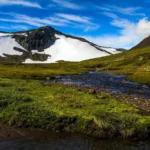
Forests, rivers, mountains… Nature and its landscapes are invaluable allies for our health and well-being, especially during these intensely hot periods!
Feeling exhausted or drained by the heatwave? Do you find yourself longing for shady retreats? Those paths, forests, hills, mountains, or even cemeteries and towpaths where you can lie down in the shade and rejuvenate?
Why the 12-5-30 Incline Walking Method Is the Ultimate Fat-Burning Workout, According to Fitness Experts
The ultimate trick to banish mold from your bathroom grout in just 7 minutes—no vinegar or baking soda needed
In Walk and Ground Yourself, British author Annabel Abbs elaborates on the rich physical and psychological interactions that can occur between us (our bodies and minds) and the natural environment — presenting about twenty such interactions, each forming short, inspiring, and practical chapters.
Throughout the book, numerous accounts reveal that regular visits to these natural spaces can help combat depression and even slow the progression of serious illnesses. As we struggle with heat and deadly ozone spikes, this reflection reminds us that nature is not just a source of comfort but a vital ally for our health and internal balance.
A diverse forest, especially one with conifers, releases volatile organic compounds known as phytoncides. Breathing these in during a walk triggers our bodies to produce biochemical substances known in the medical world as “molecules of hope”: serotonin, a neurotransmitter that makes us happier and more alert, and endocannabinoids, which are excellent for brain plasticity. After more than two decades of research, the Japanese are so convinced of the benefits of these ancient, diverse forests that they have made forest therapy a university discipline.
Similarly, landscapes energize our inner lives and help us combat gloom, depression, and more. A scent carried by a sea breeze, the softness of moss at the foot of a tree can revive vivid memories in our minds, brightening our moods or even acting as a catalyst.
“When a place seems to resonate with our emotions, it feels as though a gentle nudge prompts us to identify and accept them, rather than judge or evade them,” explores Annabel Abbs. “Landscapes thus enable us to confront aspects of ourselves that might otherwise be repressed, suppressed, or unexpressed.”
While the link between diet and health is well established, the connection between biodiversity and health has remained underexplored, despite numerous scientific studies highlighting its richness. But, after another grueling heatwave, how can one doubt that health and intimacy require these invisible exchanges with landscapes? One can only imagine that, in the context of significant ecological transition, the daily working hours could one day be reduced (without a reduction in salary), to foster overall health through regular contact with nature’s green and blue hues.
| Walk and Ground Yourself — Forests, Mountains, Seaside… Landscapes that Comfort Us, by Annabel Abbs, translated from English by Béatrice Vierne, published by , March 2026, 336 pages, 21 euros. |
You don’t need to backpack the 1,000 km of marked trails in Cantal (in addition to the GR 14) to experience the soothing effects of its volcanic landscapes. Regular sensory immersions in nature, led by naturalist guides or mountain guides if needed, will awaken your senses and lift your spirit. The Sense of Walking, a heartwarming documentary, will certainly inspire this desire by revealing the deep connections one can form with the environment.
Firstly, there’s nothing like freeing your feet, teaches guide Nadège, who takes both children and adults on barefoot walks through mud, grass, or over the pebbles of a stream.
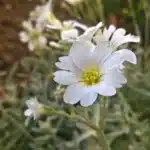
With about 7,000 nerve endings connected to every organ in the body, according to Chinese medicine, freeing them through massage also seems to free the mind. This appears to work for today’s walk participants (both adults and children), who are easily persuaded to then awaken their sense of touch by caressing tree trunks, followed by their senses of smell and taste, breathing in and then tasting gentian flowers, wild thyme, or burnet – with scents “to die for” and flavors far less toxic than the basic ones we are accustomed to: fat, salt, and sugar, highlights the guide.
These immersive walks also remind us that the biodiversity of our surroundings is tailored to our needs. In the mountains, for instance, many plants like yarrow or wild thyme act on the respiratory system, helping our bodies adapt to weather changes.
One day, journalist and writer Jean-Paul Kauffmann decided to follow the Marne River on foot from where it flows into the Seine at Charenton to the village of Balesmes-sur-Marne, where it originates. 525 km with hardly any constraints, except to not stray from its meanders, and hardly any hindrances either: good meals in the evening at an inn, topped off with one of his favorite cigars, and no schedules. Especially not!, insists this epicurean who is sensitive to the changing atmospheres of the landscape.
As you read, you’ll be delighted to find that his portrayal of the Marne is so vivid. Overlaying the image of the ever-changing river is that of its relationship with humanity. On one side, the colors of the Marne, its “intense smell of grass, foliage, wet wood that [he] has never found elsewhere”, its calm flow, its nectar of fulfillment.
“The pleasure of being alone in a collected solitude, not withdrawn but gathered within myself deeply in a movement of trust and intimacy with what surrounded me: the clouds, the warm air, the white willows, the wild roses along the river, and that elusive light… All of it offered,” writes this senior reporter whose life was marked by three years of unlawful detention in Lebanon in 1985.
On the other side, a whole humanity lives around its banks, the “conjurers” of melancholy as he calls them, men and women trying to live despite the brutality of globalized capitalism, the disappearance of public services, and trying to understand what is happening to them. His encounter with them dazzled him, he said in a program produced by at the book’s release.
It’s Jeanne, aged 86, who took under her wing Félix, a former bargee drifting along, offering him lavish meals on her terrace overlooking the Marne; it’s the farmer dispossessed of his lands, covered by the A4 highway, who managed, despite the shock, to recreate, with his market gardener daughter, a farm that became a “good example of mediation between the rural and the urban”; it’s Jacques Servières, an artist who created a “garden of sculptures” by the river, from blocks of stone from an old aqueduct, etc. As if the Marne, France’s longest river, continues to inspire and shelter the creation of a world on a human scale, warm and supportive. A true pleasure to read.
| Up the Marne, by Jean-Paul Kauffmann, published by , 2014, 320 pages, 8.70 euros. |
legend
Similar Posts
- “Walking in nature changed my life”—Science confirms surprising mental health benefits
- Explore the Loire: A Riveting Night with Étienne Davodeau Reveals River’s Secrets
- Walking at This Surprising Pace Could Dramatically Boost Your Health, Scientists Reveal
- “I’ve never seen my garden so beautiful”: The all-natural trick experts swear by to keep slugs away for good
- Plants, Not Graves: How Natural Cemeteries Are Safeguarding Biodiversity

Hi, I’m Ashley from the Decatur Metro team. I share essential information for a sustainable and responsible lifestyle.