Ever paused to think which human creation truly stands out when you gaze at our planet from orbit? You might be in for a surprise—it isn’t the Great Wall of China.
Why the Great Wall of China isn’t visible from space ?
We’ve all heard the claim: the Great Wall of China stretches so far that it must be plainly visible from the heavens. I’ll confess, as a schoolkid I dutifully told friends exactly that—only to stumble across a snappy NASA refutation years later. In reality, the Wall’s modest proportions and natural camouflage make it virtually invisible once you leave the planet.

Why the 12-5-30 Incline Walking Method Is the Ultimate Fat-Burning Workout, According to Fitness Experts
The ultimate trick to banish mold from your bathroom grout in just 7 minutes—no vinegar or baking soda needed
First, consider its dimensions: roughly 8 852 kilometres long, but a mere 4 to 5 metres wide and 6 to 7 metres high. That’s barely wider than a family car is long. On the Moon—some 384 000 kilometres away—no human-made feature stands out, and not even mountain ranges are discernible. Even from low Earth orbit, around 400 kilometres up, the Wall blends into the rocky terrain and winding ridges. Place a pin on Google Earth about 100 km north‑west of Beijing, zoom out to 10 km altitude and you’ll see just how easily it disappears beneath surrounding peaks.

Legend attributes the myth to an 18th-century British antiquarian’s tentative speculation that it “might just be seen from the Moon.” Fast forward to 1969: when asked if he’d spotted the Wall, Neil Armstrong was unequivocal: “No, I could not see the Wall from lunar orbit.” His words laid the rumours to rest—astronauts report that bright city lights and major highways are far more obvious than any ancient stone rampart.
A European Giant shines brighter
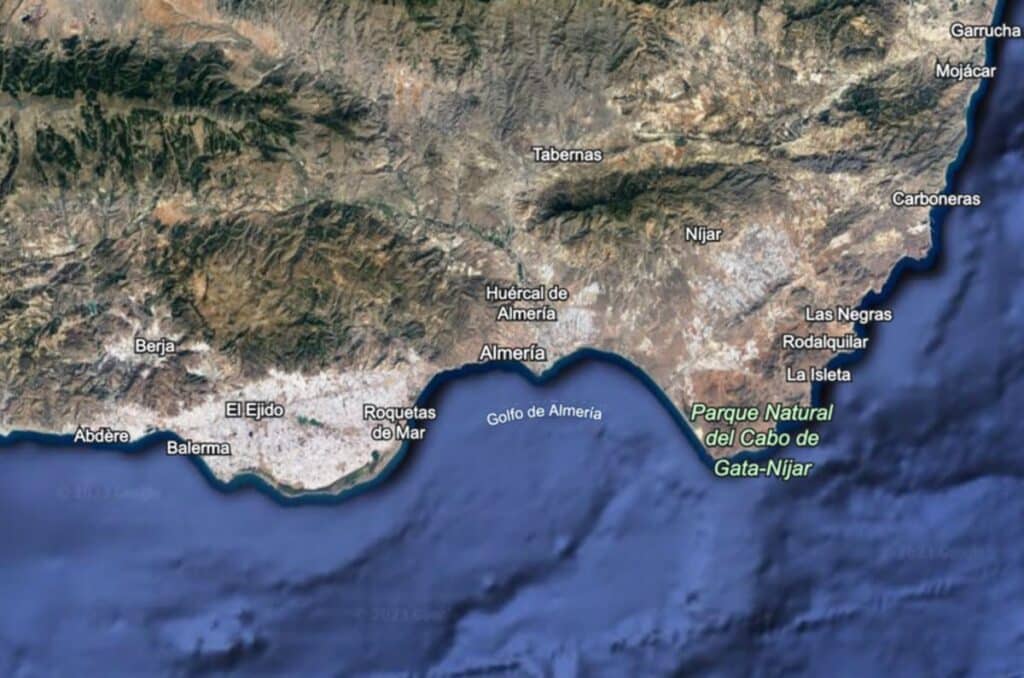
So if not the Great Wall, what human creation truly lights up our planet from space? Believe it or not, the champion is tucked away in southern Spain: the vast plastic greenhouses near Almería. Famously dubbed the Sea of Plastic, they blanket over 40 000 hectares of Andalusian coastline in gleaming white sheeting. From the International Space Station—roughly 400 km above Earth—this sprawling expanse looks like a luminous inland sea.

Spanish astronaut Pedro Duque, the first from his country to journey into orbit, has often pointed them out as the most striking man-made pattern visible from the ISS. He joked that returning to Earth felt like spotting “a mirror laid across the landscape.” I can’t help but remember gazing at satellite images and marvelling at the contrast between the intense white of those greenhouses and the muted browns of the surrounding hills.
Yet there’s a serious side. According to Greenpeace Spain, the production and disposal of the plastic sheets create an immense environmental impact, contaminating soils and waterways and affecting local wildlife. This agricultural marvel feeds much of Europe, but it comes at a cost: tackling the resulting pollution presents a formidable challenge.
Looking up with fresh eyes
Next time you catch a glimpse of Earth from a plane window or explore satellite views at your desk, keep an eye out not for ancient ramparts but for those shining expanses of aluminium-coloured plastic. The story reminds us that human ingenuity can be both awe-inspiring and deeply consequential. Whether it’s the myth of the Great Wall’s cosmic visibility or the dazzling reality of Spain’s greenhouse network, it’s always worth questioning the tales we take for granted—and celebrating the unexpected wonders of our planet.
Similar Posts
- NASA says China could slow Earth’s rotation with a single action
- For the first time since the 1970s, NASA may not be able to send astronauts to the Moon
- Mystery object hurtling toward the Milky Way’s center at 2 million km/h baffles astronomers
- Archaeologists Warn of Hidden Traps in China’s First Emperor Tomb
- Explore the Universe with ASAP: Inside the Venus Lounge Experience

Hi, I’m Brandon from the Decatur Metro team. I guide you through the trends and events reshaping our region.